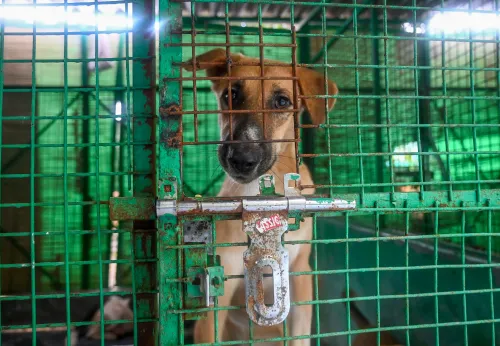
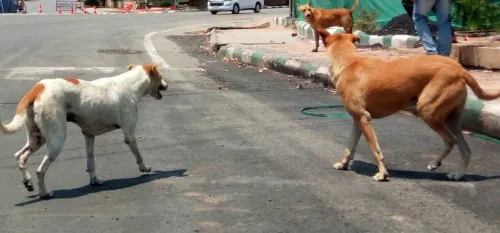
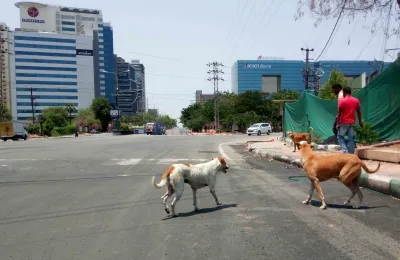
Will the Supreme Court Address the Stray Dog Issue Today?
Synopsis
Today, the Supreme Court continues its crucial hearing on the escalating stray dog situation, analyzing state compliance with regulations. The court's concerns about public safety and effective animal management highlight the urgency of addressing this pressing issue. Stay tuned for updates on this developing story.
Key Takeaways
The Supreme Court is actively addressing the issue of stray dogs.
There is a notable increase in dog bite incidents.
Compliance with Animal Birth Control Rules is critical.
States must implement effective management strategies.
Public safety remains a top priority in this debate.
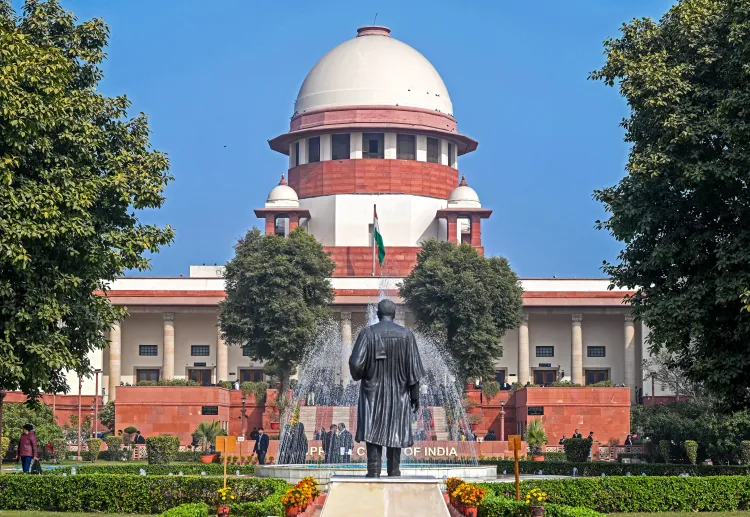
New Delhi, Jan 8 (NationPress) The Supreme Court is set to resume its deliberations on the issue of stray dogs today, with an emphasis on assessing compliance from various states and union territories (UTs).
Previously, on Wednesday, the highest court voiced its alarm over the significant increase in dog bite incidents nationwide and criticized local authorities for their inadequate enforcement of the Animal Birth Control (ABC) Rules.
A bench comprising Justices Vikram Nath, Sandeep Mehta, and N.V. Anjaria, which is reviewing the suo motu case concerning the management of stray dogs in public areas, noted that both children and adults have suffered bites, leading to tragic fatalities due to inaction.
“We acknowledge that these occurrences are happening. Both children and adults are being bitten, and there have been fatalities,” remarked the Justice Nath-led Bench, highlighting that in the past 20 days, two judges had been involved in accidents related to animals.
The Supreme Court emphasized that the presence of stray animals on the streets is not solely a biting issue; it also poses a significant risk for accidents.
“When they are running on the road, it creates a problematic situation. Roads where vehicles are in motion present a danger beyond just biting,” the court observed.
Senior Advocate Gaurav Agarwal, acting as amicus curiae, informed the bench that based on previous Supreme Court directives, the National Highways Authority of India (NHAI) has formulated a Standard Operating Procedure (SOP) and identified around 1,400 kilometers of vulnerable road segments.
However, he mentioned that effective implementation would necessitate collaborative efforts from state governments, including the establishment of shelters and staffing for ABC centers.
Agarwal also pointed out that several major states, including Madhya Pradesh, Uttar Pradesh, Tamil Nadu, Karnataka, and Punjab, have yet to submit compliance affidavits.
The Justice Nath-led bench cautioned that the Supreme Court would adopt a stringent stance against states that fail to comply.
“We will be strict with states that do not respond,” it stated.
Senior advocate Kapil Sibal, representing animal welfare organizations, argued that managing the dog population through sterilization and vaccination is the only sustainable approach, warning that indiscriminate removal of dogs could exacerbate the issue.
Pointing to the globally recognized CSVR (Capture, Sterilize, Vaccinate, and Release) model, Sibal noted that unscientific relocation could create territorial vacuums, provoke dog fights, and increase the spread of rabies.
When Sibal suggested that people must “coexist with animals,” the Supreme Court responded firmly. “You are fortunate. People are being bitten, and children are suffering,” the Justice Nath-led bench remarked, asserting that institutional settings such as courts, schools, and hospitals should remain free from stray animals.
The Supreme Court questioned the rationale behind allowing dogs in areas meant for unrestricted access by children, patients, and individuals with disabilities.
Solicitor General Tushar Mehta, representing the authorities, proposed that residents’ welfare associations in gated communities should have the authority to vote on whether stray animals should be permitted on their properties, noting that compassion for animals cannot outweigh the rights and safety of residents.
Point of View
It is imperative to acknowledge that the Supreme Court's deliberations on the stray dog crisis reflect a pressing societal concern. The balance between animal welfare and public safety must be approached with care, emphasizing the need for effective management solutions that protect both humans and animals. This ongoing case underscores the importance of accountability from state authorities in ensuring compliance with established guidelines.
NationPress
30 Sept 2026
Frequently Asked Questions
What is the Supreme Court currently discussing?
The Supreme Court is discussing the stray dog menace and the compliance of states and union territories with animal management regulations.
Why is the issue of stray dogs significant?
The rise in dog bite incidents poses a safety risk to the public, necessitating effective management and compliance with the Animal Birth Control Rules.
What are the proposed solutions for stray dog management?
Proposed solutions include sterilization, vaccination, and the implementation of a comprehensive management strategy like the CSVR model.
What consequences may states face for non-compliance?
The Supreme Court has warned that states failing to comply with regulations may face strict measures.
How can residents influence stray dog policies in their communities?
Residents' welfare associations in gated communities may vote on whether to allow stray animals on their properties, balancing compassion with safety.