Is the Supreme Court Serious About Holding Dog Feeders Responsible?
Synopsis
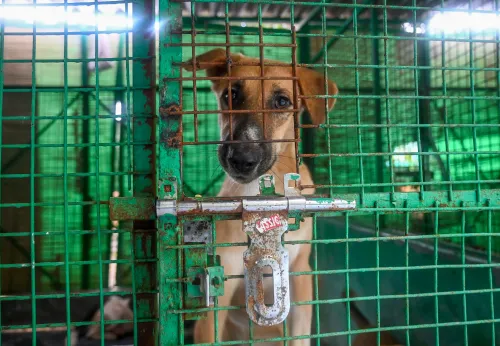
In a recent Supreme Court hearing, the justices reiterated their serious stance on the accountability of dog feeders following dog attacks. With concerns about the management of stray dogs and the implementation of the Animal Birth Control Rules, this case highlights the complex interaction between animal rights and public safety. Stay tuned as the court prepares to continue its deliberations.
Key Takeaways
The Supreme Court maintains a serious stance on the responsibility of dog feeders.
Concerns about the management of stray dogs and public safety were highlighted.
The Animal Birth Control Rules require effective implementation for better outcomes.
Transparency and accountability in animal welfare are crucial.
Future hearings will address ongoing challenges in the stray dog management system.
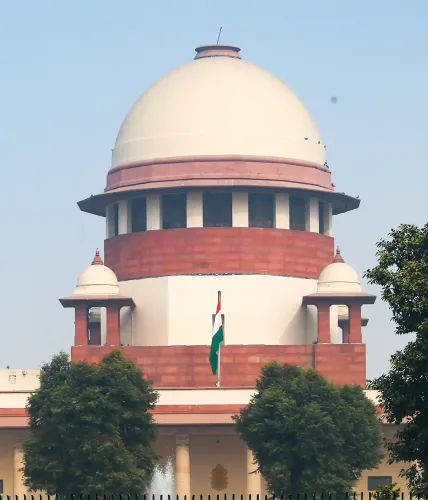
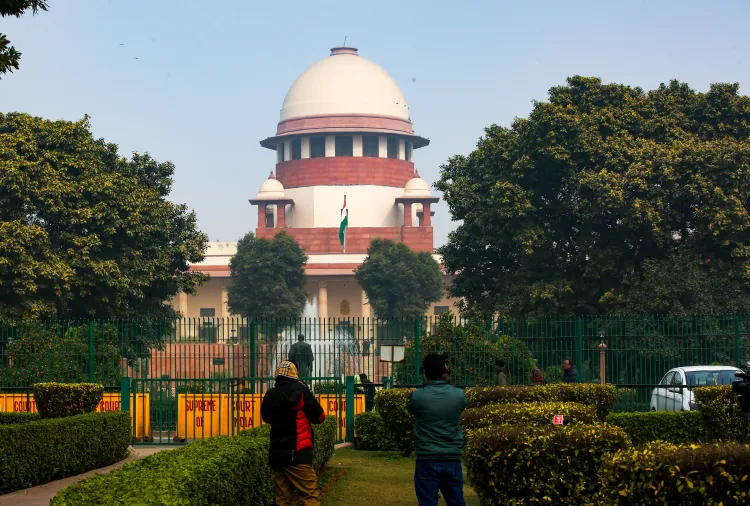
New Delhi, Jan 20 (NationPress) The Supreme Court stated unequivocally on Tuesday that it continues to uphold its previous oral statements in the suo motu stray dogs matter, including the assertion that dog feeders might bear responsibility for dog attacks. This comes in light of the rejection of claims that these comments were delivered in a sarcastic manner.
During the hearing of a suo motu case regarding the management of stray dogs in public areas, a panel comprising Justices Vikram Nath, Sandeep Mehta, and N.V. Anjaria was informed by advocate Prashant Bhushan that some of the court's earlier oral remarks had been misinterpreted, allegedly leading to violence against dog feeders.
“At times, the Court's remarks result in unfortunate outcomes. For instance, your lordships suggested that feeders should be held accountable for dog bites. Perhaps it was meant sarcastically,” Bhushan argued.
However, the Justice Nath-led panel dismissed this claim, asserting that the comments were made “very seriously.”
“No, we did not express it sarcastically. We stated it very seriously,” the Supreme Court clarified, emphasizing that the essence of the remarks remained unchanged, regardless of their delivery during oral exchanges with legal counsel.
During the proceedings, Bhushan pointed out the inconsistent enforcement of the Animal Birth Control (ABC) Rules nationwide.
He noted that while sterilizing stray dogs can diminish aggression, the system has largely failed in many cities due to a lack of transparency and accountability. “This sterilization initiative has proven effective in locations such as Jaipur and Goa, but it has faltered in many urban areas. To enhance its efficacy, transparency and accountability are essential,” Bhushan proposed, suggesting a mechanism for citizens to report unsterilized stray dogs to appropriate authorities.
In response, Justice Mehta humorously asked, “Why can't we have dogs carry their own certificates?”
This led Bhushan to reiterate his concern that even seemingly light-hearted remarks from the apex court could lead to grave consequences on the ground. The Supreme Court acknowledged its awareness of the live broadcasting of the proceedings.
Senior advocate Raju Ramachandran, representing former Union Minister and animal rights advocate Maneka Gandhi, also interjected, stating that both the Bar and the Bench must exercise caution during televised hearings.
In reply, the Justice Nath-led panel indicated that it was already practicing restraint and strongly criticized certain public comments made by the former Union Minister, noting that she had committed “contempt of court” through her statements regarding judges, although the apex court was not pursuing this matter out of “magnanimity.”
“Earlier, you were advising the Court to be careful; have you considered the nature of remarks your client has made?” the panel asked Ramachandran.
The senior counsel responded by stating that he was advocating a cause and that the roles of lawyers and judges differ significantly from those of politicians. In his statements, Ramachandran underscored the necessity for effective rabies and birth control programs, mentioning that more than 30 states have failed to implement strategies under the National Action Plan for Rabies Elimination (NAPRE).
Justice Mehta inquired about Maneka Gandhi's contributions, as a former Union Minister and animal rights activist, towards securing funding for these initiatives.
Ramachandran admitted he could not provide an oral response, adding that the specifics were outlined in the scheme. In a prior session, the Supreme Court had considered submissions highlighting conflicts between the Animal Birth Control Rules and the provisions of the Bharatiya Nyaya Sanhita (BNS).
The petitioners contended that while the ABC Rules dictate that dogs be released post-sterilization and vaccination, the BNS permits local authorities to remove those causing public disturbances. The apex court is set to continue hearing the matter on January 28.
Point of View
I believe that it's imperative to balance animal rights with public safety. The Supreme Court's remarks underscore the complexities involved in managing stray dog populations. This case calls for a collaborative approach, ensuring transparency and accountability in animal welfare programs while safeguarding the community.
NationPress
3 Oct 2026
Frequently Asked Questions
What did the Supreme Court say about dog feeders?
The Supreme Court affirmed that dog feeders may be held responsible for dog attacks, rejecting claims that previous remarks were sarcastic.
What are the Animal Birth Control (ABC) Rules?
The ABC Rules are guidelines aimed at managing stray dog populations through sterilization and vaccination.
Why is there a need for effective rabies control programs?
Effective rabies control programs are essential to ensure public health and safety, as well as to improve the welfare of stray animals.
When will the Supreme Court resume the hearing on this case?
The Supreme Court is scheduled to continue hearings on this matter on January 28.
What concerns were raised about the implementation of ABC Rules?
Concerns were raised about the inconsistent implementation of ABC Rules across different cities, leading to insufficient transparency and accountability.