Did Congress MP Jairam Ramesh Criticize Maharashtra CM Over Davos MoU?
Synopsis
Maharashtra's involvement in the World Economic Forum in Davos has become a contentious topic after Congress MP Jairam Ramesh criticized the signing of a MoU. With significant economic implications and job creation potential, the situation has ignited political discussions surrounding the state’s outreach efforts.
Key Takeaways
Maharashtra signed 19 MoUs worth Rs 14.5 lakh crore.
Expected to create over 15 lakh jobs .
Focus on infrastructure and urban development .
Political scrutiny highlighted by Jairam Ramesh .
Continued investment reflects strong investor confidence .
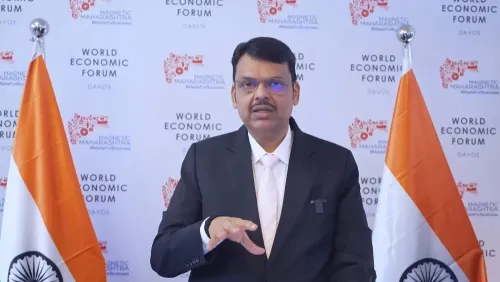
New Delhi, Jan 20 (NationPress) The picturesque streets of Davos, Switzerland, have become a stage for global leaders and industry titans to engage in discussions about prosperity, governance, and future economies. In this context, Maharashtra's involvement in the World Economic Forum has surfaced as both a significant economic achievement and a focal point for political debate.
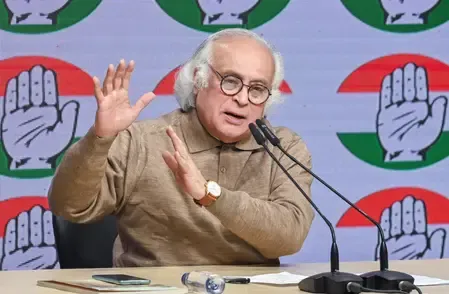
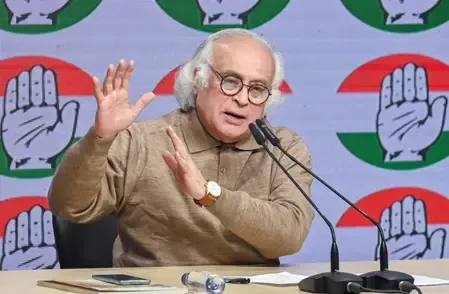
The outreach efforts by the Maharashtra government at Davos have faced political backlash, particularly from Congress General Secretary Communications In-charge Jairam Ramesh, who raised concerns regarding a Memorandum of Understanding (MoU) that was signed at the international forum.
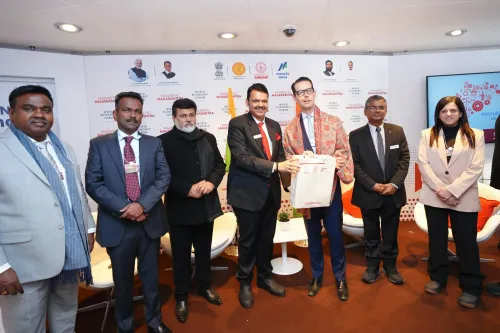
On the first day of the summit, the state secured 19 MoUs amounting to an impressive Rs 14.5 lakh crore, which are expected to create over 15 lakh jobs.
These agreements support Maharashtra's long-term vision encapsulated in its “Viksit Maharashtra 2047” initiative.
Chief Minister Devendra Fadnavis emphasized promoting the state as a center for infrastructure development and industrial growth.
However, as is often the case in Indian politics, what began as an economic narrative quickly evolved into political commentary.
On his official X account, Jairam Ramesh questioned the legitimacy of one of the MoUs signed in Davos, stating, "The Chief Minister of Maharashtra goes to Davos and signs an MoU with a company owned by a Minister in his Cabinet. Was it necessary to sign it in Switzerland, or does this event carry a deeper implication?"
This statement aimed to spark a broader discussion regarding the optics and context surrounding the agreement.
Although framed as a call for dialogue rather than a direct accusation, it certainly added a political dimension to what was otherwise an impressive economic accomplishment.
The online discourse expanded, with social media users highlighting that Congress-ruled Telangana's Chief Minister Revanth Reddy was also in Davos, raising questions about whether international forums are being selectively scrutinized for political gain.
Meanwhile, Maharashtra's investment initiative continues to thrive on the ground, with infrastructure and urban development being primary focuses of the MoUs.
Strong commitments from several major businesses reflect a robust investor confidence.
As discussions at Davos shift towards AI, quantum computing, fintech, and green energy, political debates may linger back home. Observers note that, beyond the discussions, the overarching narrative is one of Indian states competing on a global level, where development objectives and diplomacy often intertwine with political conversations.
Point of View
I observe that Maharashtra's participation in the World Economic Forum is noteworthy for its potential economic impact. However, the ensuing political discourse, especially from figures like Jairam Ramesh, highlights the complex relationship between governance and economic development in India. The narrative emphasizes the importance of transparency and scrutiny in agreements made at such high-profile events, illustrating the dynamic interplay of politics and economics in our nation.
NationPress
29 Sept 2026
Frequently Asked Questions
What is the significance of the MoUs signed by Maharashtra in Davos?
The MoUs represent a substantial investment of Rs 14.5 lakh crore, aimed at creating over 15 lakh jobs and supporting the state’s long-term development vision, 'Viksit Maharashtra 2047.'
Who criticized the MoUs signed in Davos?
Congress General Secretary Communications In-charge Jairam Ramesh raised questions about the legitimacy of one MoU, particularly its connection to a company owned by a Minister in the Maharashtra Cabinet.
What are the primary areas of focus for Maharashtra's investment initiatives?
Infrastructure and urban development are key areas emphasized during the MoUs, reflecting a strong investor confidence.
How did social media react to the MoUs?
The online discourse expanded, with users pointing out that leaders from other states, like Congress-ruled Telangana, were also present, questioning the selective scrutiny of political figures.
What are the implications for Maharashtra's future development?
The MoUs and related investments are expected to bolster Maharashtra's economic landscape, driving job creation and positioning the state as a significant player in global development discussions.