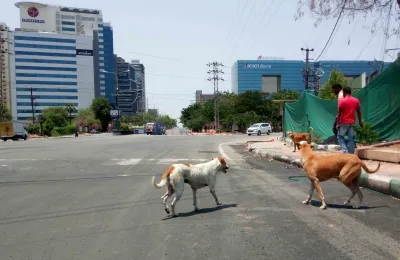
Is the Supreme Court Alarmed by the Increasing Stray Dog Crisis?

Synopsis
The Supreme Court of India is sounding the alarm on the rising threat from stray dogs, highlighting the dire consequences of inaction from local authorities. As dog bite incidents escalate, lives hang in the balance, prompting urgent calls for adherence to Animal Birth Control (ABC) protocols. Will the court's intervention spark necessary reforms?
Key Takeaways
The Supreme Court is addressing the rising threat posed by stray dogs.
Municipal authorities are criticized for their inaction on the ABC Rules.
Both public safety and animal welfare must be balanced.
Collaborative efforts are needed from state governments to manage stray populations.
Non-compliance by states could lead to strict legal consequences.
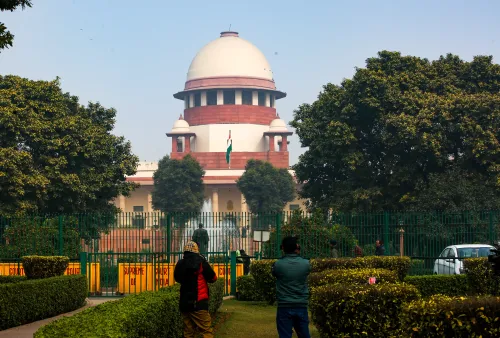
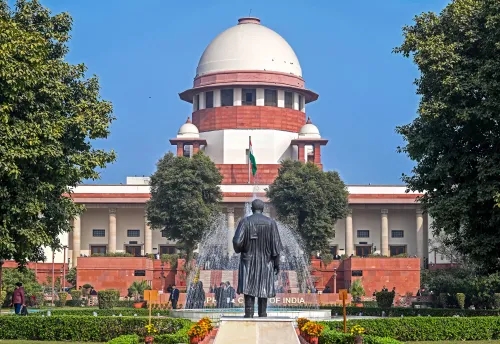
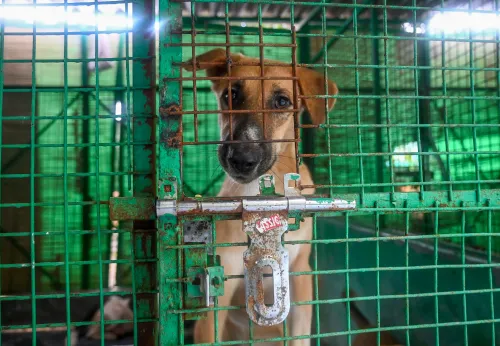
New Delhi, Jan 7 (NationPress) The Supreme Court on Wednesday raised alarms regarding the worrying increase in dog bite incidents throughout the nation and the ineffectiveness of municipal authorities in enforcing the Animal Birth Control (ABC) Rules). A panel composed of Justices Vikram Nath, Sandeep Mehta, and N.V. Anjaria, who were reviewing the suo motu case concerning stray dog management in public areas, noted that both children and adults are suffering bites and that lives are at risk due to inaction.
“We acknowledge that these events are taking place. Children and adults are being bitten, and there have been fatalities,” remarked the Justice Nath-led panel, highlighting that in the past 20 days, two judges have been involved in animal-related traffic incidents.
The court indicated that the presence of stray animals on roads poses not only a bite risk but also a significant accident hazard.
“Their presence on the roads is problematic, especially where vehicles are in motion. It's more than just biting,” the justices observed.
Amicus curiae and senior advocate Gaurav Agarwal informed the panel that following the Supreme Court's prior directives, the National Highways Authority of India (NHAI) had developed a Standard Operating Procedure (SOP) and identified approximately 1,400 km of at-risk highway segments.
However, he stressed that effective implementation would necessitate collaborative efforts from state governments, including the establishment of shelters and staffing for ABC centers.
The amicus also pointed out that several major states, including Madhya Pradesh, Uttar Pradesh, Tamil Nadu, Karnataka, and Punjab, had yet to submit compliance affidavits.
The Justice Nath-led panel issued a warning, indicating that the Supreme Court would adopt a stringent approach toward non-compliance.
“We will take a firm stance against states that have not complied,” they stated.
Senior advocate Kapil Sibal, representing animal welfare organizations, argued that population control through sterilization and vaccination is the only viable long-term solution, warning that indiscriminate removal of dogs could worsen the situation.
Referring to the globally recognized CSVR (Capture, Sterilize, Vaccinate, and Release) model, Sibal cautioned that unscientific relocations could create a territorial vacuum, leading to dog fights and a higher spread of rabies.
When Sibal suggested that people need to “coexist with animals,” the Supreme Court responded emphatically, “You are fortunate. People are getting bitten, children are being bitten,” emphasizing that places like courts, schools, and hospitals must remain free of stray animals.
The court questioned how dogs could be permitted in areas designated for accessibility by children, patients, and individuals with disabilities.
Solicitor General Tushar Mehta, representing the authorities, proposed that residents' welfare associations in gated communities should have the ability to vote on whether stray animals can be permitted within their areas, asserting that compassion for animals should not compromise the safety and rights of residents.
The Supreme Court's proceedings will continue on Thursday, as they are poised to further investigate the matter and review the compliance status of states and union territories (UTs).
Point of View
I believe it is crucial to address the rising stray dog crisis with urgency. The Supreme Court's intervention highlights a systemic failure in municipal governance and animal welfare. We must find a balanced approach that ensures public safety while addressing the ethical treatment of animals. Our focus should remain on collaborative solutions that prioritize both community welfare and animal rights.
NationPress
19 Sept 2026
Frequently Asked Questions
What are the Animal Birth Control (ABC) Rules?
The ABC Rules are guidelines established to manage the population of stray dogs through sterilization and vaccination to ensure the safety of both animals and humans.
Why is the Supreme Court involved in this issue?
The Supreme Court is concerned over the escalation of dog bite incidents and the failure of local authorities to implement effective measures for stray dog management.
What are the proposed solutions to the stray dog problem?
Proposed solutions include the implementation of the CSVR model, which focuses on capturing, sterilizing, vaccinating, and releasing stray dogs to manage their population humanely.
What is the stance of animal welfare groups?
Animal welfare groups advocate for humane population control methods such as sterilization and vaccination, warning against the indiscriminate removal of stray dogs from their territories.
What actions will the Supreme Court take if compliance is not observed?
The Supreme Court has warned that it will adopt a strict stance against states that fail to comply with the directives related to stray dog management.