Will the Supreme Court Address Stray Dog Management Tomorrow?

Synopsis
The Supreme Court is gearing up to hear a pivotal case on stray dog management, with significant implications for public safety and national reputation. Chief Secretaries from across the country are required to attend in person, reflecting the urgency and importance of compliance with animal welfare regulations.
Key Takeaways
Supreme Court to hear case on stray dog management.
Chief Secretaries of all states required to appear in person.
Only a few states have submitted compliance affidavits.
Failure to comply may lead to coercive measures.
The issue affects both public safety and national reputation.
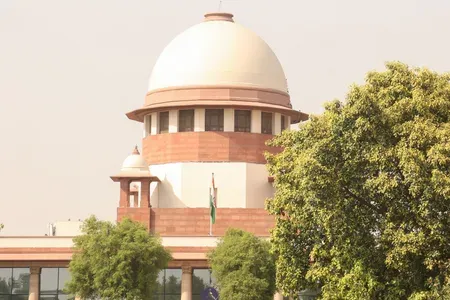
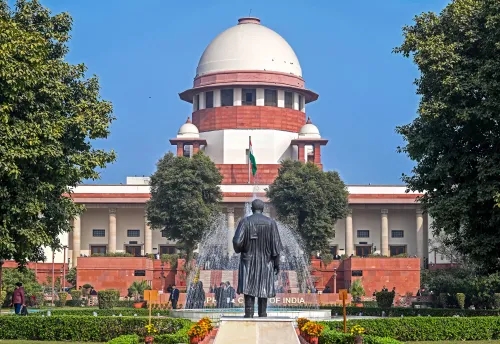
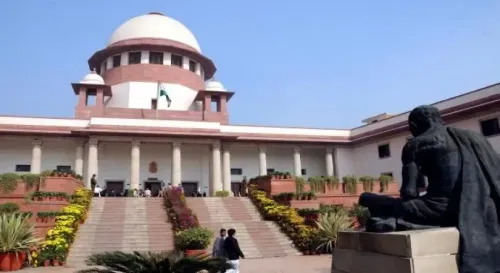
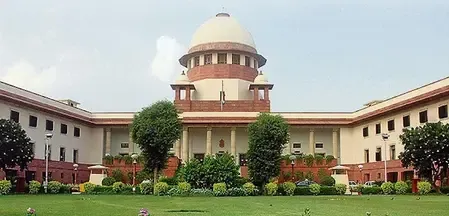
New Delhi, Nov 2 (NationPress) The Supreme Court is set to deliberate on Monday (November 3) regarding the suo moto case related to the management of stray dogs throughout the nation. Chief Secretaries from all states and Union Territories—excluding West Bengal and Telangana—have been mandated to appear in person.
A special bench, consisting of Justices Vikram Nath, Sandeep Mehta, and N.V. Anjaria, will address the case, having previously expressed dissatisfaction with the ongoing non-compliance exhibited by numerous states and UTs regarding the apex court's directives on the implementation of the Animal Birth Control (ABC) Rules, 2023.
During the last hearing on October 27, the court conveyed its strong disapproval of most state governments' failure to submit compliance affidavits, despite explicit orders issued on August 22.
The apex court pointed out that only West Bengal, Telangana, and the Municipal Corporation of Delhi (MCD) had complied by submitting their affidavits.
“Haven’t the officers been following news? Even if they are not served, the affidavit should have been filed. All Chief Secretaries must be present on November 3,” remarked the Justice Nath-led bench.
On October 31, the Supreme Court dismissed Solicitor General Tushar Mehta's appeal to permit virtual attendance for the Chief Secretaries, insisting instead that they must appear personally before the court.
The Supreme Court had previously instructed all states and UTs to file affidavits that detail the actions taken to enforce the ABC Rules, including sterilization initiatives, vaccination programs, and the creation of animal shelters and pounds.
The court also cautioned that coercive measures and costs could be imposed for persistent non-compliance. This matter, which has attracted multiple intervention requests from resident welfare associations and individuals, is under close scrutiny by the Supreme Court, which underlined that the issue pertains not just to public safety but also to the country’s international reputation.
The court noted, “Continuous incidents are occurring, and the country’s image is adversely affected in the eyes of foreign nations. We are also seeing news reports.”
Point of View
It is imperative to recognize the Supreme Court's proactive approach to a pressing issue that affects public safety and the nation's image. The court's insistence on accountability among state officials underscores the significance of adhering to animal welfare standards.
NationPress
20 Sept 2026
Frequently Asked Questions
What is the main focus of the Supreme Court's hearing?
The hearing primarily focuses on the management of stray dogs across India, ensuring compliance with the Animal Birth Control Rules.
Which states are exempt from the Chief Secretaries' attendance?
West Bengal and Telangana are the only states exempt from having their Chief Secretaries appear in person.
What actions are states required to report?
States must report on their efforts regarding sterilization drives, vaccination programs, and the establishment of animal shelters.
What consequences may states face for non-compliance?
The Supreme Court has indicated that coercive measures and costs could be imposed for continued non-compliance.
How does this issue affect India's global image?
The ongoing stray dog issue is seen as a factor that can negatively impact India’s reputation internationally.