How Will CAPF Deployment Be Determined for Bengal Polls?
Synopsis
As West Bengal gears up for its Assembly elections, the ECI reveals the critical role of state police deployment in determining the need for Central Armed Police Forces. With a potential demand for 240,000 personnel, this election could reshape the state’s polling landscape. Discover the implications of a possible one or two-phase election.
Key Takeaways
CAPF deployment depends on state police availability.
Estimated need for 240,000 CAPF personnel .
Potential for one or two-phase elections .
Addressing historical voter intimidation issues.
Contingent deployment from other states if needed.
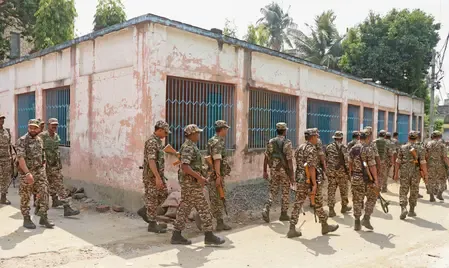
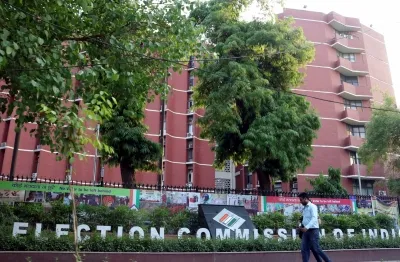
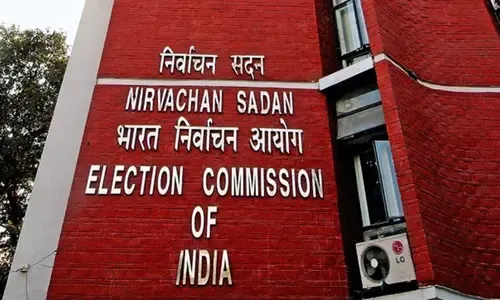
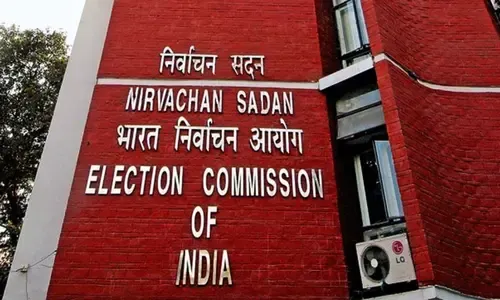
Kolkata, Jan 8 (NationPress) The Election Commission of India (ECI) has indicated that the specific allocation of Central Armed Police Forces (CAPF) for the upcoming Assembly elections in West Bengal will depend on the availability of state police officers for election security.
The extent of deployment will also rely on how state police personnel will be arranged by the Chief Electoral Officer (CEO), West Bengal, for securing the elections.
According to sources within the CEO’s office, an estimation suggests that approximately 35,000 personnel from the West Bengal Police, including those from Kolkata and various Police Commissionerates, could be assigned for election security purposes.
On this basis, the CEO’s office anticipates that around 2,000 companies of CAPF, totaling roughly 240,000 personnel, may be necessary, which is double the average requirement of 1,000 companies observed in the last four elections within the state.
This election cycle sees an increased demand for CAPF deployment due to the proposal to conduct the polls in a single phase or at most two phases, as opposed to the seven to eight phases that characterized the previous four elections.
“Should there be a shortfall in the required CAPF deployment, especially considering concurrent Assembly elections in three other states and one union territory, the gap could be filled by deploying personnel from state police forces of other states,” a source from the CEO’s office clarified.
An insider from the CEO’s office noted that the prospect of holding a single-phase or two-phase election in 2026 presents both benefits and challenges.
“The benefit is that political parties will find it difficult to mobilize their supporters from various areas, addressing the longstanding issue of outsider mobilization on the polling day or the day before, which can intimidate voters,” the insider explained.
However, this arrangement would necessitate a larger CAPF presence, particularly on the polling day itself. “If the Chief Electoral Commission of India (CECI) can ensure proper arrangements, the idea of a one- or two-phase election is entirely feasible,” the source concluded.
Point of View
It is imperative to recognize the significance of the ECI's role in ensuring fair and secure elections. The strategic deployment of CAPF, contingent on state police availability, is a prudent approach to maintaining order during the electoral process. By potentially limiting the election to one or two phases, the ECI aims to address historical issues of voter intimidation, ensuring a more equitable environment for all voters.
NationPress
26 Sept 2026
Frequently Asked Questions
What is the rationale behind CAPF deployment?
The deployment of CAPF is determined by the availability of state police personnel for election security, ensuring adequate protection for the electoral process.
How many CAPF personnel are expected for the elections?
The estimate suggests around 2,000 companies of CAPF, totaling approximately 240,000 personnel, may be required for the upcoming elections.
What changes are expected in polling phases?
This election may be conducted in one or two phases, a significant change from the seven to eight phases seen in previous elections, aimed at reducing voter intimidation.
How will potential shortages be addressed?
If there are shortages, personnel may be sourced from state police forces of other states to meet the required CAPF deployment.
What are the advantages of fewer polling phases?
Fewer polling phases could minimize the mobilization of outside political supporters, addressing concerns about voter intimidation on election day.