How does the Economic Survey reflect healthy fundamentals and robust reforms across sectors?
Synopsis
In her address on January 29, Finance Minister Nirmala Sitharaman highlighted the impressive insights from the Economic Survey 2025-26, showcasing the significant banking reforms and fiscal strategies that have bolstered India's economic resilience. Discover how these reforms have transformed banking fundamentals and infrastructure in the country.
Key Takeaways
GNPA ratio at a historic low of 2.2%.
Recovery efficiency improved with NPA rates nearly doubling.
Capital expenditure increased by 89% since FY22.
Inflation rate dropped to 1.8% among major economies.
Inland water transport cargo movement surged significantly.
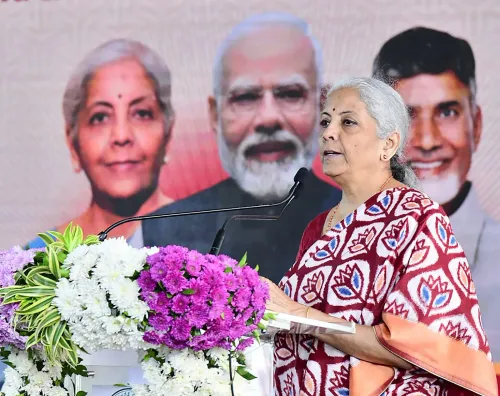
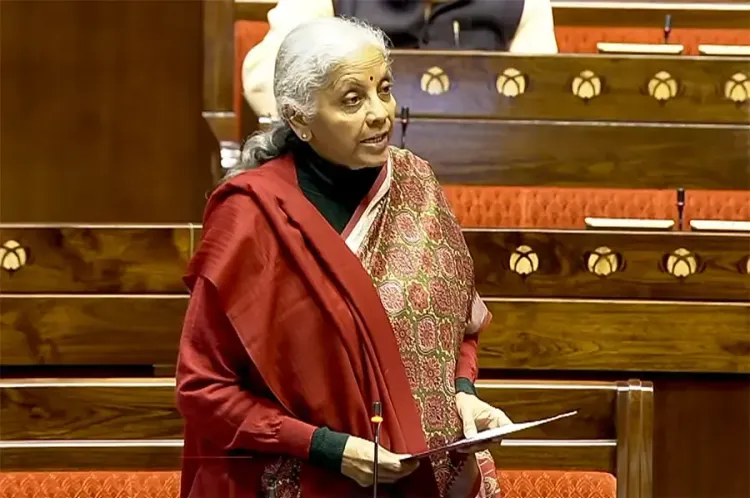
New Delhi, Jan 29 (NationPress) Finance Minister Nirmala Sitharaman stated on Thursday that the Economic Survey for 2025-26 demonstrates the strong banking fundamentals resulting from the numerous banking reforms implemented by Prime Minister Narendra Modi’s administration over the past decade.
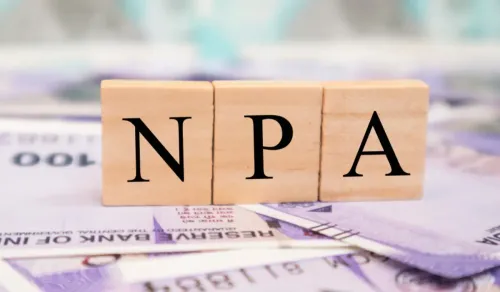
The Gross Non-Performing Asset (GNPA) ratio of scheduled commercial banks has plummeted to a historic low of 2.2 percent as of September 2025, showcasing a clear departure from previous stress cycles, the Finance Minister noted in a series of updates on X.
“Recovery efficiency has improved significantly, with NPA recovery rates nearly doubling from 13.2 percent in FY18 to 26.2 percent in FY25. Profitability has surged, with profit after tax increasing by 16.9 percent in FY25, while Return on Assets has stabilized at commendable levels,” she remarked.
Furthermore, Regional Rural Banks have also reinforced their position through consolidation and technology integration, achieving an unprecedented consolidated net profit of Rs 7,600 crore in FY24, while their GNPA ratio fell to a 13-year low of 5.4 percent in FY25, according to the Survey.
Sitharaman emphasized that the government’s strategic fiscal approach, focused on credible deficit reduction, resilient revenue generation, and a decisive shift in spending toward capital investment, has bolstered macroeconomic stability and fostered growth in the aftermath of the pandemic. This fiscal resilience underscores prudent policy decisions and careful fiscal management.
“The government remains dedicated to fiscal consolidation without hindering growth. The fiscal deficit target of 4.4 percent for the current FY 2026 is on track, a success acknowledged by three sovereign rating upgrades this financial year,” she added.
Capital expenditure has surged by almost 89 percent since FY22, reaching a budgeted Rs 11.21 lakh crore for FY26. The effective capital expenditure has risen from 2.7 percent (pre-pandemic average) to 3.9 percent of GDP (post-pandemic).
“We are constructing assets that act as the economic veins of an aspiring economy. The national highway network has expanded by close to 60 percent, increasing from 91,287 km in FY14 to 1.46 lakh km by FY26, while operational high-speed corridors have grown nearly tenfold to 5,364 km, significantly alleviating freight congestion,” noted the Finance Minister.
Additionally, rail capacity creation has accelerated, with annual commissioning more than doubling over the past decade. Port infrastructure has also expanded, with cargo handling rising from 1,052 MMT to 1,602 MMT and total capacity reaching 2,771 MMT, along with a reduction in average container vessel turnaround time from 43.44 hours to 30.88 hours.
A remarkable transformation is evident in inland water transport, where cargo movement has soared from 18 MMT in 2013-14 to 146 MMT in 2024-25, indicating a structural shift towards more affordable, eco-friendly, and efficient freight logistics.
The Survey also points out that cities thrive not just on infrastructure but also on trust, predictability, and civic cooperation.
“When regulations are clear, services dependable, and public areas respected, growth becomes easier to manage—and sustain. We are dedicated to developing cities that promote the ‘ease of living’ for our citizens,” stated the Finance Minister.
Furthermore, she indicated that the Survey 2025-26 reveals the sharpest drop in headline inflation (1.8 percent) among major economies in 2025. India recorded an inflation rate of 1.7 percent between April-December 2025, primarily driven by a drop in food prices of key commodities like vegetables and pulses.
“Timely trade policies have balanced the interests of consumers and farmers—customs duty on crude edible oils was lowered to 10 percent to ease prices, while a 30 percent import duty on yellow peas supported local producers ahead of the planting season,” FM Sitharaman remarked.
Point of View
The insights presented in the Economic Survey resonate deeply with the ongoing reforms under Modi's leadership. The commitment to fiscal prudence and robust banking reforms signals a promising trajectory for India’s economy, aligning with the nation's goals for sustainable growth and improved infrastructure.
NationPress
23 Sept 2026
Frequently Asked Questions
What is the GNPA ratio as per the Economic Survey 2025-26?
The GNPA ratio stands at a historic low of 2.2 percent as of September 2025.
How much has capital expenditure increased since FY22?
Capital expenditure has surged by nearly 89 percent, reaching a budgeted Rs 11.21 lakh crore for FY26.
What was the inflation rate recorded in India between April-December 2025?
India recorded an inflation rate of 1.7 percent during this period, primarily driven by a decrease in food prices.
What are the key focuses of the government's fiscal strategy?
The government's fiscal strategy emphasizes credible deficit reduction, resilient revenue mobilization, and a focus on capital formation.
What is the significance of the Economic Survey 2025-26?
The Economic Survey highlights the robust banking reforms and fiscal strategies that have strengthened India's macroeconomic stability and growth prospects.