ED Busts Foreign Funding Network in Chhattisgarh's Maoist Zones
Synopsis
The Enforcement Directorate has cracked open a foreign-funded money pipeline in Chhattisgarh's Maoist heartland, recovering overseas debit cards, unexplained cash, and digital devices across Bastar and Dhamtari. With Rs 6 crore in suspicious transactions under scrutiny and alleged links to tribal conversion activities, this probe could redefine how India's Red Corridor insurgency is financed.
Key Takeaways
The Enforcement Directorate (ED) conducted coordinated raids on April 25, 2025 in Dhamtari and Bastar districts of Chhattisgarh, targeting suspected foreign-funded financial networks in Maoist-affected areas.
Investigators seized foreign-origin debit cards, unexplained cash, digital devices, and sensitive documents pointing to an organised overseas money pipeline.
Financial transactions worth approximately Rs 6 crore are under scrutiny, with funds allegedly withdrawn across India using international debit cards to evade banking oversight.
Chief Minister Vishnu Deo Sai confirmed the discovery of a structured financial network in the Bastar region and stated the ED would take further action.
The funds were reportedly being used to finance activities in Chhattisgarh's tribal belt , with alleged links to religious conversion activities in the sensitive zone.
The probe is part of India's broader federal strategy to dismantle the financial infrastructure of illicit groups operating across the Red Corridor , with more arrests and asset seizures expected in coming weeks.
The Enforcement Directorate (ED) has exposed a sophisticated foreign-funded financial network operating deep within the Maoist-affected regions of Chhattisgarh, following a series of coordinated multi-state raids conducted on Saturday, April 25, 2025. The central agency's operations, focused on the Dhamtari and Bastar districts, have yielded compelling evidence of an organised money pipeline allegedly channelling overseas funds into India's most sensitive insurgency zones. The breakthrough marks one of the most significant financial intelligence operations in the Red Corridor in recent years.
Key Recoveries and Evidence Seized
During the raids, ED investigators recovered a cache of foreign-origin debit cards, a substantial quantity of unexplained cash, multiple digital devices, and a set of sensitive documents that investigators believe are central to mapping the network's operations.
The modus operandi, as pieced together by investigators, was methodical: large sums of money were systematically withdrawn across various locations in India using internationally issued debit cards, effectively bypassing traditional banking surveillance mechanisms. The funds were then allegedly funnelled into targeted pockets of Chhattisgarh to finance ground-level activities away from regulatory scrutiny.
Sources indicate that transactions worth approximately Rs 6 crore are under the scanner, with the ED examining bank statements and digital trails to trace the precise origin of these foreign deposits.
Chief Minister Vishnu Deo Sai Responds
Chief Minister Vishnu Deo Sai, when questioned by the media about whether the ED had seized financial transactions worth Rs 6 crore, confirmed that the central agency's probe in the Bastar region had successfully uncovered a structured financial network. He stated that the ED would continue to take further action as the investigation progresses.
The state leadership's response signals that the Chhattisgarh government is closely monitoring the federal probe and is prepared to extend administrative cooperation to investigators working in these sensitive zones.
Alleged Link to Religious Conversion Activities
A particularly sensitive dimension of the investigation is the reported allegation that a significant portion of these funds was being utilised to facilitate religious conversion activities in the tribal belt of Bastar. This claim, if substantiated, adds a deeply complex socio-political layer to what is already a volatile security environment.
The Bastar tribal region has historically been a flashpoint where insurgency, development deficits, and identity politics intersect. Authorities are now probing whether these financial trails connect to broader external networks with an intent to destabilise the social and political fabric of the region.
Broader Security Implications for the Red Corridor
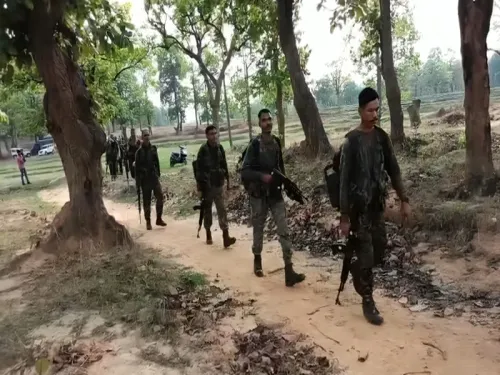
This operation is part of a sustained, coordinated federal strategy to sever the financial lifelines of illicit groups active across India's Red Corridor — a stretch of districts spanning Chhattisgarh, Jharkhand, Odisha, and parts of other states where Left Wing Extremism (LWE) has historically thrived.
Notably, over the past two years, security forces have intensified both kinetic and non-kinetic operations against Maoist networks, with the government's SAMADHAN doctrine specifically targeting funding channels, recruitment pipelines, and ideological support structures. The ED's latest crackdown aligns directly with this multi-agency approach.
Critics and security analysts have long argued that the financial architecture sustaining insurgencies in these regions is far more globalised than conventional narratives suggest, with funds allegedly routed through NGOs, shell accounts, and international payment networks to avoid detection.
What Happens Next
The ED is currently conducting a forensic analysis of the seized digital devices and bank records to identify the individuals and organisations abroad who are allegedly responsible for funding these operations. Investigators are expected to issue summons to key suspects and may seek Mutual Legal Assistance Treaties (MLATs) with foreign jurisdictions to trace the money trail internationally.
As the probe widens, officials have indicated that more arrests and asset attachments are likely in the coming weeks. The investigation could potentially implicate both domestic intermediaries and foreign entities, raising the possibility of diplomatic engagement if state-linked actors are found to be involved.
With assembly and local body elections periodically reshaping political dynamics in Chhattisgarh, the timing and outcome of this investigation will be closely watched by both security establishments and political observers across the country.
Point of View
Not just police action. What the mainstream narrative misses is the convergence of three fault lines here: Left Wing Extremism, tribal identity politics, and alleged foreign interference — a combination that, if proven, would represent one of the most complex internal security challenges India has faced in a decade. The government must now demonstrate that this probe leads to prosecutions, not just press conferences.
NationPress
19 Sept 2026
Frequently Asked Questions
What did the ED find during its raids in Chhattisgarh's Maoist areas?
The ED recovered foreign-origin debit cards, unexplained cash, digital devices, and sensitive documents during raids in the Dhamtari and Bastar districts of Chhattisgarh. These materials are central to the agency's investigation into a suspected foreign-funded financial network operating in Maoist-affected zones.
How much money is under scrutiny in the Chhattisgarh ED probe?
Financial transactions worth approximately Rs 6 crore are currently under the ED's scanner in the Chhattisgarh investigation. Chief Minister Vishnu Deo Sai confirmed this figure when speaking to the media on April 25, 2025.
What is the alleged purpose of the foreign funds found in Bastar?
According to reports, the foreign funds were allegedly being used to finance activities in Chhattisgarh's sensitive tribal belt, including alleged religious conversion activities. Investigators are also probing whether the money is linked to broader networks aimed at destabilising the region's social and political fabric.
How were foreign funds being moved into Chhattisgarh's Maoist regions?
Investigators believe large sums were systematically withdrawn across India using internationally issued debit cards, bypassing conventional banking oversight. The cash was then allegedly routed into specific areas of Chhattisgarh to fund local operations under the radar.
What action is the ED likely to take next in the Chhattisgarh case?
The ED is conducting forensic analysis of seized digital devices and bank records to identify domestic and foreign individuals behind the network. Officials expect further arrests, asset attachments, and possible international legal cooperation through Mutual Legal Assistance Treaties (MLATs) to trace the overseas money trail.