India to grow above 7% despite West Asia tensions, says CEA Nageswaran

Synopsis
India's top economic adviser says growth will hold above 7% even as West Asia tensions stoke crude oil risks — but the current account deficit could nearly double to 2% of GDP in FY27. With FDI momentum intact and 86% of deregulation targets met, the macro picture is resilient but not without fault lines.
Key Takeaways
Anantha Nageswaran projected India's growth will remain above 7% in the near term despite West Asia geopolitical tensions.
The current account deficit (CAD) could widen to around 2% of GDP in FY27 , up from below 1% in FY26 .
Gross FDI inflows are expected at $90–95 billion in FY26 , with momentum projected to hold into the following year.
Corporate profitability has improved significantly, but private investment has not kept pace — a key divergence flagged by the CEA.
Nearly 86% of identified deregulation targets across 23 areas have already been achieved by states.
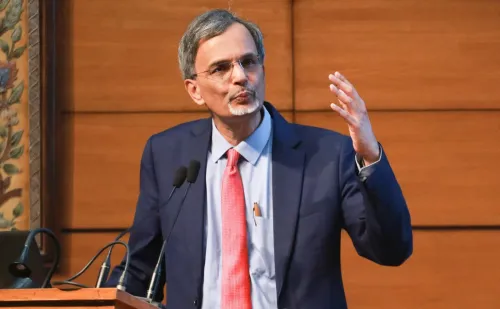
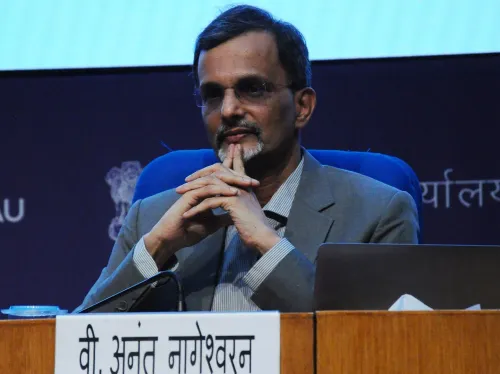
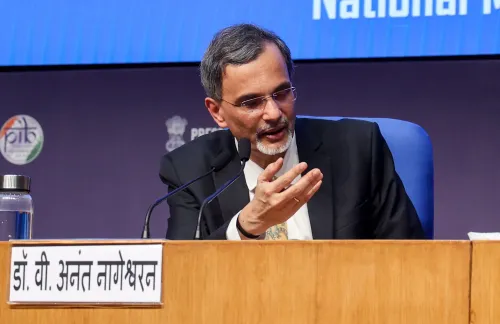
India's economy is likely to sustain growth above 7% in the near term even as geopolitical tensions in West Asia pose risks to the macroeconomic outlook, Chief Economic Adviser (CEA) V. Anantha Nageswaran said on Saturday, 2 May. Speaking in New Delhi, Nageswaran noted that the timing of the conflict coincides with expectations of another year of strong growth, and that the Union government is closely monitoring and managing crude oil supply dynamics.
Growth Outlook and Crude Oil Risks
CEA Nageswaran maintained that India's dependence on imported crude oil should not be viewed as a vulnerability in isolation, as alternative energy options also carry their own cost-related challenges. He acknowledged, however, that elevated import costs stemming from the West Asia conflict could weigh on the external sector. This comes amid a broader global environment of heightened geopolitical uncertainty that has already rattled energy markets.
Current Account Deficit Could Widen
Nageswaran flagged potential pressures on India's external accounts, cautioning that elevated import costs combined with a moderation in remittance inflows could push the current account deficit (CAD) higher. He indicated the CAD could widen to around 2% of GDP in FY27, up from below 1% of GDP in FY26 — a notable shift that could attract scrutiny from credit rating agencies and foreign portfolio investors alike.
FDI Inflows and Investor Confidence
On capital flows, the CEA said India continues to remain an attractive destination for investors despite global uncertainties. Gross foreign direct investment (FDI) inflows are expected to be in the range of $90–95 billion in FY26, with momentum likely to hold in the following year as India strengthens its manufacturing base. Notably, this projection comes at a time when several emerging markets are experiencing capital outflows amid risk-off sentiment globally.
Inflation, Corporate Profits, and Private Investment
Addressing inflation, Nageswaran pointed to a gradual decline in the share of food in the consumer price index (CPI) basket, even as short-term risks from weather conditions and input cost pass-through remain. He also highlighted a significant divergence: while corporate profitability has improved markedly in recent years, private investment has not kept pace, signalling a gap between earnings growth and capital formation that policymakers are watching closely.
Regulatory Reforms Gaining Ground
The CEA highlighted meaningful progress on easing regulatory frameworks, noting that states have made substantial headway in deregulation efforts across key sectors. According to Nageswaran, nearly 86% of identified deregulation targets across 23 areas have already been achieved. Analysts say sustained deregulation at the state level is critical to unlocking private capital and closing the investment gap. With global headwinds intensifying, the pace of domestic structural reforms will be closely watched in the months ahead.
Point of View
And framing it as 'not a vulnerability in isolation' risks underplaying the fiscal pass-through risk at a time when the rupee is already under pressure. More critically, the divergence between corporate profitability and private investment is the structural story that deserves far more attention than it is getting: profits are up, but capex is not following. Until that gap closes, India's growth story remains consumption- and government-spending-led — not the broad-based investment cycle that sustainable 7%-plus growth requires.
NationPress
18 Sept 2026
Frequently Asked Questions
What did CEA Nageswaran say about India's GDP growth outlook?
CEA V. Anantha Nageswaran said on 2 May that India's economy is likely to sustain growth above 7% in the near term, even as geopolitical tensions in West Asia pose risks to the macroeconomic outlook. He added that the Union government is closely monitoring crude oil supply dynamics.
How will the West Asia conflict affect India's current account deficit?
According to Nageswaran, elevated import costs and a moderation in remittance inflows could push India's current account deficit (CAD) to around 2% of GDP in FY27, up from below 1% in FY26. This widening reflects the indirect impact of the West Asia conflict on India's external accounts.
What is the FDI inflow forecast for India in FY26?
Gross FDI inflows are expected to be in the range of $90–95 billion in FY26, according to CEA Nageswaran. He said momentum is likely to hold into the following year as India strengthens its manufacturing base.
Why is private investment lagging despite strong corporate profits in India?
CEA Nageswaran flagged a divergence between corporate profitability, which has improved significantly in recent years, and private investment, which has not kept pace. He did not specify a single cause, but the gap signals that higher earnings are not yet translating into capital formation at the expected scale.
How far has India progressed on regulatory deregulation?
According to Nageswaran, nearly 86% of identified deregulation targets across 23 areas have already been achieved by states. He described this as substantial headway and said states are actively pushing deregulation across key sectors.