Manoj Muntashir slams Nehru, Congress over Vande Mataram stanzas at Ujjain Youth Dharma Sansad
Synopsis
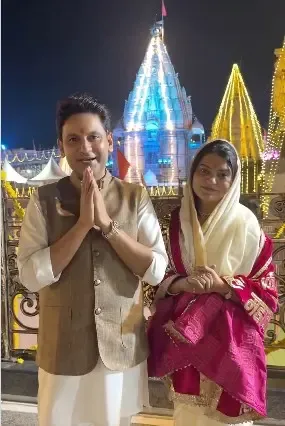
Lyricist Manoj Muntashir used the Youth Dharma Sansad stage in Ujjain to challenge a convention dating back to 1936 — asking who gave Nehru or Congress the right to 'censor' Vande Mataram by dropping four of its six stanzas. The remarks, delivered before 1,700 students, also invoked Rahul Gandhi's reported interruption of the song on Independence Day.
Key Takeaways
Manoj Muntashir addressed the Youth Dharma Sansad in Ujjain on 18 September , speaking to around 1,700 students.
He criticised the practice of singing only two stanzas of Vande Mataram , attributing the convention to a reported 1936 decision by Jawaharlal Nehru .
Muntashir claimed Rahul Gandhi stopped a performance of the song on 15 August citing this decades-old convention.
He noted that Vande Mataram was first sung at a Congress session in 1896 and performed in full until 1937 .
He urged youth to prioritise a unified Indian identity with the phrase 'Country first, direction later.' The three-day event runs from 17 to 19 September at Geeta Bhawan, Ujjain .
Lyricist Manoj Muntashir on Friday, 18 September took sharp aim at former Prime Minister Jawaharlal Nehru and the Indian National Congress over the long-standing practice of singing only two stanzas of Vande Mataram, addressing roughly 1,700 young students at the Youth Dharma Sansad in Ujjain. The three-day event, running from 17 to 19 September, saw its second-day lecture session held at Geeta Bhawan.
The Vande Mataram Controversy
Speaking for approximately 20 minutes, Muntashir argued that Vande Mataram was first sung at a Congress session in 1896 and was performed in full until 1937, when objections reportedly led to the dropping of four of its six stanzas. He claimed that Nehru had reportedly decided in 1936 that only two stanzas should be sung going forward.
Muntashir said he had witnessed Leader of the Opposition Rahul Gandhi stop a performance of the song on 15 August because of this decades-old convention. 'Nehru or anyone else — who are they to censor our culture?' the lyricist reportedly asked the gathering, questioning the logic of advocating 'Hindu-Muslim bhai-bhai' slogans while simultaneously restricting the national song.
Appeal to Youth: Dharma, Culture and Family
Beyond the political remarks, Muntashir's address covered dharma, education, family values, and the teachings of Swami Vivekananda. Referencing the Ramayana and the Mahabharata, he urged young attendees to remain rooted in their cultural heritage.
He expressed concern over the erosion of family bonds, observing that siblings in urban India now sometimes meet only once in two or three years — and occasionally only in court. He appealed to the youth to actively safeguard family and culture, warning that ancient civilisations including the Roman, Egyptian, Mesopotamian, Greek, and Persian had perished precisely because they failed to protect their culture, literature, and history.
National Identity Over Regional Divisions
Muntashir advocated strongly for a unified national identity, urging attendees to introduce themselves as Indians first before identifying their regional origin — encapsulating this in the phrase 'Country first, direction later.' He said that whether one is from the North, South, East, or West of India should be secondary to the shared national identity.
He also invoked the Covid-19 pandemic period, noting that India's vaccine carried the Sanskrit message 'Sarve Santu Niramaya' (May all beings be free from disease) as an illustration of the civilisational depth of Indian identity.
Confidence in Gen Z
Closing his address on an optimistic note, Muntashir expressed confidence that India's future remains secure, saying that as long as Gen Z walks the path of dharma, no harm can come to the nation. The Youth Dharma Sansad concludes on 19 September, with sessions continuing to draw students from across the country.
Point of View
Minority sensitivities, and the Nehru legacy. What is notable here is the venue — a 1,700-strong youth gathering — and the specific targeting of Rahul Gandhi's reported conduct on Independence Day, which gives the critique an immediate electoral edge. Mainstream coverage tends to treat such speeches as rhetoric; the more substantive question — whether the 1937 Working Committee resolution was a pragmatic accommodation or a constitutional overreach — rarely gets examined seriously. That historical gap is what speakers like Muntashir exploit most effectively.
NationPress
18 Sept 2026
Frequently Asked Questions
What did Manoj Muntashir say about Vande Mataram at the Youth Dharma Sansad?
Manoj Muntashir criticised the practice of singing only two stanzas of Vande Mataram, attributing it to a reported 1936 decision by Jawaharlal Nehru. He questioned the right of Nehru or Congress to 'censor' the national song, and claimed Rahul Gandhi had stopped a performance of it on 15 August for the same reason.
When and where was the Youth Dharma Sansad held?
The Youth Dharma Sansad is a three-day event in Ujjain, running from 17 to 19 September. Manoj Muntashir spoke on the second day, 18 September, at a lecture session held at Geeta Bhawan.
What is the controversy around the two stanzas of Vande Mataram?
Vande Mataram was reportedly sung in full — all six stanzas — at a Congress session in 1896 and continued that way until 1937, when objections led to four stanzas being dropped. Critics like Muntashir argue this amounts to cultural censorship, while the convention has been defended historically as a compromise to address sensitivities around certain stanzas.
Who attended the Youth Dharma Sansad in Ujjain?
Around 1,700 young students from across India attended the event. Manoj Muntashir spoke on the second day, covering topics including dharma, education, family values, and the teachings of Swami Vivekananda.
What broader message did Muntashir deliver at the event?
Beyond the political critique, Muntashir urged youth to stay connected with their cultural roots, protect family bonds, and adopt a unified Indian identity — summed up in his phrase 'Country first, direction later.' He also warned that ancient civilisations perished when they failed to safeguard their culture and history.