Did JP Nadda Highlight Nehru's Concerns on Vande Mataram in Rajya Sabha?
Synopsis
In a compelling session of the Rajya Sabha, J.P. Nadda revisited the pivotal discussions from the Constituent Assembly, revealing deep ideological divisions concerning India's national identity. His remarks about Nehru's reservations on Vande Mataram ignited passionate debates, raising questions about cultural legacy versus political narratives.
Key Takeaways
Nadda revisited the debates of the Constituent Assembly on the national anthem.
A significant distinction was made between Jana Gana Mana and Vande Mataram .
Nehru's reservations on Vande Mataram were highlighted as a critical factor in the Assembly's decisions.
The discussion revealed deep ideological divides within Indian politics.
The importance of Bharat Mata as a cultural symbol was emphasized.
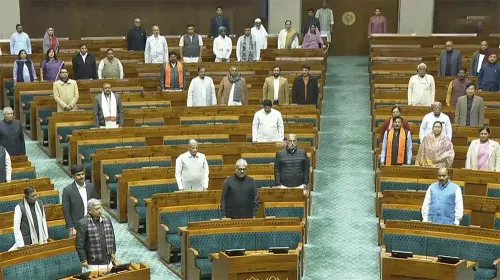
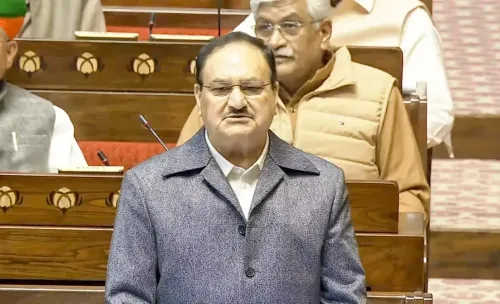
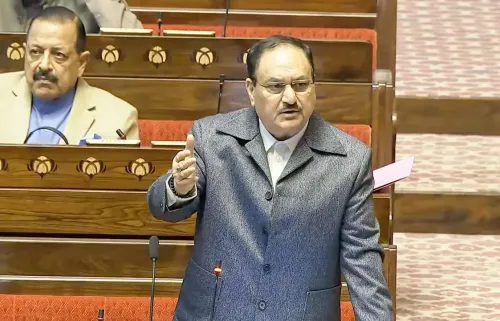
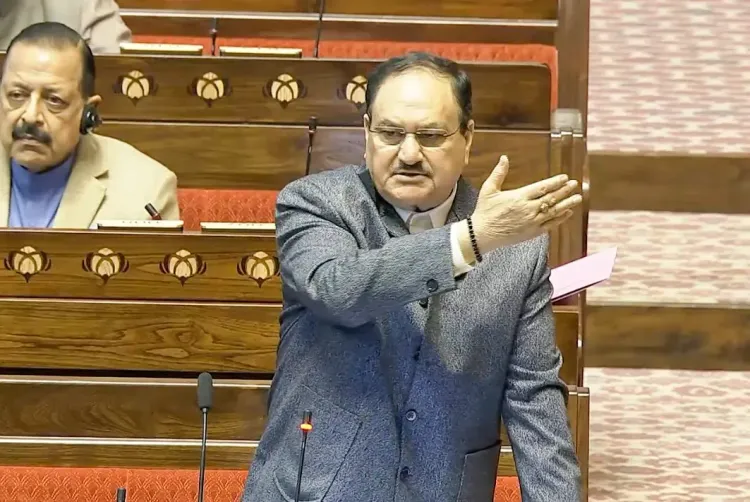
New Delhi, Dec 11 (NationPress) In a significant address in the Rajya Sabha, Leader of the House J.P. Nadda revisited the discussions that took place during the Constituent Assembly regarding India’s national anthem, emphasizing the contrasting treatment given to Jana Gana Mana compared to Vande Mataram.
During the ongoing debate surrounding Vande Mataram, Nadda pointed out that the Assembly had dedicated time to finalize Jana Gana Mana as the national anthem, while similar requests for Vande Mataram were dismissed.
Nadda contended that this decision mirrored the hesitations of Jawaharlal Nehru, the nation’s first Prime Minister, who, as per historical documents, did not view Vande Mataram as an appropriate candidate for the anthem.
Quoting Nehru’s correspondence, Nadda expressed that the esteemed leader believed the song was unsuitable for orchestral composition, especially in international settings where India’s anthem might be played.
In his remarks, Nadda highlighted Nehru’s assertion that while Vande Mataram was emotionally compelling, its linguistic and stylistic complexities posed challenges for formal presentations abroad.
“Nehru himself articulated that Vande Mataram was inappropriate for orchestral arrangement, particularly in foreign nations,” Nadda stated, pointing out that this consideration was pivotal in the Assembly’s decision-making.
The debate intensified when Leader of Opposition Mallikarjun Kharge questioned whether the discussion focused genuinely on Vande Mataram or was merely an attack on Nehru.
In response, Nadda accused the Congress party of having historically compromised the cultural, ethos, and thought processes of Bharat. He emphasized that the invocation of Maa Bharti or Bharat Mata transcends political affiliations, rooted instead in a rich civilizational history stretching back thousands of years.
Nadda underscored that this phrase encapsulates the collective essence of Indian culture, crossing political divides and reflecting the profound cultural heritage of the nation.
Through his comments, he aimed to present Bharat Mata as an everlasting emblem of identity and reverence, juxtaposing it against what he articulated as Congress' reluctance to accept cultural traditions. This exchange highlighted the ideological rift surrounding national symbols and their interpretations in contemporary politics.
By invoking Nehru’s statements, Nadda aimed to spotlight what he called a conscious sidelining of Vande Mataram, despite its inspirational role during the independence movement.
This provoked lively discussions within the House, with members from the Treasury benches advocating for greater recognition of the song, while opposition members accused the government of selectively interpreting history for political gain.
Point of View
I see this debate as a pivotal moment, reflecting the ongoing ideological struggles within Indian politics. It underscores the need for a balanced appreciation of our cultural symbols, urging a dialogue that transcends partisan divides and embraces our rich heritage.
NationPress
20 Sept 2026
Frequently Asked Questions
What did J.P. Nadda say about Nehru's view on Vande Mataram?
Nadda emphasized that Nehru expressed reservations about Vande Mataram being suitable for orchestral arrangement, which influenced the Constituent Assembly's decision.
Why was Vande Mataram not made the national anthem?
The Constituent Assembly chose Jana Gana Mana after discussions, during which requests to extend similar consideration to Vande Mataram were not accepted.
What was the reaction in the Rajya Sabha regarding Nadda's statements?
The debate sparked animated exchanges, with members from the Treasury benches advocating for Vande Mataram's recognition, while opposition members accused the government of selectively quoting history.
How does Nadda frame the concept of Bharat Mata?
Nadda presents Bharat Mata as a timeless symbol of Indian cultural identity, emphasizing its significance beyond political affiliations.
What historical context did Nadda provide in his speech?
He referenced archival records that highlight Nehru's concerns regarding the orchestral suitability of Vande Mataram, illustrating the ideological divide on national symbols.