India could hit 7%+ growth by FY28 if global risks ease: CEA Nageswaran
Synopsis
Hours after the RBI trimmed India's FY27 growth forecast to 6.6%, CEA Nageswaran pushed back with a medium-term case: macro stability and supply-side discipline could put India back above 7% by FY28. The catch — it all hinges on geopolitical disruptions that began in late February reversing course, a variable entirely outside New Delhi's control.
Key Takeaways
Anantha Nageswaran said India could return to over 7 per cent GDP growth by FY28 if global conditions stabilise.
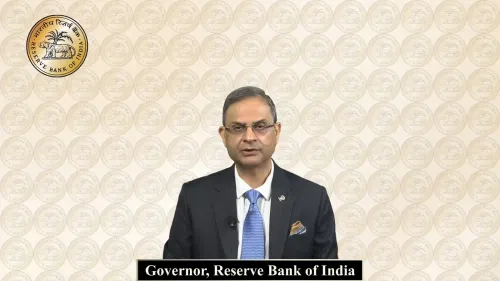
The RBI on 5 June revised its FY27 growth forecast down to 6.6 per cent from 6.9 per cent projected in April.
The RBI cited rising energy and commodity prices and West Asia supply disruptions as key risks.
Nageswaran said the government is not disputing the RBI's revised estimate, acknowledging both upside and downside risks.
The FY28 recovery outlook is explicitly conditional on a reversal of geopolitical and economic disruptions that emerged since late February .
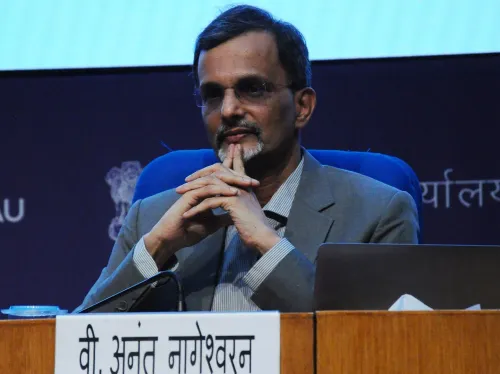
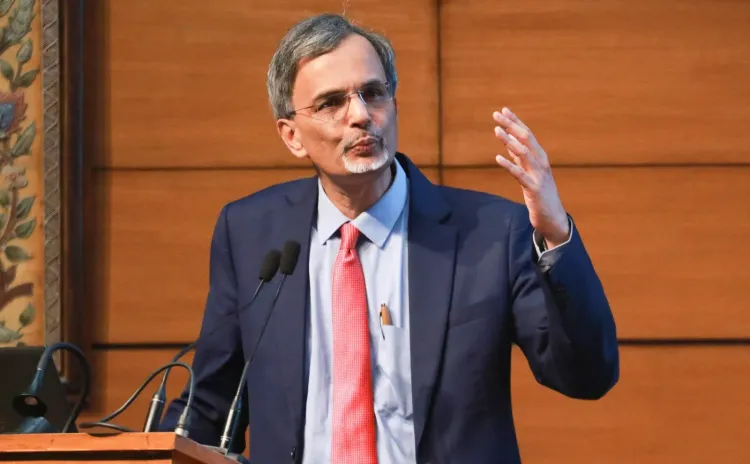
Chief Economic Adviser V. Anantha Nageswaran said on Friday, 5 June that India has a credible path back to over 7 per cent GDP growth by FY28, provided macroeconomic stability is maintained and supply-side reforms stay on track. The statement came hours after the Reserve Bank of India (RBI) trimmed its FY27 growth forecast to 6.6 per cent from the 6.9 per cent it had projected in April.
RBI's Revised Forecast and the Risks Behind It
The RBI cited rising energy and commodity prices alongside supply disruptions tied to the ongoing conflict in West Asia as the primary factors behind the downward revision. The central bank's move reflects a broader recalibration of near-term expectations as global headwinds intensify.
Addressing reporters in New Delhi, Nageswaran said the government has no intention of challenging the RBI's revised numbers, acknowledging that the current environment carries both upside and downside possibilities. "We have no reason to second-guess them at this point, because there are both possibilities on the upside and on the downside with respect to the numbers that they have presented," he said.
The Case for a FY28 Recovery
Nageswaran argued that even if growth dips below the 7 per cent threshold in the near term — as the RBI's forecast implies — the structural foundations remain intact. "So, even if the growth were to slip below 7 per cent as the RBI forecast suggests... macro stability measures and supply assurances will bring us back to a 7 per cent plus growth track in FY28 or as soon as external conditions improve," he said.
He attributed the current softness largely to geopolitical and economic disruptions that have escalated since late February, suggesting these are cyclical rather than structural drags. The recovery scenario, he stressed, is conditional on those pressures reversing.
Conditionality and the Limits of the Outlook
Nageswaran was careful to frame the FY28 projection as conditional rather than guaranteed. "Now, if these conditions continue, then we will revisit the estimate for the next financial year," he added, signalling that the government is tracking global developments closely before committing to firmer numbers.
This comes amid a broader pattern of downward revisions across multilateral agencies, several of which have trimmed India's near-term growth outlook in recent months on account of trade uncertainty and commodity-price volatility. Notably, the gap between the government's medium-term optimism and the RBI's cautious near-term stance reflects the genuine difficulty of forecasting in an environment shaped by geopolitical variables outside India's control.
What to Watch Next
The trajectory of West Asia tensions, global energy prices, and the pace of domestic supply-side reforms will be the key variables determining whether India can realistically reclaim the 7 per cent-plus growth band by FY28. Analysts and policymakers alike will be watching the next round of RBI and government projections — expected later this year — for firmer signals on the recovery timeline.
Point of View
Not contradiction. But Nageswaran's FY28 target rests almost entirely on external variables reversing, which is a weak foundation for policy planning. India has repeatedly projected a return to high-growth trajectories contingent on global calm, only for fresh disruptions to defer that timeline. The more pressing question is whether domestic supply-side reforms can generate enough momentum to partially offset external drag — and on that, the CEA offered reassurance but little specificity.
NationPress
20 Sept 2026
Frequently Asked Questions
What did CEA Nageswaran say about India's GDP growth outlook?
Chief Economic Adviser V. Anantha Nageswaran said on 5 June that India could return to over 7 per cent GDP growth by FY28, provided macroeconomic stability is maintained and supply-side reforms continue. He described the current slowdown as a temporary disruption driven by global factors.
Why did the RBI revise India's FY27 growth forecast downward?
The RBI lowered its FY27 GDP growth forecast to 6.6 per cent from 6.9 per cent, citing rising energy and commodity prices and supply disruptions linked to the conflict in West Asia. These global headwinds have clouded India's near-term economic outlook.
Is the government disputing the RBI's revised growth estimate?
No. CEA Nageswaran explicitly said the government has no reason to second-guess the RBI's revised forecast, acknowledging that the current environment carries both upside and downside risks to the numbers presented by the central bank.
What conditions must be met for India to hit 7%+ growth by FY28?
Nageswaran said the recovery depends on a reversal of geopolitical and economic disruptions that have built up since late February, alongside continued macroeconomic stability and supply-side reforms at home. He cautioned that if global conditions do not improve, growth estimates for the next financial year would be revisited.
How does this compare to India's recent growth trajectory?
India has consistently targeted 7 per cent-plus growth as a medium-term benchmark, but near-term forecasts have been trimmed by both the RBI and multilateral agencies in recent months due to global trade uncertainty and commodity-price volatility. The FY27 forecast of 6.6 per cent marks a step down from earlier projections.