Kerala Elections: Eid Celebration Fuels Political Outreach as Candidates Gather at Eidgahs
Synopsis
As Eid al-Fitr coincides with upcoming elections, candidates in Kerala are strategically leveraging the festive atmosphere at Eidgahs to connect with voters. This unique mix of faith and politics highlights the urgency as the April 9 Assembly polls approach.
Key Takeaways
Eid celebrations are being leveraged for political outreach in Kerala.
Candidates from multiple parties are engaging with voters at Eidgahs.
Kerala's Muslim community is a key electoral bloc.
The approach highlights the blend of faith and politics in election strategies.
As campaigns enter their final phase, visibility among voters is critical.
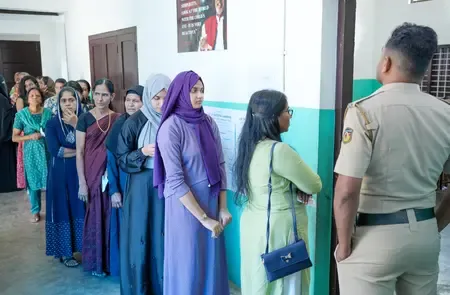
Thiruvananthapuram, March 20 (NationPress) This year's Eid al-Fitr, coinciding with a Friday, has infused Kerala's electoral campaign with a vibrant yet pressing political atmosphere. Candidates from various parties gathered at Eidgahs in a frantic outreach endeavor as the April 9 Assembly elections approach.
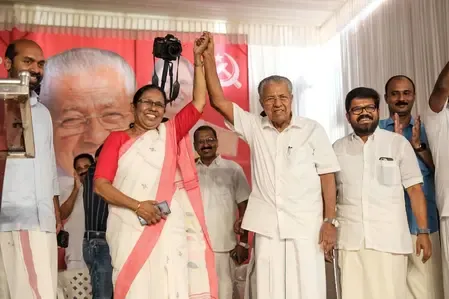
With only a few days remaining for the campaigning period, representatives from the CPI(M)-led Left Democratic Front, the Congress-led United Democratic Front, and the BJP-led National Democratic Alliance flocked to prayer sites throughout the state early in the day.
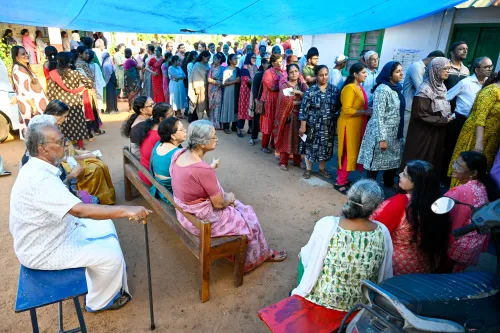
The events, characterized by large crowds of worshippers, quickly evolved into informal political interactions.
The prominent leader of the Indian Union Muslim League, Sayyid Sadiq Ali Shihab Thangal, was observed rushing to the prayer site alongside veteran candidate P.K. Kunjalikutty from the Malappuram constituency, even as numerous journalists awaited interviews on this festive occasion.
“We face significant challenges, but as the campaign intensifies in the coming days, our enthusiasm will grow, as the outcome appears promising,” remarked Thangal.
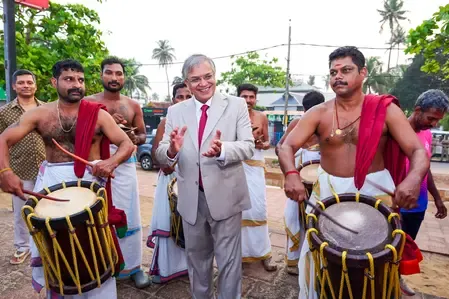
Candidates arrived well in advance of the prayers' conclusion, patiently waiting at the peripheries to greet worshippers as they exited the Eidgahs. Handshakes, brief dialogues, and urgent requests for support characterized these interactions, as candidates aimed to enhance their visibility among a crucial voter demographic in a limited timeframe.
Kerala's Muslim community, which comprises approximately 24% of the state's population of 3.30 crore, is a vital electoral faction, particularly in several constituencies throughout Malabar and parts of central Kerala.
The festive assembly provided a unique chance to engage with a large audience of voters in a single location, a feat that traditional campaigning often struggles to achieve so close to election day.
In various areas, Muslim candidates from different political affiliations participated in Eid prayers alongside the faithful, intertwining religious observance with subtle political messages.
For many, this gathering also served to strengthen community bonds and highlight their cultural connections.
While the sanctity of the occasion remained respected, the palpable sense of electoral urgency was unmistakable.
As door-to-door canvassing and public meetings enter their final phase, Eid ul-Fitr has transformed into a dual celebration and strategic pause where faith, festivity, and politics converge in the concluding stretch of a high-stakes electoral race.
Point of View
The convergence of electoral campaigns and religious celebrations in Kerala highlights a significant strategy among candidates to engage with the influential Muslim voter base. This approach underscores the importance of community connections in political outreach, especially as the election date draws near.
NationPress
21 Sept 2026
Frequently Asked Questions
Why are candidates gathering at Eidgahs in Kerala?
Candidates are utilizing Eidgah gatherings to connect with voters just days before the April 9 Assembly elections, blending religious observance with political outreach.
What percentage of Kerala's population is Muslim?
Approximately 24% of Kerala's population, which totals around 3.30 crore, identifies as Muslim.
How does Eid al-Fitr influence electoral campaigns in Kerala?
Eid al-Fitr provides a unique opportunity for candidates to engage with large groups of voters in a festive setting, making it a strategic moment for political outreach.
What political parties are participating in this outreach?
Candidates from the CPI(M)-led Left Democratic Front, the Congress-led United Democratic Front, and the BJP-led National Democratic Alliance are all actively participating.
What is the significance of the upcoming Assembly elections in Kerala?
The April 9 Assembly elections are crucial, and candidates are keen to maximize their visibility and voter engagement in the final days of campaigning.