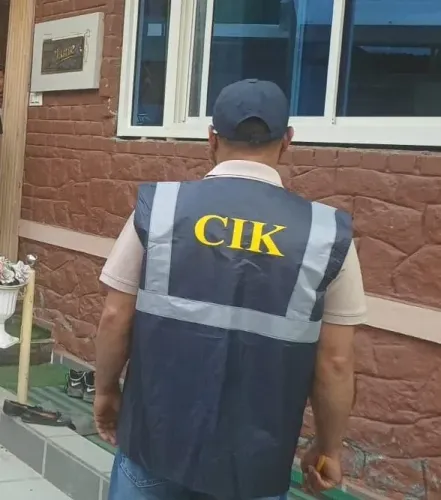
Srinagar court sentences ex-terrorist Ghulam Dar to life imprisonment for 2020 murder

Synopsis
A Srinagar court has handed a founding member of the banned Tehreek-ul-Mujahideen a life sentence for a 2020 civilian murder — tried under ordinary criminal law, not special security statutes. The verdict is a pointed reminder that a militant past offers no legal immunity in post-Article 370 Jammu & Kashmir.
Key Takeaways
A Srinagar court on 10 August sentenced Ghulam Mohi-ud-Din Dar to rigorous life imprisonment and a ₹50,000 fine for murder under Section 302 IPC .
The case stems from FIR No.
03/2020 at Police Station Maisuma , involving the murder of Abdul Gani Dar of Rassu, Budgam .
The convict is a founding member of Tehreek-ul-Mujahideen (TuM) and had operational links with Lashkar-e-Taiba and Hizb-ul-Mujahideen through the 2000s.
Srinagar Police built the case on scientific evidence and standard criminal prosecution — not special security law.
The verdict underscores that former militants remain subject to ordinary criminal accountability in Jammu & Kashmir .
A court in Srinagar, Jammu & Kashmir, on Monday, 10 August sentenced former militant Ghulam Mohi-ud-Din Dar to rigorous life imprisonment and a fine of ₹50,000 for the murder of Abdul Gani Dar — a 2020 case registered under Section 302 of the Indian Penal Code (IPC) at Police Station Maisuma. The conviction, secured by Srinagar Police, closes a case that carried the full weight of a violent militant past.
Who Is Ghulam Mohi-ud-Din Dar
Ghulam Mohi-ud-Din Dar, son of Abdul Gani Dar, is a resident of Bichwara, Dalgate, Srinagar and a founding member of Tehreek-ul-Mujahideen (TuM) — a proscribed outfit linked to the Jamiat-e-Ahl-e-Hadith movement in Kashmir. During his years of active militancy, he was involved in grenade attacks, assaults on security checkpoints, weapon-snatching, and the targeted killing of civilians and security personnel.
He also reportedly provided logistical support and maintained operational links with Lashkar-e-Taiba (LeT) and Hizb-ul-Mujahideen (HM) through the 2000s, before his arrest. The murder conviction pertains to the killing of Abdul Gani Dar, son of Mohd. Abdullah, a resident of Rassu, Budgam, as documented in FIR No. 03/2020.
How the Case Was Built
Srinagar Police described the conviction as the result of a meticulous investigation backed by scientific evidence and diligent prosecution before the court. Investigators pursued the case through standard due process, treating the accused's militant background as no bar to criminal accountability.
Notably, this is a rare instance where a former militant faces a full criminal trial and life sentence for a post-militancy offence — distinct from the more common security-law detentions that have historically characterised J&K's legal landscape.
What Srinagar Police Said
In an official statement, Srinagar Police said the outcome 'demonstrates that an individual's past association with militancy does not place them beyond the reach of the law, and that serious criminal offences are pursued through due process irrespective of the accused's background.' The force added that it 'remains steadfast in its commitment to upholding the rule of law, ensuring justice for victims and bringing offenders to justice in accordance with law.'
Significance of the Verdict
The case signals a broader institutional posture in J&K: that former militants who re-enter civilian life are subject to the same legal framework as any other citizen. Critics of the region's security apparatus have long argued that militant-linked crimes often go unprosecuted due to evidentiary gaps or political sensitivities. This conviction, grounded in civilian criminal law rather than special security statutes, offers a different model. The verdict is expected to send a clear message to others with militant histories who may believe past affiliations provide a degree of legal insulation.
Point of View
Trial, and due process — rather than invoking special security statutes sets a precedent that is harder to challenge on civil liberties grounds and more durable in appellate courts. J&K's security narrative has often leaned on detention without conviction; this case offers a contrasting model. The question is whether Srinagar Police can replicate this evidentiary rigour across the backlog of unresolved militant-era crimes, many of which have witnesses too intimidated or too old to testify.
NationPress
25 Sept 2026
Frequently Asked Questions
Who is Ghulam Mohi-ud-Din Dar and why was he sentenced?
Ghulam Mohi-ud-Din Dar is a former militant and founding member of Tehreek-ul-Mujahideen (TuM), sentenced by a Srinagar court on 10 August to life imprisonment for the murder of Abdul Gani Dar of Rassu, Budgam. The case was registered as FIR No. 03/2020 at Police Station Maisuma, and he was convicted under Section 302 of the Indian Penal Code.
What is Tehreek-ul-Mujahideen (TuM)?
Tehreek-ul-Mujahideen is a proscribed militant outfit associated with the Jamiat-e-Ahl-e-Hadith movement in Kashmir. The convict, Ghulam Mohi-ud-Din Dar, is one of its founding members and was previously linked to Lashkar-e-Taiba and Hizb-ul-Mujahideen through the 2000s.
What was the punishment handed down by the court?
The court sentenced Ghulam Mohi-ud-Din Dar to rigorous imprisonment for life along with a fine of ₹50,000, under Section 302 of the Indian Penal Code for the murder of Abdul Gani Dar.
Why does this conviction matter for Jammu & Kashmir?
The case is notable because it prosecuted a former militant through standard criminal law and due process rather than special security statutes, establishing that a militant background provides no immunity from ordinary criminal accountability. Srinagar Police said the outcome reflects its commitment to justice through professional investigation and scientific evidence.
Who was the victim in this case?
The victim was Abdul Gani Dar, son of Mohd. Abdullah, a resident of Rassu, Budgam, whose murder was registered under FIR No. 03/2020 at Police Station Maisuma in Srinagar.