CM Fadnavis Addresses MACCIA Executive Board 2026-28 in Mumbai
Synopsis
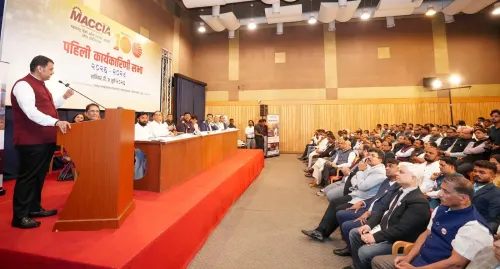
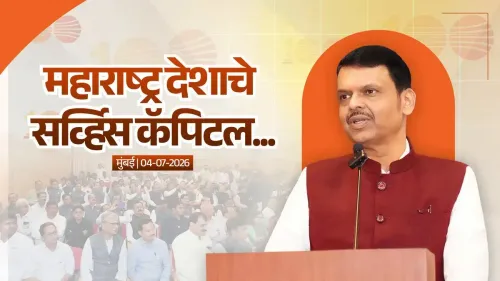
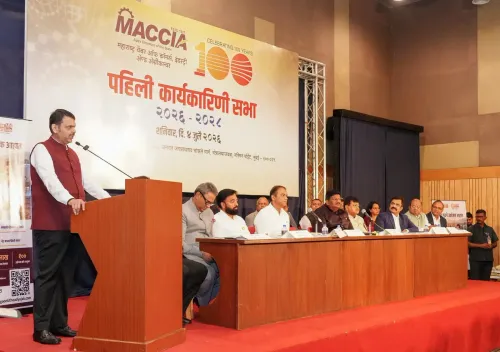
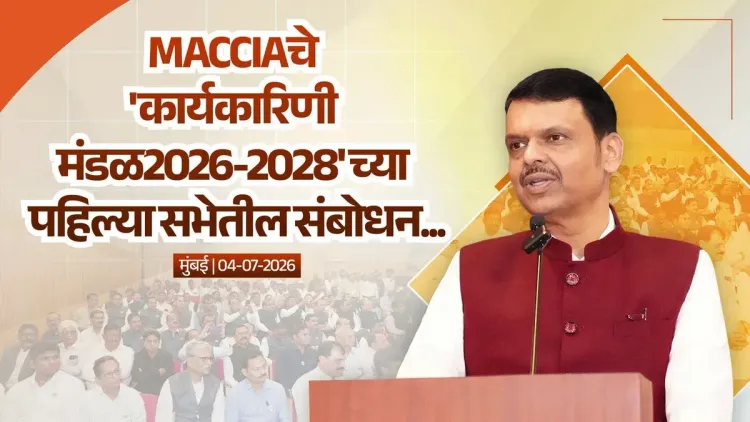
Maharashtra Chief Minister Devendra Fadnavis addressed the first meeting of the MACCIA Executive Board 2026-2028 in Mumbai on 4 July 2026, reinforcing the state government's commitment to sustained public-private dialogue on industrial and agricultural growth.
Key Takeaways
Chief Minister Devendra Fadnavis addressed the inaugural session of the MACCIA Executive Board 2026-2028 in Mumbai on 4 July 2026 .
MACCIA (Maharashtra Chamber of Commerce, Industry and Agriculture) is Maharashtra's apex representative body for trade, manufacturing and agriculture.
The address signals early government engagement with the new board, setting the tone for a two-year term of public-private dialogue.
Maharashtra is India's top industrial state , making its government-chamber relationship a key driver of national economic output.
Follow-up policy announcements on industrial incentives and agricultural support are expected as the board begins its work.
Maharashtra Chief Minister Devendra Fadnavis addressed the inaugural meeting of the Maharashtra Chamber of Commerce, Industry and Agriculture (MACCIA) Executive Board 2026-2028 in Mumbai on 4 July 2026, signalling the state government's continued engagement with the organised business community on industrial growth priorities.
Context
The meeting marked the first formal session of the newly constituted MACCIA Executive Board for the 2026-2028 term. MACCIA — the Maharashtra Chamber of Commerce, Industry and Agriculture — is one of Maharashtra's oldest and most representative apex bodies, bringing together voices from trade, manufacturing and agriculture under a single platform. Chief Minister Fadnavis's address to the board's opening session underscores the government's intent to maintain an active dialogue with industry from the outset of the new board's tenure.
Policy Backdrop
Maharashtra has long positioned itself as India's leading industrial and commercial hub, with Mumbai and Pune serving as anchor cities for finance, manufacturing and services. During Fadnavis's earlier tenure (2014-2019) as Chief Minister, the state pursued multiple ease-of-doing-business reforms and aligned closely with the national Make in India programme launched in 2014 to scale up domestic manufacturing capacity.
State governments across India routinely use chambers of commerce as sounding boards to shape industrial policy, attract investment and maintain inter-state competitiveness. For Maharashtra, which contributes a disproportionately large share of national tax revenues and exports, sustaining that dialogue is a structural priority rather than a ceremonial one.
Stakeholders and Impact
The MACCIA Executive Board represents a cross-section of stakeholders — business owners, industrial investors and agri-entrepreneurs — whose decisions on capacity expansion, hiring and supply chains have direct implications for Maharashtra's economy. An early address by the Chief Minister sets the tone for what the board can expect in terms of policy responsiveness over its two-year term.
Small and medium enterprises, which form the backbone of Maharashtra's industrial districts, and agricultural commodity traders who depend on state-level policy support, are among those with the most immediate stake in the board's agenda and in the government's willingness to act on its recommendations.
What's Next
Observers will watch for any follow-up announcements on industrial incentives, investment facilitation measures or infrastructure commitments that emerge from the board's deliberations. The MACCIA 2026-2028 board's recommendations on manufacturing competitiveness and agricultural value chains are likely to feed into upcoming state budget discussions and legislative sessions. The Chief Minister's participation at the very first meeting of the new board is widely read as an indication that the government intends to keep industry closely in the loop on Maharashtra's economic strategy.
Point of View
Not a passive regulator. This fits a broader pattern of competitive sub-national economic diplomacy, where Maharashtra must continuously demonstrate policy responsiveness to retain investment that other states are aggressively courting. For Fadnavis, who built much of his first-term identity around ease-of-doing-business reforms, the engagement also reinforces a personal brand as a pro-growth administrator. The real test will come when the board's recommendations reach the budget table.
NationPress
3 Oct 2026
Frequently Asked Questions
What is MACCIA and why does it matter for Maharashtra?
MACCIA, the Maharashtra Chamber of Commerce, Industry and Agriculture, is the state's apex body representing business, trade and agricultural interests. It serves as a key channel through which industry communicates priorities to the state government, making its board meetings significant for policy direction.
Why did CM Fadnavis address the MACCIA Executive Board meeting?
Chief Minister Devendra Fadnavis addressed the inaugural meeting of the MACCIA Executive Board 2026-2028 in Mumbai on 4 July 2026 to signal the government's commitment to active engagement with industry at the start of the new board's two-year term.
What is the MACCIA Executive Board 2026-2028?
The MACCIA Executive Board 2026-2028 is the newly constituted governing body of the Maharashtra Chamber of Commerce, Industry and Agriculture for the period 2026 to 2028. Its first formal meeting was held in Mumbai on 4 July 2026.
What policy outcomes could follow from the MACCIA board meeting?
Analysts expect the board's deliberations to influence upcoming state budget discussions, with possible announcements on industrial incentives, ease-of-doing-business measures and agricultural value-chain support emerging over the coming months.
How has Devendra Fadnavis engaged with industry in the past?
During his earlier tenure as Maharashtra Chief Minister from 2014 to 2019, Fadnavis introduced multiple ease-of-doing-business reforms and aligned the state with the national Make in India programme to attract manufacturing investment.