CM Fadnavis: Maharashtra to be $1 Trillion Economy by 2030
Synopsis
Chief Minister Devendra Fadnavis chaired the first meeting of MACCIA's 2026–2028 executive board in Mumbai, projecting Maharashtra will hit a trillion-dollar economy by 2030, citing a 15% GDP share, 40%+ FDI inflows, and three infrastructure-led growth models spanning new expressways and Wadhavan Port.
Key Takeaways
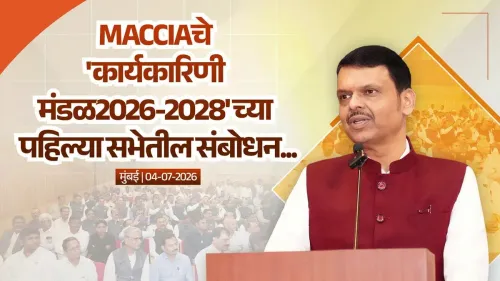
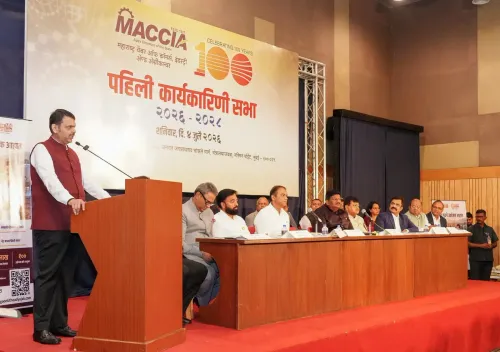
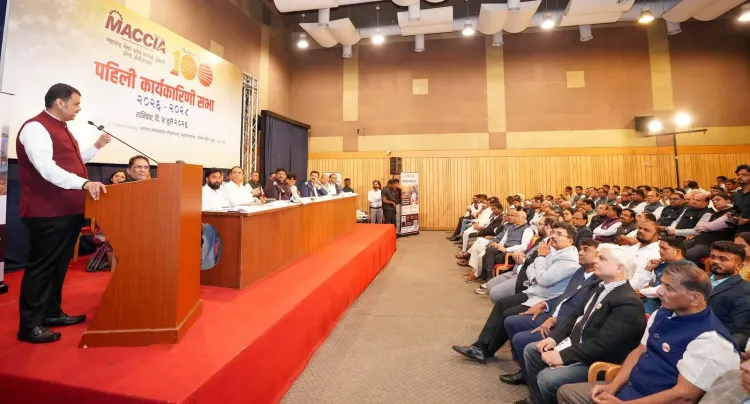
CM Devendra Fadnavis presided over the inaugural meeting of MACCIA's Executive Board 2026–2028 in Mumbai on 4 July 2026 .
Maharashtra targets a trillion-dollar economy by 2030 , with CM Fadnavis projecting it will eventually surpass the economies of Singapore and the UAE .
The state contributes 15% of India's GDP , leads in engineering and horticulture exports, and attracts over 40% of national FDI .
State GST-era revenues have grown from ₹60,000 crore (pre-GST VAT) to approximately ₹1,87,000 crore .
New growth engines being developed include Nashik, Chhatrapati Sambhajinagar, Nagpur, Dhule, Ahilyanagar and Gadchiroli .
MACCIA will complete 100 years in 2027 ; its new board will guide the chamber through its centenary year.
The Chief Minister's Office of Maharashtra announced on Saturday, 4 July 2026 that Chief Minister Devendra Fadnavis presided over the inaugural meeting of the Maharashtra Chamber of Commerce, Industry and Agriculture (MACCIA) Executive Board 2026–2028 in Mumbai, reaffirming the state's ambition to become a trillion-dollar economy by 2030.
Context
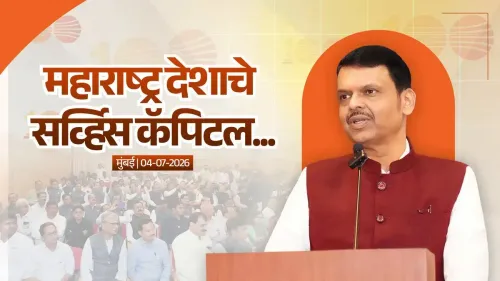
Addressing the first sitting of MACCIA's newly constituted governing board, CM Fadnavis described Maharashtra as the 'ग्रोथ इंजिन' ('growth engine') of investment, industry and development in India. He credited industry, trade and agriculture bodies such as MACCIA with helping the government understand entrepreneurs' expectations, challenges and expansion opportunities. MACCIA is approaching its centenary — the chamber will complete 100 years in 2027.
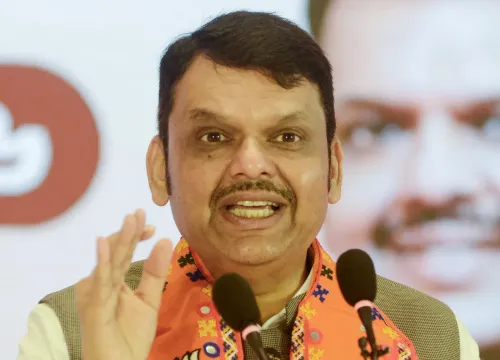
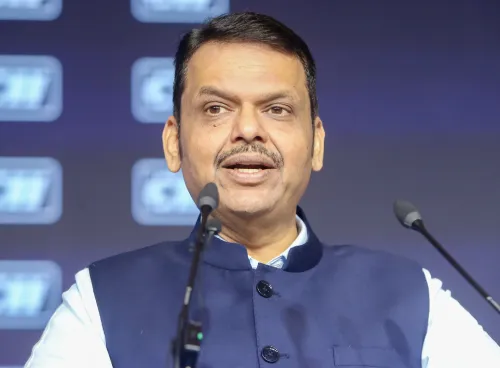
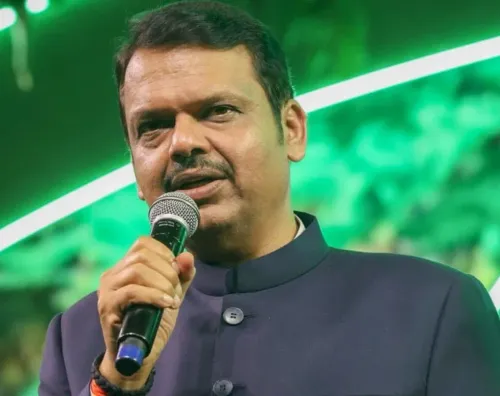
CM Fadnavis expressed confidence that Maharashtra would not only achieve a trillion-dollar economy by 2030 but would eventually surpass the economies of Singapore and the UAE. He noted that the state currently contributes 15 per cent of India's GDP, ranks first nationally in engineering and horticulture exports, and attracts more than 40 per cent of the country's total foreign direct investment.
Policy Backdrop
The Chief Minister cited a dramatic rise in tax revenues as evidence of the state's economic momentum. Before the introduction of GST, Maharashtra's VAT collections stood at ₹60,000 crore; that figure has since climbed to approximately ₹1,87,000 crore, reflecting the combined strength of the state's industrial, trade and agricultural sectors.
The state government is pursuing growth through three development models: infrastructure-led development, policy-driven industrialisation, and port-centric growth. CM Fadnavis stated that Maharashtra faces no shortage of investment interest, with a large volume of memoranda of understanding being signed — and approximately 80 per cent of those agreements converting into actual investment on the ground.
Two flagship infrastructure projects are central to this strategy. The Delhi–Mumbai Industrial Corridor (DMIC), a major bilateral industrial-nodes initiative, and the Hinduhridaysamrat Balasaheb Thackeray Maharashtra Samruddhi Mahamarg — the Mumbai–Nagpur Expressway — are together opening new industrial corridors across the state. The Samruddhi Mahamarg was conceived and construction was initiated during Fadnavis's first term as Chief Minister (2014–2019).
Stakeholders and Impact
Beyond the established Mumbai–Pune and Mumbai Metropolitan Region (MMR) belt, CM Fadnavis highlighted a new set of emerging growth centres: Nashik, Chhatrapati Sambhajinagar, Nagpur, Dhule, Ahilyanagar and Gadchiroli. This decentralised push is aimed at spreading industrial and economic activity into Vidarbha, Marathwada and the state's interior regions.
On port-led development, a dedicated high-speed connectivity link is being developed to connect Wadhavan Port — a planned deep-water port on the Maharashtra coast — to the Samruddhi Mahamarg. A separate expressway between Wadhavan and Nashik is also under development, and the Samruddhi Mahamarg itself is set to be extended all the way to Gadchiroli.
The meeting was attended by State Minister Dr. Pankaj Bhoyar, MLA Praveen Darekar, MLA Dr. Rahul Awade, MACCIA President Ravindra Mangave, and other dignitaries.
What's Next
With MACCIA's 2026–2028 executive board now constituted, the chamber is expected to deepen its engagement with the state government on industrial policy as it builds towards its centenary in 2027. CM Fadnavis expressed confidence that the organisation's work would reach new heights during this period and extended his best wishes for the road ahead.
The key milestones to watch include progress on linking Wadhavan Port to the Samruddhi corridor, the pace of MoU-to-investment conversion, and any new industrial policy announcements tied to the 2030 trillion-dollar target — a benchmark that will define Maharashtra's economic identity for the decade.
Point of View
Port-led growth and decentralised industrialisation — is durable across political cycles. The trillion-dollar-by-2030 target, paired with the Singapore-UAE comparison, is designed to benchmark Maharashtra against global city-states rather than rival Indian states, raising the ambition ceiling considerably. The emphasis on an 80% MoU-to-investment conversion rate — if sustained — would mark Maharashtra as an outlier in a national landscape where project announcements routinely outpace execution. The extension of the Samruddhi Mahamarg to Gadchiroli is particularly significant: it signals a political commitment to bring Naxal-affected eastern Maharashtra into the mainstream industrial economy.
NationPress
3 Oct 2026
Frequently Asked Questions
When will Maharashtra become a trillion-dollar economy?
Chief Minister Devendra Fadnavis has projected that Maharashtra will become a trillion-dollar economy by 2030 , and will eventually surpass the economies of Singapore and the UAE.
What is MACCIA and why is it important?
MACCIA — the Maharashtra Chamber of Commerce, Industry and Agriculture — is a century-old body representing business, trade and agricultural interests in Maharashtra. It is completing 100 years in 2027 and plays a key role in channelling industry feedback to the state government.
What is Maharashtra's share in India's GDP?
Maharashtra contributes 15 per cent of India's GDP. The state also ranks first nationally in engineering and horticulture exports and attracts over 40 per cent of the country's total foreign direct investment.
What is the Samruddhi Mahamarg and where will it be extended?
The Hinduhridaysamrat Balasaheb Thackeray Maharashtra Samruddhi Mahamarg is the Mumbai–Nagpur Expressway. CM Fadnavis announced it will be extended to Gadchiroli , and a new expressway connecting Wadhavan Port to Nashik via the corridor is also planned.
Which new cities are becoming industrial growth centres in Maharashtra?
Beyond Mumbai, Pune and the MMR, CM Fadnavis identified Nashik, Chhatrapati Sambhajinagar, Nagpur, Dhule, Ahilyanagar and Gadchiroli as emerging growth engines under the state's decentralised industrial development strategy.