CM Fadnavis chairs State Marathi Development Institute meet
Synopsis
Chief Minister Devendra Fadnavis chaired the State Marathi Development Institute's regulatory board meeting in Mumbai on 20 July 2026, directing pre-scheduled statutory sittings, an action plan for language promotion, and faster progress on the Thanjavur Modi-script digitisation and a London World Marathi Centre.
Key Takeaways
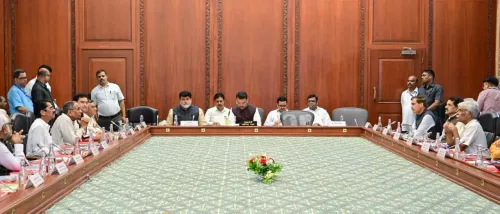
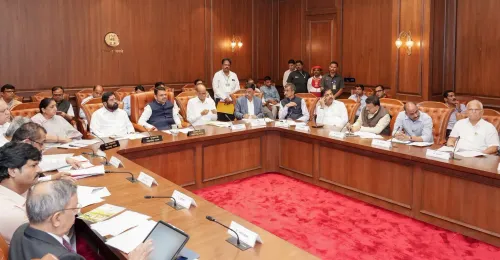
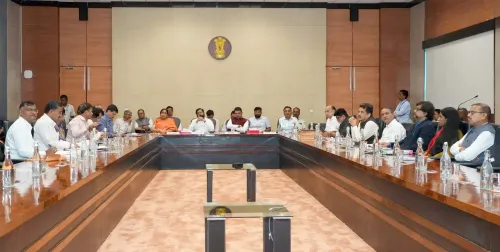
CM Devendra Fadnavis chaired the State Marathi Development Institute regulatory board meeting at Sahyadri Guest House, Mumbai on 20 July 2026 .
The institute was directed to pre-schedule all statutory meetings for the year and prepare an effective action plan for Marathi promotion.
Progress was reviewed on digitising approximately 15 lakh historical Modi-script documents held at Thanjavur , Tamil Nadu.
Discussions were held on accelerating the World Marathi Centre in London , to be named after Chhatrapati Shivaji Maharaj .
Proposals included expanding the 'Village of Books' and portable library initiatives to tribal and border-area Marathi schools, and building a theatre complex in Gadchiroli-Wadsa for eastern Vidarbha's folk traditions.
Minister Uday Samant , literary board chairman Prof.
Sadanand More and institute director Dr.
Shyamkant Devare attended the meeting.
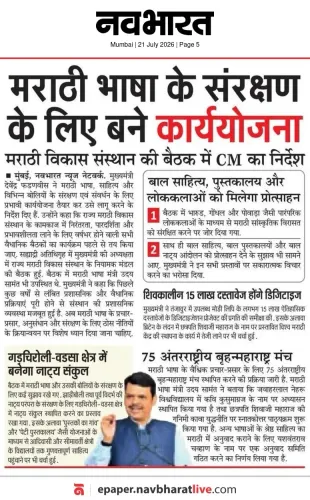
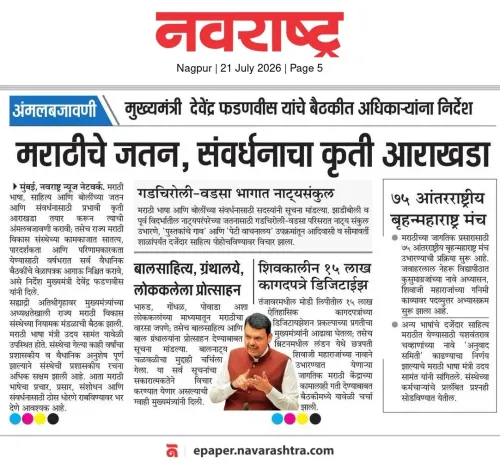
The Chief Minister's Office of Maharashtra announced on Monday, 20 July 2026 that Chief Minister Devendra Fadnavis chaired the regulatory board meeting of the State Marathi Development Institute (Rajya Marathi Vikas Sanstha) at Sahyadri Guest House, Mumbai, directing the body to pre-schedule all statutory meetings for the year and prepare an effective action plan for Marathi language promotion.
Context
The meeting focused on strengthening the institute's operations by ensuring 'continuity, transparency and effectiveness' in its functioning. CM Fadnavis congratulated the institute for clearing all pending statutory compliances, noting that the administrative and statutory backlog of several years had been resolved, making the body 'more capable and effective.' He stated that the focus must now shift to implementing concrete policies for the promotion, dissemination, research and preservation of the Marathi language.
Fadnavis also assured that pending issues of the institute's employees would be resolved positively. The meeting was attended by Minister Uday Samant, Maharashtra State Literary and Cultural Board Chairman and senior literary figure Prof. Sadanand More, State Marathi Development Institute Director Dr. Shyamkant Devare, and senior officials.
Policy Backdrop
Maharashtra has maintained Marathi as its sole official language since the state's formation on linguistic lines on 1 May 1960. The State Marathi Development Institute serves as the nodal body for language promotion, research and preservation of Marathi and its dialects. Indian states have increasingly invested in digitising pre-modern records and building diaspora-facing cultural infrastructure, with similar initiatives seen in Tamil Nadu, Karnataka and West Bengal in recent years.
At the meeting, CM Fadnavis reviewed progress on the digitisation of approximately 15 lakh historical documents written in Modi script held at Thanjavur in Tamil Nadu. He also discussed accelerating work on a World Marathi Centre to be established in London in the name of Chhatrapati Shivaji Maharaj, Maharashtra's revered historical ruler.
Stakeholders and Impact
Board members placed several significant proposals before the Chief Minister. These included expanding the 'Village of Books' (Pustakanche Gaav) and 'Peti Vachnalaya' (portable library box) initiatives to reach Marathi-medium schools in tribal and border areas, and constructing a theatre complex in the Gadchiroli-Wadsa region to preserve the Zhadiboli dialect and the theatrical traditions of eastern Vidarbha.
Members also proposed safeguarding the heritage of folk arts such as Bharud, Gondhala and Powada through dedicated programmes, alongside promoting children's literature and children's libraries. CM Fadnavis said all these suggestions would be considered positively. Tribal communities, border-region schools, folk artists and the global Marathi diaspora stand to benefit directly from these proposed measures.
What's Next
The immediate priority is the finalisation and rollout of the institute's annual statutory meeting schedule and action plan, as directed by CM Fadnavis. Physical progress on the Thanjavur Modi-script digitisation project and the London World Marathi Centre will be closely watched by language advocates and the Marathi diaspora. Any budgetary allocations or formal agreements tied to these projects in the next state legislative session will signal how swiftly the government intends to move from direction to delivery.
Point of View
Having cleared years of statutory backlog. The twin anchors of the Thanjavur digitisation project and the London World Marathi Centre reflect a dual strategy: securing the language's historical record while projecting it globally through diaspora infrastructure. Invoking the name of Chhatrapati Shivaji Maharaj for the London centre carries unmistakable political symbolism, reinforcing Maharashtra's Maratha identity narrative on an international stage. The emphasis on tribal and border-area outreach also suggests an awareness that Marathi promotion must reach beyond urban literary circles to be politically and culturally credible.
NationPress
19 Oct 2026
Frequently Asked Questions
What was decided at the State Marathi Development Institute meeting on 20 July 2026?
CM Devendra Fadnavis directed the institute to pre-schedule all statutory meetings for the year, prepare an action plan for Marathi promotion, and positively consider proposals on folk arts, tribal-area libraries, and a theatre complex in Gadchiroli-Wadsa.
What is the Thanjavur Modi script digitisation project?
It is a project to digitise approximately 15 lakh historical documents written in Modi script held at Thanjavur in Tamil Nadu; CM Fadnavis reviewed its progress at the 20 July meeting.
Where will the World Marathi Centre be built and after whom will it be named?
The World Marathi Centre is planned for London and will be named after Chhatrapati Shivaji Maharaj, the revered Maratha ruler. The meeting discussed accelerating work on this project.
What is the 'Village of Books' initiative in Maharashtra?
'Village of Books' ( Pustakanche Gaav ) is an initiative to promote reading culture; the board meeting proposed expanding it along with portable 'Peti Vachnalaya' libraries to reach Marathi-medium schools in tribal and border areas.
Who attended the State Marathi Development Institute board meeting?
The meeting was attended by Minister Uday Samant, Maharashtra State Literary and Cultural Board Chairman Prof. Sadanand More, institute Director Dr. Shyamkant Devare, and senior officials, under the chairmanship of CM Devendra Fadnavis.