CM Fadnavis chairs key meets on Marathi, pilgrimage, property law

Synopsis
Chief Minister Devendra Fadnavis on 20 July 2026 chaired a State Marathi Development Institute board meeting, approved revised pilgrimage-site development plans for Gangakhed, Amravati and Katol, and called for a comprehensive 'Delta' law to unlock the latent value of assets, with an expert committee to be formed.
Key Takeaways
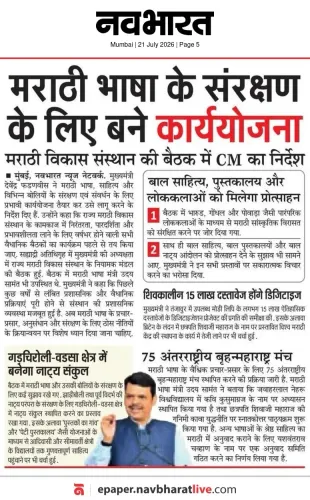
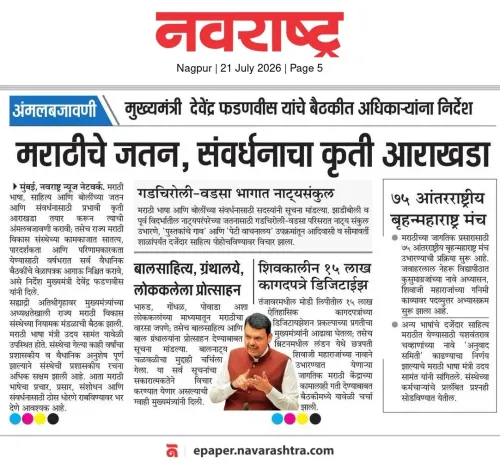
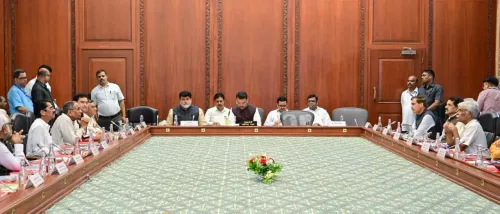
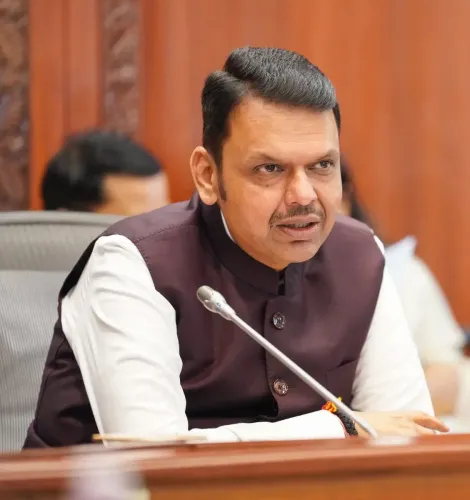
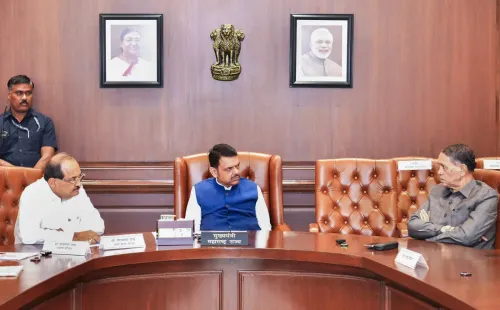
CM Devendra Fadnavis chaired the governing board meeting of the State Marathi Development Institute on 20 July 2026 and directed an effective action plan for Marathi language preservation and promotion.
Revised tirthakshetra development plans for Gangakhed (Parbhani), Amravati , and Katol (Nagpur) were approved, with a directive to honour the state's saint tradition legacy.
CM Fadnavis called for 'latent value' ( supta mulya ) utility of assets to be incorporated into a proposed new 'Delta' law.
An expert committee is to be constituted to draft the comprehensive 'Delta' legislation.
The decisions reflect Maharashtra's continuing policy of pairing cultural heritage and language promotion with administrative and economic reform.
The Chief Minister's Office of Maharashtra released its daily summary for Monday, 20 July 2026, highlighting three significant decisions taken under Chief Minister Devendra Fadnavis: a directive to implement an effective action plan for Marathi language preservation, approval of revised development plans for three pilgrimage sites, and a push to embed 'latent value' utility of assets into a proposed 'Delta' law.
Context
Chief Minister Devendra Fadnavis chaired a meeting of the governing board of the State Marathi Development Institute (Rajya Marathi Vikas Sanstha) on Monday. He directed officials to implement a robust action plan (prabhavi kruti aaraakhda) for the preservation and promotion of the Marathi language. The institute is the nodal state body responsible for policy and programmes supporting Marathi across education, literature, and public life.
Separately, the Chief Minister approved revised pilgrimage-site development plans for Gangakhed, Amravati, and Katol, instructing that development at these sites honour and preserve the legacy of the saint tradition (santparampara). Gangakhed in Parbhani district, Amravati in the Vidarbha region, and Katol in Nagpur district are all established pilgrimage centres with deep roots in Maharashtra's Warkari and regional saint traditions.
Policy Backdrop
Maharashtra's commitment to Marathi language promotion dates to the 1960s Official Language Act, with successive governments constituting expert bodies and periodic action plans. The State Marathi Development Institute has been the institutional vehicle for these efforts, though advocates have long called for more concrete implementation timelines and funding.
Tirthakshetra development has also featured in earlier Fadnavis-led administrations between 2015 and 2018, when pilgrim infrastructure upgrades were announced at several sites across the state. The current approvals for Gangakhed, Amravati, and Katol represent revised and updated versions of those frameworks.
On the property-law front, Chief Minister Fadnavis called for the 'latent value' (supta mulya) utility of assets to be embedded in a proposed 'Delta' law, and directed that an expert committee be constituted to draft a comprehensive piece of legislation. The exact scope and provisions of the proposed 'Delta' law are yet to be detailed in a formal government resolution.
Stakeholders and Impact
Marathi language advocates and literary organisations stand to benefit from a structured action plan, provided implementation benchmarks and budgetary allocations are clearly defined. The absence of a firm timeline has been a recurring criticism from cultural bodies in the past.
Temple trusts, local pilgrimage economies, and residents of Gangakhed, Amravati, and Katol are the immediate beneficiaries of the approved tirthakshetra plans. Improved pilgrim infrastructure typically boosts local tourism and ancillary livelihoods. Property owners and urban local bodies across Maharashtra will watch the proposed 'Delta' law closely, as it could redefine how the state values and monetises public and private assets.
What's Next
The government is expected to issue formal resolutions detailing the Marathi language action plan's timelines and funding, as well as the composition of the expert committee for the 'Delta' law. Rollout schedules and fund releases for the three approved tirthakshetra development plans will be the immediate markers of follow-through. Together, Monday's decisions reflect the Fadnavis administration's stated priority of pairing cultural identity preservation with administrative and economic modernisation.
Point of View
As property-value reform touches urban local bodies and landowners across Maharashtra, but its impact depends entirely on the expert committee's mandate and the final legislative text. The tirthakshetra approvals for Vidarbha and Marathwada sites carry clear regional-balance optics, addressing constituencies that have periodically felt neglected in state resource allocation. Whether these directives translate into funded, time-bound implementation will determine their political and policy legacy.
NationPress
19 Oct 2026
Frequently Asked Questions
What did CM Devendra Fadnavis say about the Marathi language on 20 July 2026?
CM Devendra Fadnavis directed officials to implement an effective action plan for the preservation and promotion of the Marathi language after chairing the governing board meeting of the State Marathi Development Institute on 20 July 2026.
Which pilgrimage sites got development plan approval in Maharashtra in July 2026?
The Maharashtra government approved revised tirthakshetra development plans for Gangakhed in Parbhani district, Amravati in the Vidarbha region, and Katol in Nagpur district on 20 July 2026.
What is the 'Delta' law proposed by CM Fadnavis?
The proposed 'Delta' law aims to incorporate the 'latent value' (supta mulya) utility of assets into a comprehensive legal framework. CM Fadnavis directed that an expert committee be constituted to draft the legislation; the exact provisions have not yet been detailed in a formal government resolution.
What is the State Marathi Development Institute?
The State Marathi Development Institute (Rajya Marathi Vikas Sanstha) is a Maharashtra government body responsible for policy and programmes related to the preservation, promotion and development of the Marathi language across education, literature and public life.
Why is Gangakhed significant as a pilgrimage site in Maharashtra?
Gangakhed is a pilgrimage town in Parbhani district associated with Maharashtra's saint traditions and river-based religious sites, making it an important centre for devotees connected to the Warkari and regional saint heritage of the state.