Modi's 12 years: Fadnavis credits PM for Atmanirbhar Bharat rise
Synopsis
On the eve of Modi's 12th year in office, Maharashtra CM Fadnavis released a commemorative book crediting the PM with tripling India's GDP, lifting 25 crore from poverty, and turning India into a defence exporter — a high-profile BJP effort to cement the decade's governance narrative.
Key Takeaways
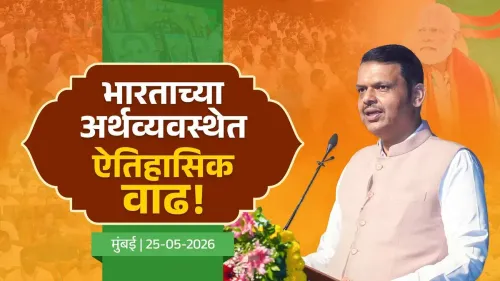
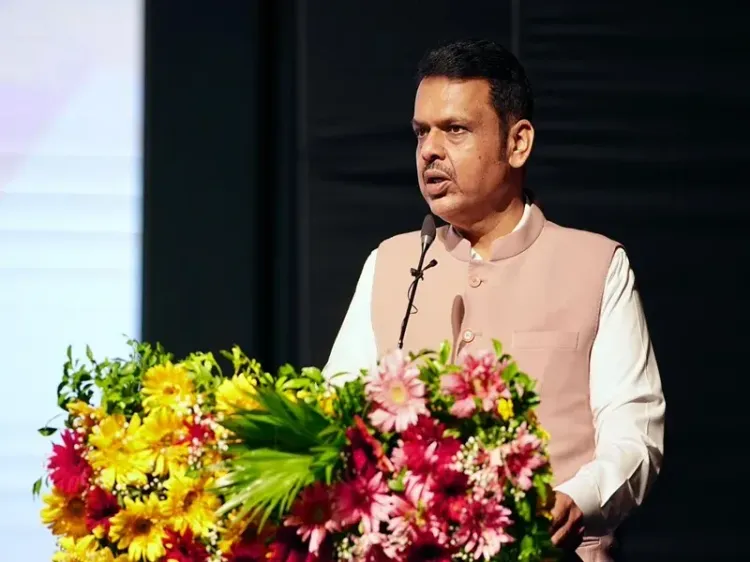
Maharashtra CM Devendra Fadnavis lauded PM Modi's 12 years in power at a book release event in Mumbai on 25 May .
India's GDP reportedly grew from ₹103 lakh crore in 2013-14 to ₹357 lakh crore under Modi's tenure, according to Fadnavis.
More than 25 crore people have been lifted out of extreme poverty, Fadnavis claimed.
Defence exports have reached ₹50,000 crore , marking India's shift from importer to exporter.
Maharashtra alone accounts for 40% of India's FDI, attributed to GST-driven single-market integration.
The commemorative book 'Rashtra Nirmanachi Tapapoorti' was released in Marathi and Hindi by the Maharashtra BJP .
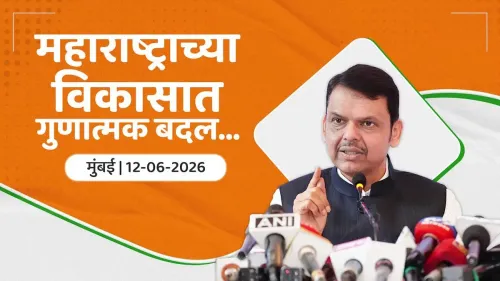
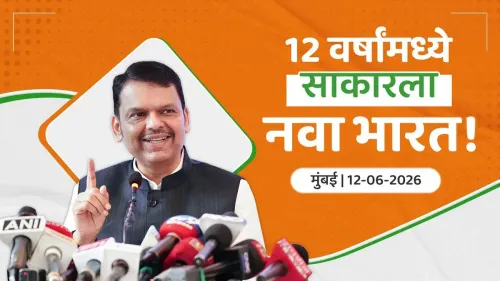
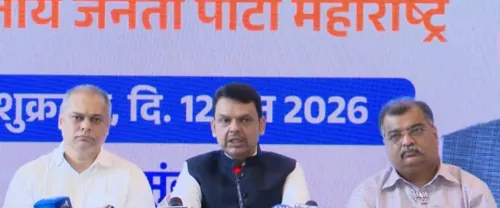
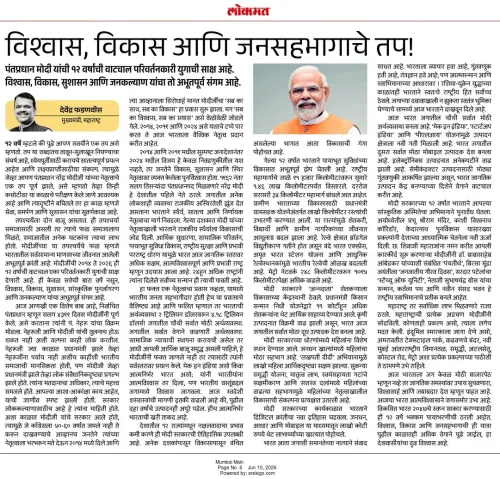
Maharashtra Chief Minister Devendra Fadnavis on Monday, 25 May credited Prime Minister Narendra Modi's 12 years in office with fundamentally reshaping India's economic identity, saying the country has shed decades of dependency and emerged as a self-reliant nation with renewed global standing. Fadnavis was speaking at the release of a special commemorative coffee table book titled 'Rashtra Nirmanachi Tapapoorti' (The Completion of an Era in Nation Building), published on the eve of Modi completing 12 years as Prime Minister since 26 May 2014.
Key Claims on Economic Transformation
Fadnavis cited a near-tripling of India's GDP — from ₹103 lakh crore in 2013-14 to approximately ₹357 lakh crore — as the most visible marker of the decade's economic shift. He also pointed to Maharashtra's own GDP expanding from ₹13 lakh crore to ₹54 lakh crore over the same period. According to Fadnavis, more than 25 crore people have been lifted out of extreme poverty under Modi's tenure, a figure he described as unmatched globally.
Structural Reforms Highlighted
The Chief Minister spoke at length about the Goods and Services Tax (GST) and the Unified Payments Interface (UPI) as transformative structural reforms. 'GST has turned India into a single market, which exponentially boosted foreign direct investment, with Maharashtra alone attracting 40 per cent of the country's FDI,' Fadnavis said. He further credited the Jan Dhan-Aadhaar-Mobile (JAM) trinity for curbing grassroots-level corruption by enabling direct benefit transfers to beneficiaries without intermediaries.
Defence and Foreign Policy
On national security, Fadnavis noted India's transition from being among the world's largest defence importers to a meaningful exporter, with defence exports reportedly touching ₹50,000 crore. He cited recent military operations and border infrastructure development as evidence of strengthened strategic preparedness, though he did not name specific operations.
Social Empowerment and the Book
Fadnavis described the Modi government's focus on four pillars — the poor (Gareeb), farmers (Anndata), youth (Yuva), and women (Nari Shakti) — as the defining social philosophy of the past decade. The coffee table book, released in both Marathi and Hindi, was framed as a data-driven record of policy outcomes. The event was organised by the Maharashtra Bharatiya Janata Party (BJP) and attended by State BJP President Ravindra Chavan, Mumbai BJP chief Amit Satam, Minister Mangal Prabhat Lodha, and senior legislators. As Modi's third term progresses, the BJP's commemorative exercises signal a broader effort to consolidate the narrative around governance outcomes ahead of future electoral cycles.
Point of View
Particularly the GDP tripling and poverty reduction numbers, are drawn from government data and carry no independent verification in this context. India's poverty headcount methodology has itself been contested by economists, making the '25 crore lifted' figure politically potent but analytically contested. More telling is the defence exports claim: the shift from importer to ₹50,000 crore in exports is verifiable and marks a genuine structural shift — arguably the most credible data point in an otherwise partisan framing.
NationPress
10 Oct 2026
Frequently Asked Questions
What is the 'Rashtra Nirmanachi Tapapoorti' book released by CM Fadnavis?
It is a special commemorative coffee table book released by the Maharashtra BJP on the eve of PM Modi completing 12 years in office on 26 May. The book, available in Marathi and Hindi, is described as a data-driven record of policy outcomes and governance achievements over the past decade.
What economic achievements did Fadnavis attribute to PM Modi's 12 years?
Fadnavis cited India's GDP growing from ₹103 lakh crore in 2013-14 to approximately ₹357 lakh crore, over 25 crore people lifted out of extreme poverty, and Maharashtra's GDP rising from ₹13 lakh crore to ₹54 lakh crore. He also highlighted defence exports reaching ₹50,000 crore.
How has GST contributed to India's FDI, according to Fadnavis?
According to Fadnavis, the Goods and Services Tax unified India into a single market, which he said exponentially boosted foreign direct investment. He noted that Maharashtra alone has attracted 40 per cent of the country's total FDI as a result.
Who attended the book release event in Mumbai?
The event was organised by the Maharashtra BJP and attended by State BJP President Ravindra Chavan, Mumbai BJP chief Amit Satam, Minister Mangal Prabhat Lodha, and several senior MLAs and media representatives.
What is Atmanirbhar Bharat and how did Fadnavis connect it to Modi's tenure?
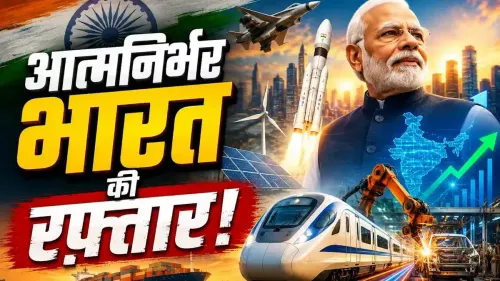
Atmanirbhar Bharat, meaning 'Self-Reliant India,' is a government initiative aimed at reducing import dependence across sectors. Fadnavis argued that 12 years of structural, economic, and social reforms — including the JAM trinity, UPI, and defence export growth — have made the vision a reality, positioning India as a confident global player.