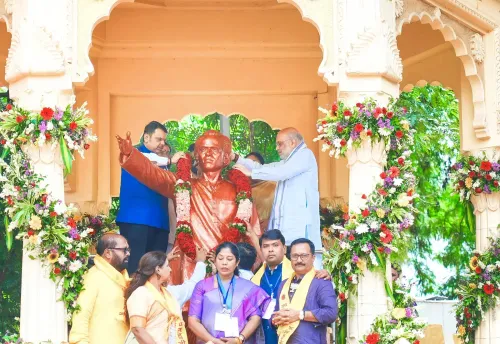
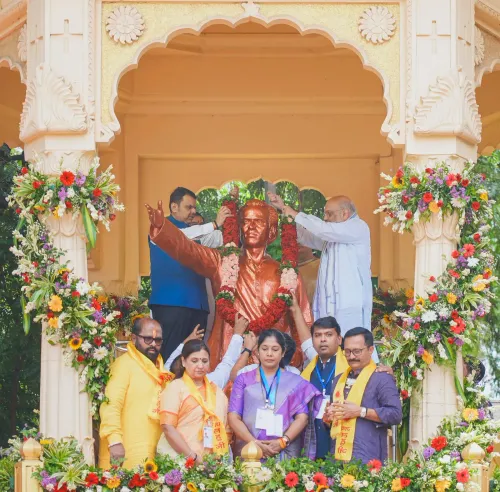
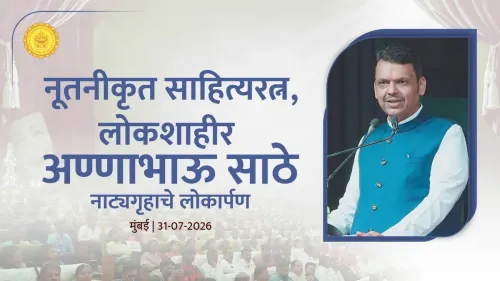
CM Fadnavis pays tribute to Lokshahir Annabhau Sathe on birth anniversary
Synopsis
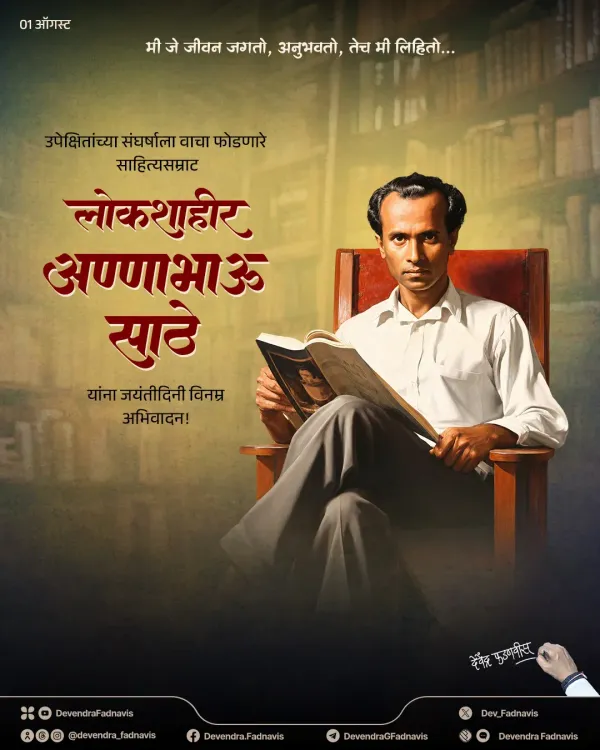
Maharashtra Chief Minister Devendra Fadnavis on 1 August paid tribute to Lokshahir Annabhau Sathe on his birth anniversary, honouring the 1920-1969 Marathi writer whose stories, novels, powadas, lavanis, and loknatya gave voice to marginalised communities and shaped Maharashtra's progressive literary tradition.
Key Takeaways
CM Devendra Fadnavis posted a public tribute to Lokshahir Annabhau Sathe on his birth anniversary on 1 August 2026 .
Fadnavis described Sathe as a loknayak (people's hero) and sahitya samrat (emperor of literature).
Annabhau Sathe ( 1920–1969 ) was born in Wategaon, Sangli district , into the Matang community, with little formal education.
His literary forms spanned kathas, kadambaris, powadas, lavanis, shahiri, and loknatya — all channelled toward the struggles of marginalised communities.
Sathe's work is deeply rooted in the Ambedkarite and progressive literary tradition of Maharashtra.
Maharashtra governments across party lines have consistently issued public tributes to Marathi literary figures linked to social reform.
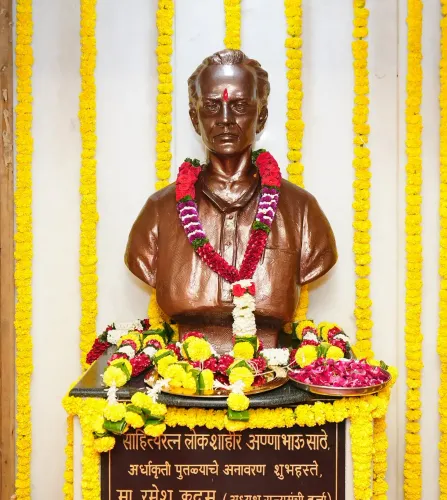
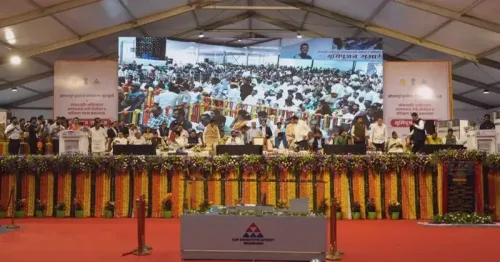
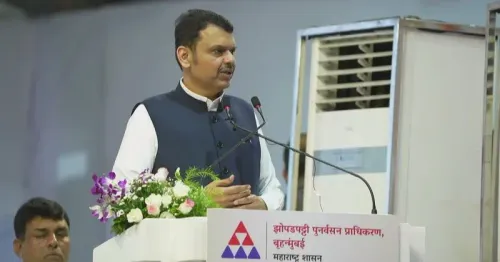
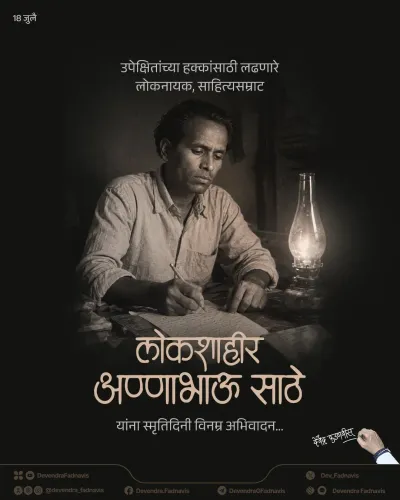
The voice of Maharashtra's margins never truly fell silent — and every year on 1 August, the state pauses to remember the man who first gave it words. Maharashtra Chief Minister Devendra Fadnavis paid tribute on Saturday to Lokshahir Annabhau Sathe on his birth anniversary, honouring the revolutionary writer whose literary output became an enduring anthem for social dignity and equality.
Fadnavis saluted Sathe as a loknayak (people's hero) and sahitya samrat (emperor of literature), writing in Marathi: 'कथा, कादंबरी, पोवाडे, लावण्या, शाहिरी आणि लोकनाट्याच्या माध्यमातून उपेक्षितांच्या व्यथा-वेदनांना शब्द आणि आवाज देणारे' — 'one who gave words and voice to the pain and suffering of the neglected through stories, novels, powadas, lavanis, shahiri and loknatya.'
From Wategaon to the world: who Annabhau Sathe was
Annabhau Sathe (1920–1969) was born into the Matang community in Wategaon, Sangli district, at the very bottom of Maharashtra's social hierarchy. He received almost no formal education — yet he became one of the most prolific and politically charged voices in Marathi literature. His arsenal was vast: kathas (short stories), kadambar (novels), powadas (ballads of heroism), lavanis (folk songs), and loknatya (folk theatre).
Every form he touched, he turned into a weapon against caste oppression and economic exploitation. His works are deeply rooted in the Ambedkarite and progressive literary tradition — a tradition that insists literature must serve the people it writes about, not merely observe them from a distance.
Why Maharashtra's governments keep returning to this name
The annual tribute is not incidental. Maharashtra governments across party lines have consistently marked the birth anniversaries of Marathi literary figures tied to social reform — and Annabhau Sathe sits at the centre of that tradition. For a state whose political identity is inseparable from its literary and cultural movements, invoking Sathe is also invoking a promise: that the struggles of the marginalised remain the state's business.
Chief Minister Fadnavis's tribute, posted publicly on a Saturday morning, extends that continuity — a BJP-led government paying homage to a writer whose politics were forged in left-wing and Dalit-rights movements. The gesture underlines how completely Sathe has crossed partisan lines to become Maharashtra's shared cultural inheritance.
Annabhau Sathe died in 1969, aged around 49, leaving behind over 35 novels and dozens of short stories, powadas, and plays. His words outlasted him by decades. They are still being read, staged, and sung — proof that the best literature does not age, it accumulates weight.
Point of View
The tribute also serves a political geometry: the Matang community Sathe belonged to is an influential constituency in Maharashtra, and ceremonial recognition of its icons carries quiet electoral weight. More broadly, the pattern of Maharashtra governments marking such anniversaries reveals how literary memory functions as soft statecraft in the state — culture is never purely culture here, it is always also politics.
NationPress
15 Sept 2026
Frequently Asked Questions
Who was Annabhau Sathe?
Annabhau Sathe (1920–1969) was a Marathi writer and lokshahir (people's poet) from Wategaon, Sangli district, known for novels, short stories, powadas, lavanis, and folk theatre that highlighted the struggles of marginalised communities, particularly within the Ambedkarite literary tradition.
Why is Annabhau Sathe's birth anniversary celebrated?
Annabhau Sathe's birth anniversary is observed across Maharashtra as a tribute to his revolutionary literary legacy and his role in giving voice to Dalit and working-class communities through Marathi literature and folk arts.
What did CM Devendra Fadnavis say about Annabhau Sathe?
CM Fadnavis described Sathe as a 'loknayak' (people's hero) and 'sahitya samrat' (emperor of literature), and honoured him for using stories, novels, powadas, lavanis, shahiri, and loknatya to give words and voice to the pain of neglected communities.
What literary forms did Annabhau Sathe work in?
Sathe worked across a wide range of Marathi literary and folk forms including kathas (short stories), kadambaris (novels), powadas (heroic ballads), lavanis (folk songs), shahiri (poetry), and loknatya (folk theatre).
What community did Annabhau Sathe belong to?
Annabhau Sathe was born into the Matang community, one of the marginalised communities at the lower end of Maharashtra's social hierarchy, and his writing drew directly from that lived experience of exclusion and resistance.