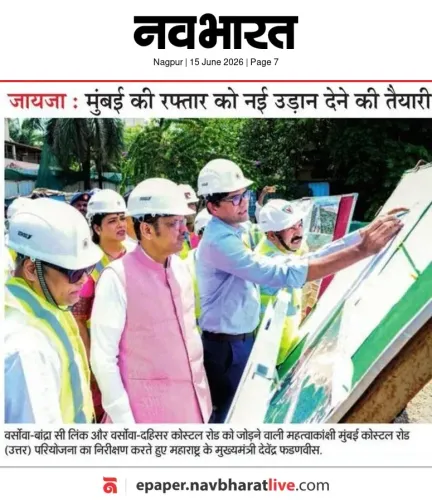
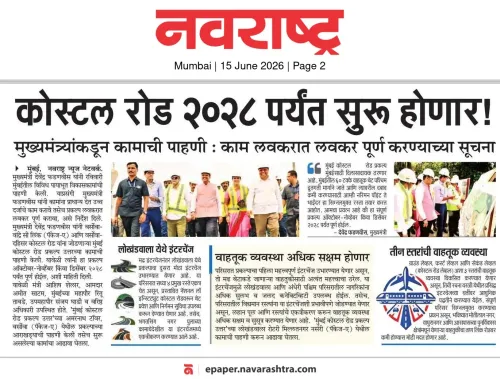
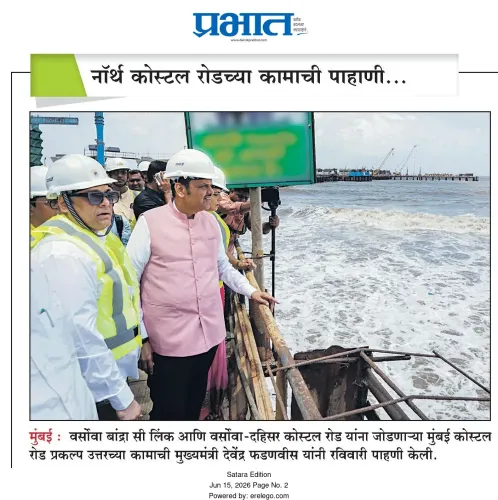
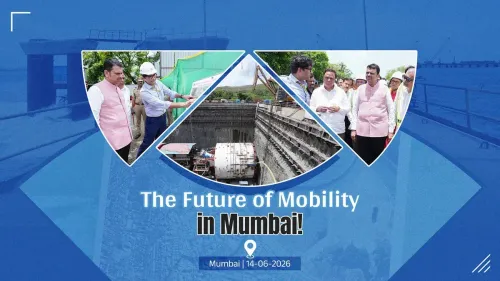
CM Fadnavis Inspects Mumbai North Coastal Road Project
Synopsis
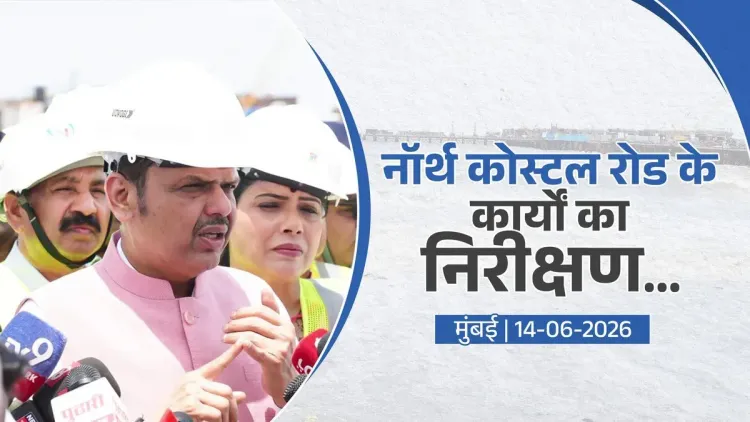
Maharashtra CM Devendra Fadnavis inspected the Mumbai Coastal Road Project North on June 14, 2026, highlighting plans for a signal-free corridor from Nariman Point to Bhayandar to decongest the Western Express Highway, which the CM said carries around 60 per cent of Mumbai's daily traffic.
Key Takeaways
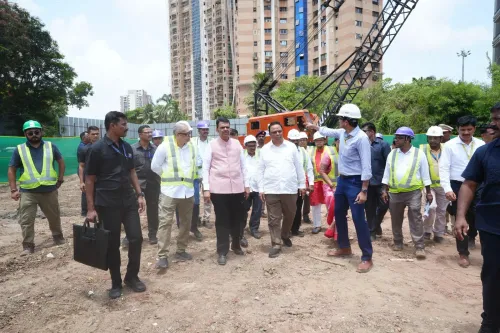
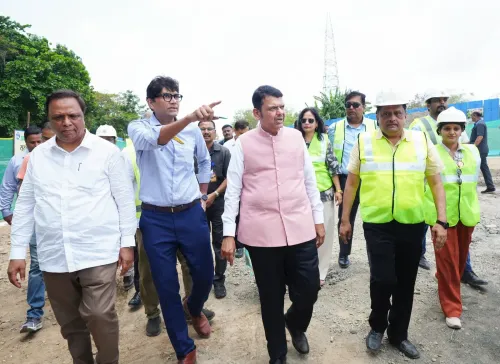
Maharashtra CM Devendra Fadnavis conducted an on-site inspection of the Mumbai Coastal Road Project North on June 14, 2026 .
The project will create a signal-free road from Nariman Point (south Mumbai) to Bhayandar (northern suburb).
CM Fadnavis stated the Western Express Highway handles approximately 60 per cent of Mumbai's daily traffic and needs decongestion.
The northern coastal road extension is part of the Mumbai Metropolitan Region Development Authority's 2016–2034 mobility plan .
The project forms part of Maharashtra's broader urban mobility push that includes metro expansions and the Mumbai Trans Harbour Link .
Western suburbs commuters and freight traffic are among the primary intended beneficiaries of the new corridor.
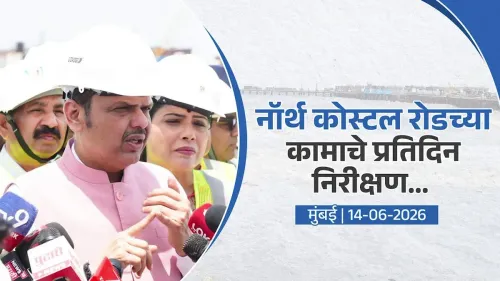
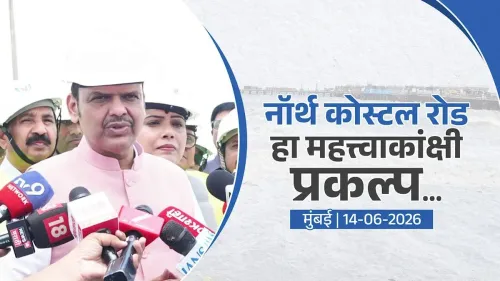
Maharashtra Chief Minister Devendra Fadnavis on Sunday, June 14, 2026, conducted an on-site inspection of the Mumbai Coastal Road Project North, describing the initiative as a major relief measure for the city's chronic traffic congestion. The project envisions a signal-free road corridor stretching from Nariman Point in south Mumbai to Bhayandar in the northern suburbs.
Posting on X, Chief Minister Fadnavis wrote: 'आज हम मुंबई कोस्टल रोड परियोजना उत्तर के कार्यों का निरीक्षण कर रहे हैं' ('Today we are inspecting the works of the Mumbai Coastal Road Project North'). He stated that the project would bring 'great relief' to Mumbai and noted that a signal-free road from Nariman Point to Bhayandar is being developed to decongest the Western Express Highway, which, according to the Chief Minister's post, carries approximately 60 per cent of Mumbai's daily traffic.
Context
The Western Express Highway is Mumbai's primary north-south arterial corridor, linking the island city to its extended western suburbs and satellite towns. Decades of population growth and vehicular expansion have pushed the highway to near-saturation during peak hours, making it one of the most congested stretches in the Mumbai Metropolitan Region. The proposed North Coastal Road is designed to run largely along the seafront, bypassing the densely built interior grid that causes bottlenecks on existing roads.
Chief Minister Fadnavis's inspection signals active state-level oversight of the project's construction progress, with the Maharashtra government positioning the corridor as a transformative piece of urban infrastructure.
Policy Backdrop
The coastal road initiative has a long policy lineage in Maharashtra. Phase I of the Mumbai Coastal Road — covering the southern stretch — received environmental and coastal regulation clearances between 2017 and 2018 before construction commenced. The full coastal road alignment, including northern extensions, was incorporated into the Mumbai Metropolitan Region Development Authority's 2016–2034 mobility plan, giving the project a firm statutory footing.
Maharashtra governments have consistently prioritised multi-phase coastal and elevated corridors since the mid-2010s to ease pressure on the Western Express Highway and the Eastern Express Highway. This broader urban mobility strategy also encompasses metro rail expansions and the Mumbai Trans Harbour Link, reflecting sustained state-level commitment to reducing travel times across the region.
Stakeholders and Impact
The primary beneficiaries of the Nariman Point–Bhayandar corridor will be daily commuters in Mumbai's western suburbs, who currently depend almost entirely on the Western Express Highway for north-south movement. Residents of suburbs such as Bhayandar, Mira Road, Borivali, and intermediate localities stand to see significantly reduced travel times once the signal-free corridor is operational.
The project is also expected to benefit commercial freight movement and intercity bus traffic that currently contributes to peak-hour congestion on the highway. Urban planners and mobility researchers have long flagged the need for a parallel coastal artery to distribute traffic load more evenly across the city's north-south spine.
What's Next
Attention will now turn to milestone completion dates for individual segments of the northern coastal road, traffic impact assessments following any partial openings, and potential integration announcements with ongoing metro corridors in the western suburbs. The Chief Minister's inspection suggests the state government intends to maintain visible momentum on the project, particularly as Mumbai's infrastructure agenda has become a key political and administrative priority for the BJP-led Maharashtra government.
Point of View
Not merely a bureaucratic exercise. The project fits into a decade-long state strategy of building parallel coastal and elevated corridors to relieve arteries like the Western Express Highway — a strategy that has spanned multiple administrations and now carries significant electoral weight in Mumbai's densely populated western suburbs. By anchoring the narrative around a concrete commuter benefit — decongesting a highway that the CM says carries 60 per cent of city traffic — the government is framing an engineering project as a quality-of-life promise. How quickly the northern segments are completed and opened will determine whether that promise translates into political capital ahead of future civic and state elections.
NationPress
14 Sept 2026
Frequently Asked Questions
What is the Mumbai Coastal Road Project North?
The Mumbai Coastal Road Project North is a planned signal-free road corridor that will connect Nariman Point in south Mumbai to Bhayandar in the northern suburbs, running largely along the seafront to bypass congested interior roads.
Why is the Mumbai North Coastal Road being built?
The project is being built primarily to decongest the Western Express Highway, which Maharashtra CM Devendra Fadnavis has stated carries around 60 per cent of Mumbai's daily vehicular traffic.
What did CM Fadnavis do on June 14, 2026?
CM Devendra Fadnavis conducted an on-site inspection of the Mumbai Coastal Road Project North on June 14, 2026, and shared an update on X highlighting the project's scope and benefits.
Where does the Mumbai North Coastal Road start and end?
The planned corridor runs from Nariman Point, Mumbai's southern business district, to Bhayandar, a suburb in the northern part of the Mumbai Metropolitan Region.
How does the Mumbai Coastal Road fit into Maharashtra's infrastructure plans?
The full coastal road alignment, including the northern extension, is part of the Mumbai Metropolitan Region Development Authority's 2016–2034 mobility plan and complements other projects such as metro rail expansions and the Mumbai Trans Harbour Link.