CM Fadnavis Launches NAINA Projects, Eyes 15 Lakh Jobs
Synopsis
Maharashtra CM Devendra Fadnavis inaugurated NAINA infrastructure projects on 25 October 2026, including three CIDCO-built bridges worth ₹953 crore across Panvel Creek and distributed property cards to landholders, targeting 15 lakh jobs in the airport-led urban zone.
Key Takeaways
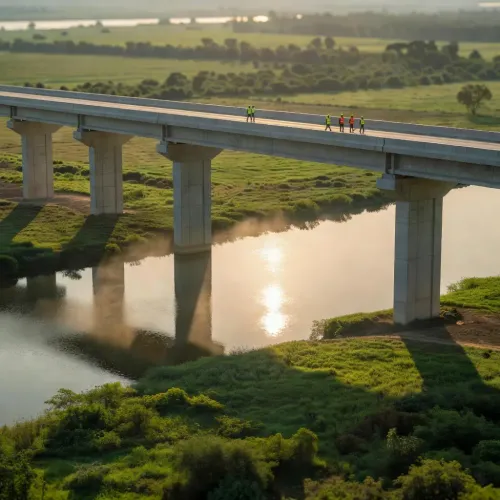
Three bridges — SBR-9, BR-4 and BR-5 — built by CIDCO at a stated cost of ₹953 crore across Panvel Creek were inaugurated, providing eastern connectivity to the Navi Mumbai International Airport.
The bridges will link Pune, Panvel, Thane and Kalyan via National Highway 4B to the airport, MTHL, Ulwe Coastal Road and Amra Marg.
Property cards were distributed to landholders in the NAINA region , formalising land titles for project-affected communities.
CIDCO was granted special powers to rectify overlapping plots and ownership-record errors in the final development plan.
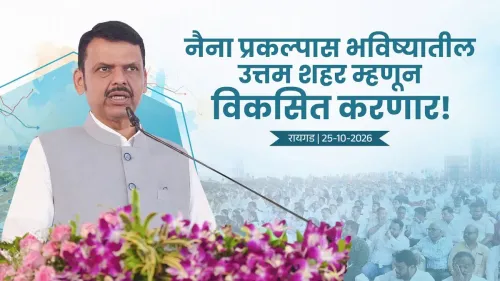
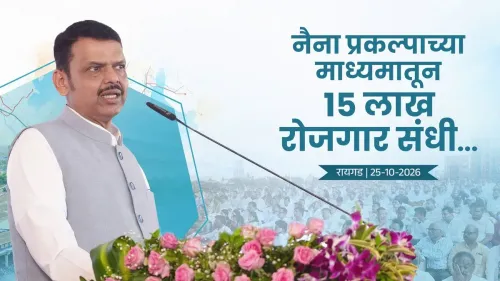
NAINA's master plan targets approximately 15 lakh employment opportunities , including 5 lakh high-paying jobs , through EduCity, MediCity, AeroCity, Sports City and Knowledge City clusters.
The districts of Thane, Navi Mumbai, Raigad and Palghar are designated as key growth centres under the NAINA framework.
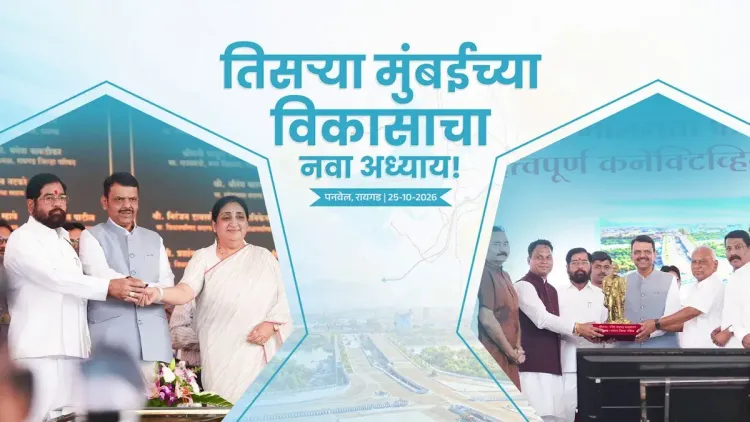
A new city is being born east of Mumbai — and Maharashtra Chief Minister Devendra Fadnavis fired the starting gun on Sunday, 25 October 2026, inaugurating a clutch of landmark infrastructure works in the NAINA (Navi Mumbai Airport Influence Notified Area) region that its planners are billing as Maharashtra's third Mumbai.
Three Bridges, One Corridor, a New Eastern Gateway
The centrepiece of the day was the inauguration of three major bridges — SBR-9, BR-4 and BR-5 — constructed by CIDCO (City and Industrial Development Corporation of Maharashtra) at a stated cost of ₹953 crore. Built across Panvel Creek, the bridges stitch together a continuous road corridor that will carry traffic from Pune, Panvel, Thane and Kalyan via National Highway 4B directly to the upcoming Navi Mumbai International Airport.
That single connection does something strategically important: it gives the new airport an eastern approach entirely independent of Mumbai's already-choked western expressway network. Onward links to the Ulwe Coastal Road, the Mumbai Trans Harbour Link (MTHL) and Amra Marg mean the airport plugs into a web of newer infrastructure rather than the city's older, congested arteries.
Property Cards, Plot Disputes and the Landholders Who Waited
Alongside the bridge inaugurations, Fadnavis distributed property cards to landholders in the NAINA region — a step that converts decades of informal land ownership into documented legal title. The government also granted CIDCO special powers to correct overlapping plots, wrong plot numbers and ownership-record errors in the final development plan, a flexibility normally unavailable once a plan is formally notified.
The move directly addresses a long-standing grievance: thousands of farmers and project-affected families in the Panvel-Raigad belt had complained that administrative errors in survey records left their land rights in legal limbo, stalling compensation and resettlement. Resolving those discrepancies is now framed as a prerequisite for the region's orderly development.
The NAINA Blueprint: EduCity, AeroCity and 15 Lakh Jobs
NAINA's master vision goes well beyond runways and roads. The planned zone encompasses thematic development clusters — EduCity, MediCity, Sports City, AeroCity and Knowledge City — designed to attract investment in education, healthcare, aviation services and research. Fadnavis stated the NAINA region is targeted to generate approximately 15 lakh employment opportunities, of which 5 lakh are described as high-paying jobs.
The districts of Thane, Navi Mumbai, Raigad and Palghar are identified as the key growth centres anchoring this expansion. The logic mirrors a well-tested urban-economics playbook: a greenfield international airport becomes a gravity well for logistics, hospitality, tech campuses and manufacturing, pulling development away from a saturated core city.
Navi Mumbai Airport's Long Road to the Runway
The Navi Mumbai International Airport's origins stretch back to the 1990s, when planners first proposed a second major airport for the Mumbai Metropolitan Region to relieve what was already a congested facility. CIDCO, established in 1970 to build Navi Mumbai as a planned counter-magnet to Mumbai, was the natural implementing agency. Decades of land-acquisition disputes, environmental clearances and financing negotiations meant the project moved in fits and starts — making today's ground-level infrastructure push a visible signal that the development machinery is now in motion.
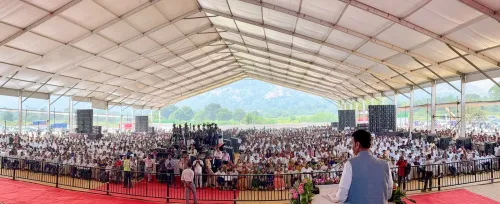
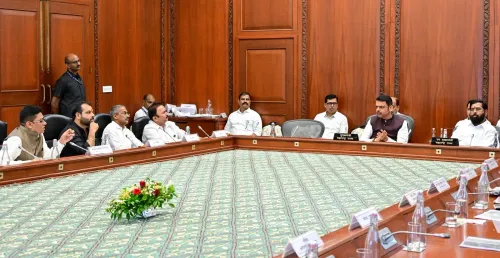
The event was attended by Deputy CM Eknath Shinde, Deputy CM Sunetra Pawar, Minister Bharat Gogawale, MP Sunil Tatkare, MP Shrirang Appa Barne and a broad cross-section of state legislators, underscoring the coalition-wide political buy-in behind the project.
When the first flight eventually lifts off from Navi Mumbai, it will take off over a region that is, right now, being assembled bridge by bridge, plot card by plot card — and the clock on Maharashtra's next growth chapter has formally started.
Point of View
Land-rights reform (property cards and plot-error corrections) and a thematic city framework (AeroCity, EduCity, MediCity) in a single event, Fadnavis is compressing the usual phased rollout into a unified political and administrative statement. The participation of both Deputy CMs and multiple ruling-coalition MPs signals that the project carries coalition-wide ownership, reducing the risk of inter-partner friction that has historically slowed Maharashtra's mega-projects. The real test will be whether the employment and investment targets survive the transition from blueprint to construction site — a gap where Mumbai Metropolitan Region projects have repeatedly stalled.
NationPress
25 Oct 2026
Frequently Asked Questions
What is NAINA in Navi Mumbai?
NAINA stands for Navi Mumbai Airport Influence Notified Area — a planned urban development zone around the upcoming Navi Mumbai International Airport, designed to grow into a major economic region and is sometimes called the 'third Mumbai.'
What bridges did CM Fadnavis inaugurate in Navi Mumbai?
CM Devendra Fadnavis inaugurated three CIDCO-built bridges — SBR-9, BR-4 and BR-5 — constructed across Panvel Creek at a stated cost of ₹953 crore , providing eastern road access to the Navi Mumbai International Airport.
How many jobs will NAINA create in Maharashtra?
The NAINA region is targeted to generate approximately 15 lakh employment opportunities , including 5 lakh high-paying jobs , through planned city clusters such as AeroCity, EduCity, MediCity, Sports City and Knowledge City.
What is CIDCO and what is its role in the NAINA project?
CIDCO (City and Industrial Development Corporation of Maharashtra), established in 1970, is the planning and executing authority for the NAINA region. It built the three new bridges, manages NAINA's development plan and has been granted special powers to correct land-record errors for project-affected landholders.
How will the new NAINA bridges connect to the Navi Mumbai airport?
The three new bridges across Panvel Creek connect Pune, Panvel, Thane and Kalyan via National Highway 4B directly to the Navi Mumbai International Airport, and also link to the Mumbai Trans Harbour Link (MTHL), Ulwe Coastal Road and Amra Marg.