CM Fadnavis launches 'Har Ghar Sant Ravidas' campaign across Maharashtra
Synopsis
CM Devendra Fadnavis has launched the 'Har Ghar Sant Ravidas Vichar — Viksit Maharashtra' campaign, a four-month statewide initiative from November 2026 to February 2027 linking over 108,000 schools, colleges, libraries and civil-society bodies to mark Sant Ravidas Maharaj's 650th birth-anniversary year.
Key Takeaways
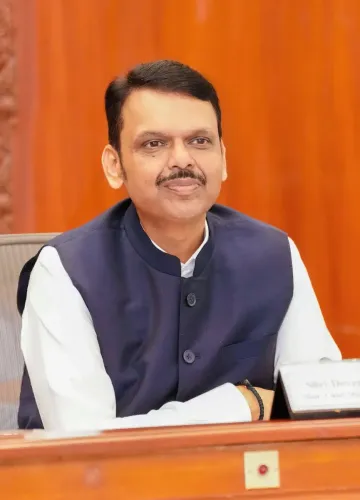
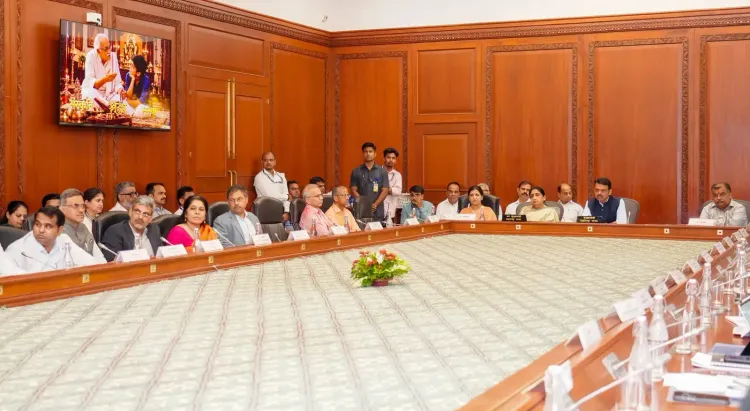
CM Devendra Fadnavis chaired the launch meeting at Sahyadri Guest House, Mumbai on 26 October 2026 .
The campaign runs November 2026 – February 2027 , covering state, district, taluka, city and village tiers simultaneously.
1,08,139 schools , 5,841 colleges , 65 universities and 11,150 public libraries are to be enrolled in the initiative.
Welfare activities include free health camps, blood-donation drives, a Shramveer Samman for artisans and 650 village idea-assemblies with tree-planting.
A Digital Ravidas 650 component will include an e-library, digital quizzes and 650 inspirational video stories .
The state-level grand finale is scheduled for 13–14 February 2027 in Nashik , concluding with a Samajkumbh gathering.
From 108,139 schools to 11,150 public libraries, Maharashtra is preparing to carry the teachings of a 15th-century Bhakti saint into every corner of the state. Chief Minister Devendra Fadnavis chaired a high-level meeting at Sahyadri Guest House, Mumbai, on Monday, 26 October 2026, to finalise the blueprint for a sweeping four-month campaign marking the 650th birth-anniversary year of Sant Ravidas Maharaj.
The initiative, formally titled 'Har Ghar Sant Ravidas Vichar — Viksit Maharashtra' ('Sant Ravidas's thought in every home — a developed Maharashtra'), will run from November 2026 to February 2027. At its core is a simple but ambitious goal: move the saint's messages of equality, humanity, dignity of labour and social justice out of ceremonial halls and into daily life.
What Fadnavis directed — and why it is scaled this big
'The teachings of Sant Ravidas Maharaj on equality, humanity, dignity of labour and social justice should not remain confined to events alone — they must become a part of society's everyday life,' CM Fadnavis said at the meeting. He directed all relevant departments to build independent implementation units and set up a monitoring committee to review progress from planning through to execution.
The campaign's architecture is deliberately tiered — committees at the state, divisional, district, taluka, city and village levels will drive rollout simultaneously. Also joining the effort: religious sites, self-help groups, youth clubs, trade and labour unions, educational bodies, health institutions, and government field offices.
Schools, colleges and the 'Digital Ravidas 650' push
Education forms the campaign's largest single pillar. 5,841 colleges and 65 universities are to be enrolled alongside the schools. Students will take part in essay competitions, debates, quizzes, sant-literature readings, research projects and cultural programmes designed to root values of social equality and humanity in the next generation.
On the digital front, the government has planned a 'Digital Ravidas 650' initiative encompassing an e-library, digital quizzes and 650 inspirational video stories. Podcasts, interviews and interactive programmes will further amplify the campaign's reach beyond physical events.
Health camps, 'Shramveer Samman' and 650 village assemblies
The welfare dimension is equally detailed. Free health check-up camps, blood-donation drives, eye and dental screenings, and awareness sessions on women's health, nutrition, de-addiction and sanitation are all slated under the campaign banner. A 'Shramveer Samman' (Honour for the Hardworking) event will spotlight artisans' products, women's economic self-reliance and a youth-service week — directly echoing the saint's core teaching on the dignity of labour.
650 villages across Maharashtra are earmarked for vicharsabhas (idea assemblies) and tree-plantation drives. Each district will deploy two dedicated publicity vehicles to carry the message to rural communities that digital outreach may not reach.
Nashik: the grand finale on 13–14 February 2027
The state-level centrepiece is set for 13 and 14 February 2027 in Nashik. The two-day programme will feature the Begumpura concept (Sant Ravidas's vision of an egalitarian, sorrow-free city), a Sant Sangam, cultural performances, a Samata Mahamanch (equality platform), a Sant Ravidas heritage exhibition, dialogue centres and community meals.
Following the main event, a 'Samajkumbh' — modelled loosely on the government's earlier 'Hind ki Chadar' programme for cross-community unity — will bring together diverse social and religious traditions to reinforce the messages of equality, fraternity and social cohesion.
At Monday's meeting, Deputy Chief Minister Sunetra Ajit Pawar, and ministers Girish Mahajan, Radhakrishna Vikhe Patil, Sanjay Sawkare, Sanjay Shirsat, State Minister Madhuri Misal and MLA Ravindra Chavan were present alongside senior officials.
When the Nashik curtain falls in February, Maharashtra will have tested whether a saint's 650-year-old vision of a sorrow-free, equal society can be woven — school desk by library shelf by village assembly — into the fabric of a 21st-century state.
Point of View
Particularly in periods of political sensitivity around caste and community relations. By anchoring the drive in welfare deliverables (health camps, artisan recognition, women's self-reliance) rather than purely ceremonial events, the Fadnavis administration signals an intent to extract measurable grassroots dividends from a cultural milestone. The explicit model of 'Hind ki Chadar' and the proposed 'Samajkumbh' suggest the government is building a replicable template for future saint-anniversary diplomacy across Maharashtra's diverse social fabric. The scale — 108,000-plus educational institutions — also doubles as a soft administrative mobilisation test ahead of local-body cycles.
NationPress
26 Oct 2026
Frequently Asked Questions
What is the 'Har Ghar Sant Ravidas Vichar — Viksit Maharashtra' campaign?
It is a Maharashtra government initiative running from November 2026 to February 2027 to spread Sant Ravidas Maharaj's teachings on equality, humanity and social justice to every household in the state through schools, colleges, libraries, health camps and digital programmes.
Why is Sant Ravidas's 650th birth anniversary being celebrated in Maharashtra?
Sant Ravidas Maharaj, a 15th-century Bhakti saint revered for his teachings on equality and dignity of labour, completes 650 years since his birth, and the Maharashtra government has chosen this milestone for a large-scale social outreach campaign.
When and where is the main state-level event for the Sant Ravidas 650 campaign?
The state-level centrepiece event is planned for 13 and 14 February 2027 in Nashik , featuring a heritage exhibition, Sant Sangam, cultural performances, community meals and the Samajkumbh gathering.
How many schools and colleges are involved in the Sant Ravidas campaign in Maharashtra?
The plan envisages linking 1,08,139 schools , 5,841 colleges , 65 universities and 11,150 public libraries to the campaign.
What is 'Digital Ravidas 650'?
'Digital Ravidas 650' is a digital component of the campaign that will include an e-library, online quizzes and the production of 650 inspirational video stories to spread the saint's teachings through social media and digital platforms.