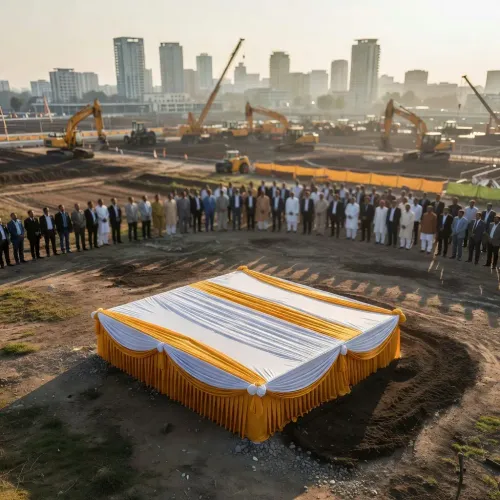
CM Fadnavis: NAINA to generate 15 lakh jobs near Navi Mumbai
Synopsis
CM Devendra Fadnavis has announced that NAINA — the Navi Mumbai Airport Influence Notified Area — will create 15 lakh jobs, with five lakh classified as high-paying, framing the planned development corridor as Maharashtra's next major employment engine.
Key Takeaways
CM Devendra Fadnavis announced that the NAINA project will generate 15 lakh total jobs in the region.
Of those, five lakh positions are projected to be high-paying, signalling intent to attract quality-sector employers.
NAINA stands for Navi Mumbai Airport Influence Notified Area , a planned urban development zone linked to Navi Mumbai International Airport .
The project follows Maharashtra's established model of using airport infrastructure as an anchor for broader regional economic development.
Key beneficiaries include job seekers in Navi Mumbai, Panvel, Uran, and Raigad district , as well as logistics and commercial investors.
Phased rollout and actual employment outcomes will be the critical benchmark for the scheme's success.
A development zone tied to one of India's most-watched airport projects just got a major employment pitch. Chief Minister Devendra Fadnavis has declared that NAINA — the Navi Mumbai Airport Influence Notified Area — will generate 15 lakh jobs, of which five lakh are expected to be high-paying, positioning the corridor as a transformative economic engine for the Mumbai Metropolitan Region.
What NAINA is — and why the numbers matter
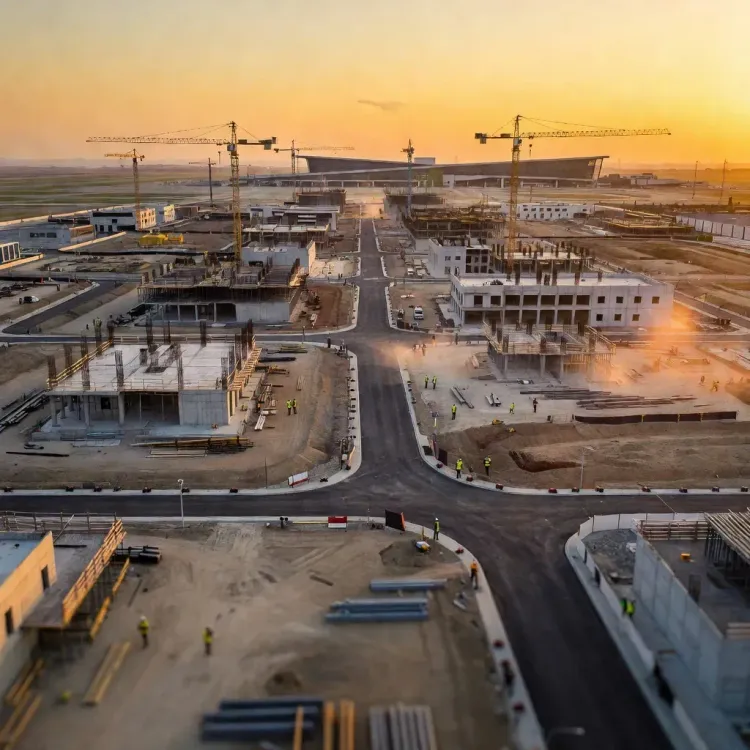
NAINA stands for Navi Mumbai Airport Influence Notified Area, a planned urban development zone designed to capitalise on the economic pull that a major new international airport generates. The concept is straightforward but ambitious: as Navi Mumbai International Airport takes shape, the surrounding region becomes a magnet for logistics, manufacturing, commercial real estate, and services — and NAINA is the governance framework meant to channel that growth in an organised, planned manner.
The 15-lakh job figure cited by CM Fadnavis is the headline, but the breakdown is the detail that cuts through: a promised five lakh high-paying positions signals that the project's architects are not simply counting construction labour or informal trade. The intent, as framed by the Chief Minister's Office, is to attract sectors — think aerospace, IT, warehousing, and financial services — that cluster around global aviation hubs.
Airport-linked urbanism: Maharashtra's long playbook
Maharashtra has a well-worn template for airport-driven economic zones. The logic runs from Mumbai's Chhatrapati Shivaji Maharaj International Airport outward — the corridors and townships that grew around it defined the economic geography of the city's western suburbs for decades. NAINA is, in effect, an attempt to engineer that same organic clustering, this time from the ground up, with Navi Mumbai as the nucleus.
Planned development zones linked to aviation infrastructure have proliferated across India, but execution timelines have often lagged announcements. The NAINA project will be watched closely to see whether phased land use, road and rail connectivity, and investor commitments actually follow the job-creation projections that CM Fadnavis has now publicly staked his government's credibility on.
Who stands to gain — and what comes next
The most immediate beneficiaries in the government's framing are job seekers in Maharashtra — particularly youth in Navi Mumbai, Panvel, Uran, and the surrounding Raigad district — along with local residents whose land values and infrastructure access are directly tied to how swiftly NAINA is rolled out. Investors in logistics and light manufacturing are the other constituency the announcement is clearly aimed at.
The real test arrives in the phased rollout: whether plots are allotted, utilities are laid, and industries actually break ground. For now, CM Fadnavis has put a number — 15 lakh — on Maharashtra's airport ambition. That number will define the benchmark against which his government's infrastructure legacy will be measured.
Point of View
At its core, a large-scale land and infrastructure play — a shift from engineering optics to employment optics. Airport-linked development zones have a patchy delivery record across India, and the specific breakdown of 'five lakh high-paying' jobs raises the political stakes considerably, because quality of employment is far harder to fudge than raw headcount. For the Mahayuti government, NAINA is also a medium-term electoral asset: the Raigad-Navi Mumbai belt is a swing geography, and sustained investment visibility there could matter ahead of future assembly cycles. The real credibility test will come when industry commitments and land allotments are made public.
NationPress
26 Oct 2026
Frequently Asked Questions
What is NAINA in Maharashtra?
NAINA stands for Navi Mumbai Airport Influence Notified Area — a planned urban development zone designed to harness economic activity generated by the upcoming Navi Mumbai International Airport. It covers a defined region around the airport where infrastructure, housing, and commercial development are being coordinated by the state government.
How many jobs will NAINA create according to CM Fadnavis?
Chief Minister Devendra Fadnavis has stated that the NAINA project will generate 15 lakh jobs in total, with five lakh of those expected to be high-paying positions.
Which areas benefit from the NAINA project?
The NAINA zone primarily covers areas around Navi Mumbai, Panvel, Uran, and parts of Raigad district — the hinterland being planned around the Navi Mumbai International Airport site.
When will NAINA job creation begin?
The NAINA project is expected to roll out in phases tied to the development of the Navi Mumbai International Airport and surrounding infrastructure. Specific timelines for job creation milestones have not been officially detailed beyond CM Fadnavis's announcement.
What sectors are expected to drive NAINA employment?
Based on the model of airport-linked urban development, sectors expected to generate employment under NAINA include logistics, warehousing, light manufacturing, commercial real estate, hospitality, and services — with high-paying roles likely tied to aviation, IT, and finance sectors.