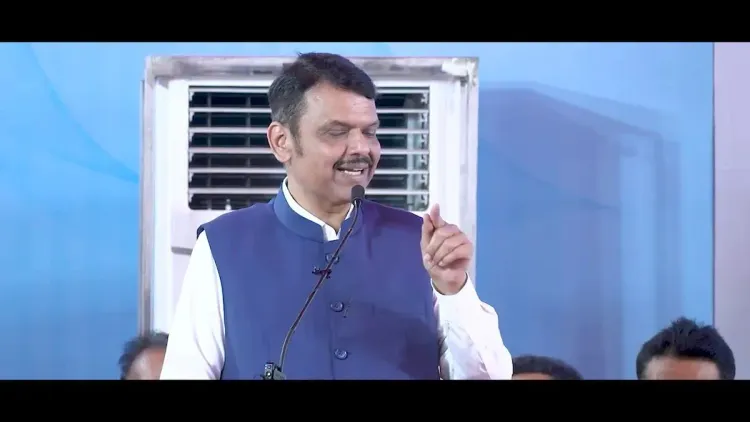
CM Fadnavis: Constitution stands, Parliament stays supreme
Synopsis
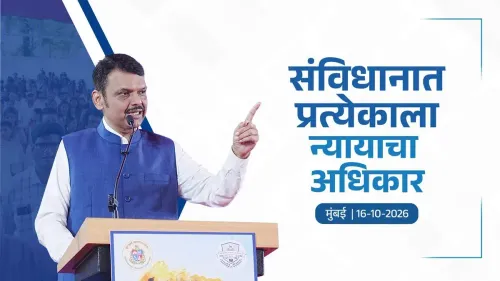
Maharashtra CM Devendra Fadnavis declared on X that as long as Dr. B.R. Ambedkar's Constitution stands, Parliament remains supreme and all national decisions must be made there — a pointed reaffirmation of India's founding democratic framework.
Key Takeaways
Maharashtra CM Devendra Fadnavis posted on 18 October 2026 reaffirming parliamentary supremacy under the Indian Constitution.
He credited the Constitution to Bharat Ratna Dr.
Babasaheb Ambedkar , the document's principal architect.
The Constitution was adopted on 26 November 1949 and came into force on 26 January 1950 .
Fadnavis stated that all national decisions must be taken in Parliament, not outside it.
The post is tagged #ConstitutionOfIndia and #DrBabasahebAmbedkar , framing the message in constitutional rather than partisan terms.
As long as Dr. B.R. Ambedkar's Constitution endures, Parliament remains sovereign — and that is where India's decisions will be made. That, in essence, is the declaration Maharashtra Chief Minister Devendra Fadnavis posted on X on Sunday, 18 October 2026, in a pointed reaffirmation of parliamentary democracy under the Indian Constitution.
Posting in Marathi, Fadnavis wrote: 'जोपर्यंत महामानव, भारतरत्न डॉ. बाबासाहेब आंबेडकर यांचे संविधान आहे, तोपर्यंत संसद सर्वोच्च असेल आणि देशाचे निर्णय संसदेतच घेतले जातील!' — translated: 'As long as the Constitution of the great man, Bharat Ratna Dr. Babasaheb Ambedkar, exists, Parliament will be supreme and the country's decisions will be taken in Parliament itself!'Ambedkar's blueprint and the doctrine of parliamentary supremacy
Dr. Bhimrao Ramji Ambedkar, chairman of the Constituent Assembly's Drafting Committee, is widely regarded as the principal architect of the Indian Constitution. Adopted by the Constituent Assembly on 26 November 1949 and brought into force on 26 January 1950, the Constitution established India as a parliamentary democracy — placing the elected legislature at the heart of national governance. Fadnavis's invocation of Ambedkar is both a tribute to that founding moment and a statement of institutional principle: that legislative supremacy is not a political preference but a constitutional guarantee.Why leaders reach for this argument — and what it signals
Affirmations of parliamentary primacy are a recurring feature of Indian political discourse, deployed across party lines whenever questions arise about where ultimate authority over national decisions should reside — whether in the legislature, the executive, the judiciary, or extra-constitutional actors. Tagging his post #DrBabasahebAmbedkar and #ConstitutionOfIndia, Fadnavis anchors his statement firmly in the constitutional tradition rather than partisan territory. The framing is deliberate: invoking Ambedkar tends to cut across ideological divides and signals a defence of institutional structures rather than any single government's agenda. The post carries no elaboration of a specific event or bill, but its directness is its own message — a senior leader of one of India's largest states publicly placing himself on the record in favour of parliamentary decision-making as the only legitimate forum for the country's choices. With parliamentary sessions always on the horizon and constitutional debates a perennial feature of Indian public life, reminders of the founding compact — and the man who drafted it — rarely lack an audience.Point of View
Making the argument harder to contest on political grounds. It fits a broader pattern in which senior leaders of all affiliations periodically stake their institutional credibility on constitutional fidelity, particularly when questions of governance, federal balance, or judicial-executive tension surface in public debate. The statement is brief, but its placement — a CM of a major state, on record, publicly — signals that the question of where legitimate national authority resides remains live.
NationPress
18 Oct 2026
Frequently Asked Questions
What did CM Devendra Fadnavis say about Parliament and the Constitution?
Fadnavis stated that as long as Dr. Babasaheb Ambedkar's Constitution exists, Parliament will remain supreme and all of India's decisions will be taken in Parliament.
Who drafted the Indian Constitution?
Dr. B.R. Ambedkar chaired the Constituent Assembly's Drafting Committee and is widely regarded as the principal architect of the Indian Constitution.
When did the Indian Constitution come into force?
The Constitution of India was adopted on 26 November 1949 and came into force on 26 January 1950, marking the birth of the Republic.
Why do Indian leaders frequently invoke Ambedkar when discussing Parliament?
Ambedkar commands reverence across political parties as the Constitution's chief drafter; invoking his legacy lends cross-partisan weight to arguments about institutional authority and democratic governance.
What does parliamentary supremacy mean in the Indian context?
Parliamentary supremacy means that the elected legislature — comprising the Lok Sabha, Rajya Sabha, and the President — is the ultimate law-making authority, and major national decisions must flow through it rather than any other body.