RSS is a service org, not a political one: Author Rashmi Samant on her new book
Synopsis
Entrepreneur Rashmi Samant's new book on the RSS centenary assembles 20 voices — Hindu, Muslim, Christian, Jewish, LGBTQIA+, British, Israeli, American — all of whom say direct contact with the Sangh changed their minds. Her core argument: the organisation's seva identity has been buried under its BJP association, and no one can understand the RSS without first understanding service as its founding principle.
Key Takeaways
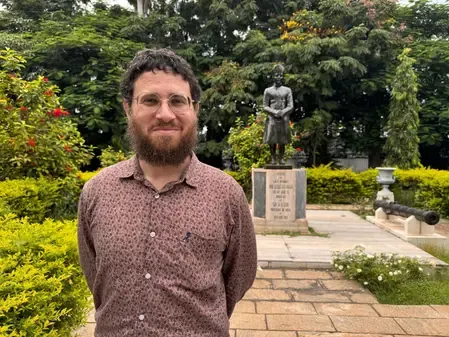
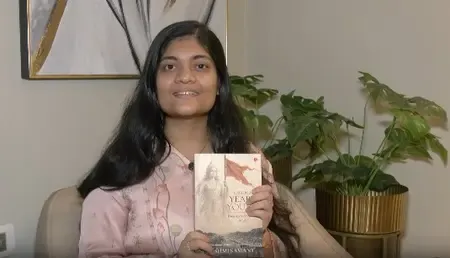
Rashmi Samant , aged 27 , has authored 'Hundred Years Young: Rashtriya Swayamsevak Sangh' during the RSS centenary year.
The book features essays by 20 contributors , most under 30 years of age , from diverse religious, national and social backgrounds including British, Israeli and American writers.
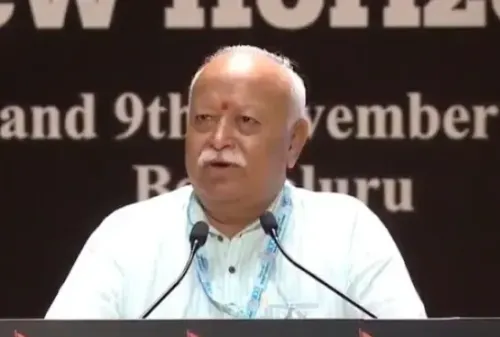
RSS Chief Mohan Bhagwat has written the foreword, endorsing the book's aim of charting a 'middle path' between uncritical praise and uninformed criticism.
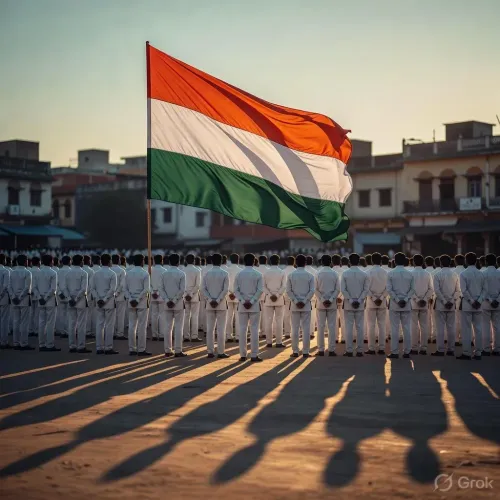
Samant cited the 1963 Republic Day parade — in which 3,500 swayamsevaks marched at Nehru's invitation — and the RSS's response to the Gujarat earthquake and Covid-19 as examples of its service record.
She argued that the RSS's ideological link to the BJP has caused its core seva identity to be overshadowed in public perception.
Entrepreneur and author Rashmi Samant has urged readers to understand the Rashtriya Swayamsevak Sangh (RSS) through its century-long record of service work rather than through a political lens, saying that those who have engaged directly with the organisation have consistently come away with a positive experience. Samant was speaking in the context of her new book, 'Hundred Years Young: Rashtriya Swayamsevak Sangh', released during the RSS centenary year.
What the book sets out to do
Samant said the volume brings together essays by 20 young contributors — most of them under 30 years of age — who approached the RSS with initial scepticism and recorded how their perceptions shifted after direct engagement. 'My approach was to bring forward people who have worked with the organisation and observed it closely,' she said. 'They joined later, saw how the Sangh functions, and then their thinking changed.'
The contributor base is deliberately diverse: the book includes writers from Britain, Israel and the United States, as well as voices from Christian, Muslim and Jewish backgrounds, and members and supporters of the LGBTQIA+ community. Samant said the intent was to make it possible to view the RSS 'from every perspective, rather than through a particular prejudiced lens.'
Service as the RSS's defining identity
A central argument in the book is that the RSS is, at its core, a seva (service) organisation, and that its political associations — particularly its ideological links to the Bharatiya Janata Party (BJP) — have obscured this dimension in public debate. 'The RSS is often viewed through a political lens, but in reality it is a service-oriented organisation where service is the highest duty,' Samant said. 'Without understanding this, no one can truly comprehend the RSS.'
She pointed to specific historical episodes as evidence: during the 1962 India-China war, when civil police were redeployed to the border, RSS swayamsevaks reportedly managed civil administration and traffic across the country. She also noted that then Prime Minister Jawaharlal Nehru invited the Sangh to march in the 1963 Republic Day parade, with 3,500 swayamsevaks participating — a fact, she argued, that is largely absent from mainstream discourse. During the Covid-19 pandemic and the Gujarat earthquake, she said, RSS volunteers reached affected communities before government relief machinery arrived.
RSS Chief Mohan Bhagwat's foreword and the 'middle path'
RSS Chief Mohan Bhagwat has written the foreword to the book. According to Samant, Bhagwat acknowledges that the organisation has attracted both excessive criticism and uncritical praise, and that the book charts a middle course — one grounded in lived experience rather than ideology. 'It is not about viewing things through the lens of a particular ideology; it is simply about experiencing the RSS and its activities and writing about them,' she said.
Samant added that international academics — including scholars from Britain, Germany and a German parliamentarian — have contributed research-based perspectives on the RSS, which she said helps situate the organisation within a global frame rather than a purely domestic one.
On youth politics and the CJP protests
Samant, who is 27 years old, also commented on recent protests by youth political groups, including the Cockroach Janta Party (CJP). She argued that the protest leadership — whom she described as largely above 29 or 30 years of age — does not represent the true Gen Z demographic. 'India's youth population is between 30 and 40 crore. India's real Gen Z are actively engaged in creative work — nation-building, positive initiatives, impactful efforts,' she said, citing the example of Skyroot, which launched India's first privately built space vehicle.
She expressed concern about a statement attributed to CJP leadership — 'Let a hundred Jantar Mantars bloom' — which she described as a variation of Mao Zedong's slogan 'Let a hundred flowers bloom,' a precursor, she argued, to the Cultural Revolution and the Great Leap Forward. 'Ideologies which seek to spread anarchy today while promising a better tomorrow are fundamentally undemocratic,' she said.
The road ahead: dialogue over street politics
Samant said she hopes the current atmosphere of political confrontation can give way to constructive dialogue, noting that the RSS has 'continuously learned and evolved' since its founding in 1925. She acknowledged that the organisation's reluctance to self-promote — rooted in its seva ethos — works against it in terms of public perception in the social media age. 'My humble appeal is that people should not form an opinion about the RSS without understanding its actual work,' she said. The book, she added, is intended as a starting point for exactly that kind of informed engagement.
Point of View
Non-Indian, LGBTQIA+ — which pre-empts the standard critique that RSS sympathisers are a monolith. What it does not fully resolve is the structural tension she herself names: that the BJP's grip on power makes separating the RSS's seva identity from its political footprint genuinely difficult for any outside observer. The historical episodes she cites — the 1962 civil administration role, Nehru's Republic Day invitation — are documented but rarely foregrounded, and their mainstreaming could meaningfully shift the terms of debate. Whether a book alone can accomplish that, against the velocity of social media outrage cycles she also criticises, remains the open question.
NationPress
18 Oct 2026
Frequently Asked Questions
What is the book 'Hundred Years Young: Rashtriya Swayamsevak Sangh' about?
It is a collection of essays by 20 young contributors — most under 30 — who describe how their perception of the RSS changed after direct engagement with the organisation. The book was authored by Rashmi Samant and includes voices from diverse religious, national and social backgrounds, with RSS Chief Mohan Bhagwat writing the foreword.
Who is Rashmi Samant?
Rashmi Samant is a 27-year-old Indian entrepreneur and author. She is known for her work connecting Indian youth narratives with broader nation-building themes, and has studied and worked abroad before writing this book on the RSS centenary.
What is Rashmi Samant's main argument about the RSS?
Samant argues that the RSS is fundamentally a service-oriented organisation — not a political one — and that its association with the BJP has caused its century-long record of seva (selfless service) to be misunderstood or ignored. She says no one can truly understand the RSS without first grasping this service identity.
What historical examples does the book highlight about the RSS's service work?
The book highlights that during the 1962 India-China war, RSS swayamsevaks managed civil administration and traffic across India when police were redeployed to the border. It also notes that then Prime Minister Jawaharlal Nehru invited 3,500 swayamsevaks to march in the 1963 Republic Day parade, and that the RSS provided relief during the Gujarat earthquake and the Covid-19 pandemic.
What does Rashmi Samant say about youth protests and the Cockroach Janta Party (CJP)?
Samant argues that the CJP protests, which have drawn 3,000 to 10,000 participants, do not represent India's true Gen Z, as much of the leadership is reportedly above 29 or 30 years of age. She expressed concern about a slogan she linked to Maoist rhetoric and said she hopes street unrest can be channelled into constructive dialogue.