South Korea growth to strengthen on chip supercycle, says Finance Minister
Synopsis
South Korean Finance Minister Lee Hyoung-il told Moody's, Fitch, and S&P on the sidelines of the IMF-World Bank Annual Meetings in Bangkok that Seoul expects growth in the 3% range this year, driven by a semiconductor and AI supercycle — and that a new Future Fund will channel those windfall tax revenues into long-term growth engines. Rating agencies confirmed their stable outlook on Asia's No. 4 economy.
Key Takeaways
Finance Minister Lee Hyoung-il met senior officials from Moody's , Fitch , and S&P at the IMF-World Bank Annual Meetings in Bangkok on 18 October 2026 .
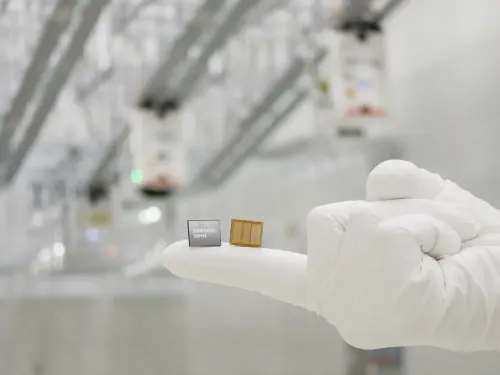
South Korea is projected to grow at the 3 percent range in 2026, supported by solid chip exports and increased facility investment.
The semiconductor and AI supercycle is helping South Korea offset challenges including population ageing and Middle East conflict spillovers.
The government plans to launch a Future Fund next year to deploy strong tax revenues from the chip boom.
South Korea signed MOUs with EBRD and CABEI on AI exchanges; all three rating agencies confirmed a stable outlook on the economy.
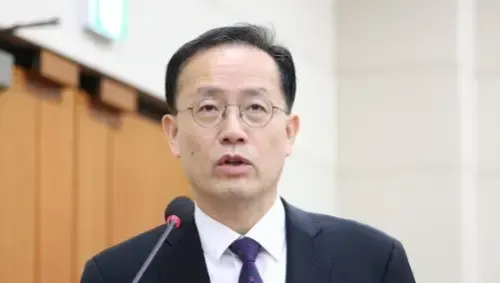
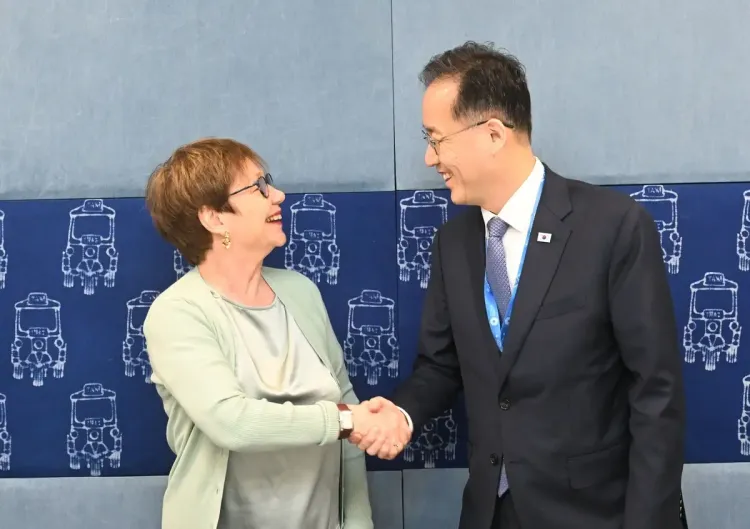
South Korean Finance Minister Lee Hyoung-il said on Sunday, 18 October 2026, that the country's economic growth momentum is set to accelerate, driven by a semiconductor supercycle, following high-level meetings with senior officials from the world's three leading credit rating agencies on the sidelines of the International Monetary Fund (IMF) and World Bank Group Annual Meetings in Bangkok.
Key Meetings in Bangkok
Lee met separately with Marie Diron, global head of Moody's Sovereign and Sub-Sovereign Risk Group; James Longsdon, global group head of Sovereign and Supranational Ratings at Fitch Ratings; and Roberto Sifon-Arevalo, global head of sovereign analytics and research at S&P Global Ratings. The meetings were confirmed by South Korea's Ministry of Finance and Economy.
Growth Outlook and Chip Supercycle
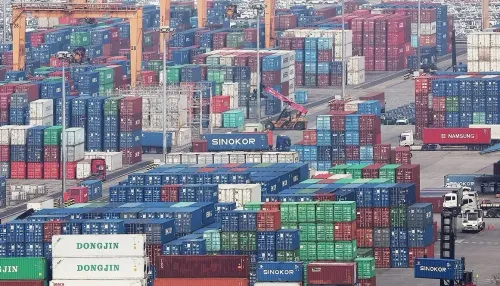
The finance minister briefed agency heads on South Korea's recent economic performance, projecting growth in the 3 percent range for the current year. He attributed this to solid chip exports and increased facility investment, with the growth momentum expected to strengthen over the medium to long term. The three agencies noted that the supercycle in the semiconductor and artificial intelligence (AI) industries has helped Asia's fourth-largest economy navigate headwinds including population ageing and instability from the war in the Middle East.
Future Fund and Growth Engines
The credit rating agencies expressed keen interest in how the South Korean government plans to deploy strong tax revenues generated by the chip supercycle. Lee provided details on the Future Fund, which is set to launch next year, and outlined government-led initiatives including three megaprojects and a green transition strategy aimed at building long-term growth engines.
Addressing Economic Disparities
Lee underscored that sustainable growth must be inclusive. The government is pursuing measures to support vulnerable groups in three key areas — housing, jobs, and financial services — while also working to narrow disparities across businesses, generations, income groups, and regions. The finance ministry said efforts are underway to ensure the gains from the semiconductor boom are broadly distributed.
MOUs with Multilateral Development Banks
On the sidelines of the same meetings, Lee signed separate memorandums of understanding (MOUs) with the European Bank for Reconstruction and Development (EBRD) and the Central American Bank for Economic Integration (CABEI) to enhance exchanges in AI. The credit rating agencies confirmed that their assessments of South Korea's economy remain stable, citing sound public finances and stable economic indicators.
With the Future Fund launch approaching and semiconductor exports holding firm, South Korea's economic narrative at the Bangkok meetings was one of confidence — though the durability of the chip supercycle and success in broadening its benefits will be closely watched in the quarters ahead.
Point of View
In effect, road-showing South Korea's credit story to the very agencies that set its sovereign rating. The chip supercycle is real, but it is also cyclical; the more interesting question is whether the Future Fund translates windfall semiconductor revenues into structural diversification, or whether it becomes another sovereign wealth vehicle that moves slower than the market cycle it was built on. The inequality subtext is also worth watching: a chip-led boom that concentrates gains in a handful of large exporters while housing and jobs pressures persist at the household level is precisely the kind of K-shaped recovery that rating agency models can underweight.
NationPress
18 Oct 2026
Frequently Asked Questions
What did South Korea's Finance Minister say about economic growth in 2026?
Finance Minister Lee Hyoung-il said South Korea is projected to grow in the 3 percent range in 2026, backed by strong chip exports and increased facility investment. He made the remarks during meetings with Moody's, Fitch, and S&P at the IMF-World Bank Annual Meetings in Bangkok.
What is South Korea's Future Fund?
The Future Fund is a government initiative that will launch next year, designed to channel strong tax revenues generated by the semiconductor supercycle into long-term growth engines. Details were shared with the three global credit rating agencies at the Bangkok meetings.
How has the chip supercycle helped South Korea?
According to the credit rating agencies, the semiconductor and AI supercycle has helped South Korea cope with structural challenges including population ageing and economic disruption linked to the war in the Middle East. It has also underpinned stable public finances and solid export revenues.
What is South Korea's credit rating outlook?
All three major credit rating agencies — Moody's, Fitch, and S&P — confirmed that their assessments of South Korea's economy remain stable. They cited sound public finances and stable economic indicators as the basis for their current stance.
What MOUs did South Korea sign at the Bangkok meetings?
South Korea signed separate memorandums of understanding with the European Bank for Reconstruction and Development (EBRD) and the Central American Bank for Economic Integration (CABEI) to enhance cooperation in artificial intelligence.