Bank of Korea raises South Korea growth forecast to 3.3% for 2026
Synopsis
The Bank of Korea has lifted South Korea's 2026 growth forecast to 3.3% — its highest projection since 2021 — on the back of an AI-infrastructure-driven semiconductor boom. With Moody's at 3.5% and Morgan Stanley at 3.4%, the consensus is hardening: South Korea is one of the clearest beneficiaries of the global AI spending surge.
Key Takeaways
The Bank of Korea (BOK) raised its 2026 GDP growth forecast to 3.3 percent on 27 August 2026 , up from 2.6 percent in May.
The revision is the second upward adjustment since the BOK's initial 2 percent projection in February 2026 .
The forecast is the highest from the BOK since 2021 , when it projected 4.7 percent growth.
Moody's projects 3.5 percent and Morgan Stanley 3.4 percent growth for South Korea in 2026.
The 2027 growth outlook was also raised to 2.9 percent , from 2.1 percent in May.
Average household monthly income reached 5.29 million won in Q2 2026 , up 4.5 percent year-on-year.
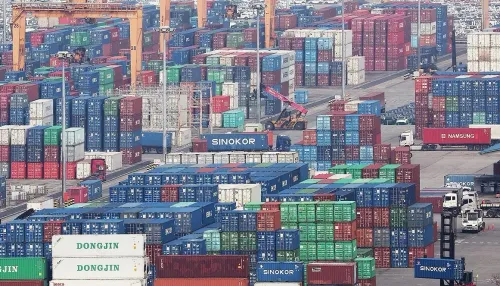
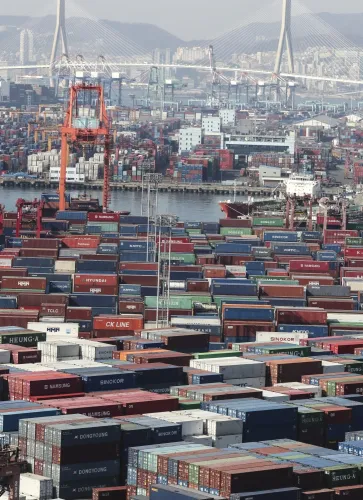
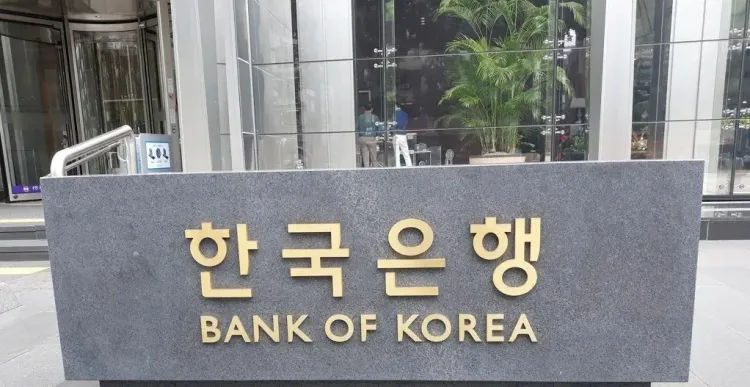
The Bank of Korea (BOK) on Thursday, 27 August 2026, raised its economic growth forecast for South Korea to 3.3 percent for the current year, citing robust semiconductor exports fuelled by sustained global demand for artificial intelligence (AI) infrastructure. The upward revision marks the central bank's highest growth projection since 2021, when it forecast 4.7 percent expansion.
Scale of the Revision
The latest forecast represents a 0.7 percentage-point increase over the BOK's previous estimate of 2.6 percent, issued in May 2026. This is the second upward revision the central bank has made since it initially projected 2 percent growth in February 2026, reflecting an accelerating economic recovery that has outpaced earlier official expectations.
The BOK's new estimate also surpasses the South Korean government's own 3 percent growth outlook published last month, signalling growing institutional confidence in the country's near-term economic trajectory.
AI-Driven Semiconductor Boom
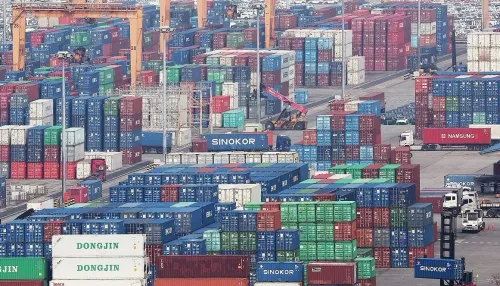
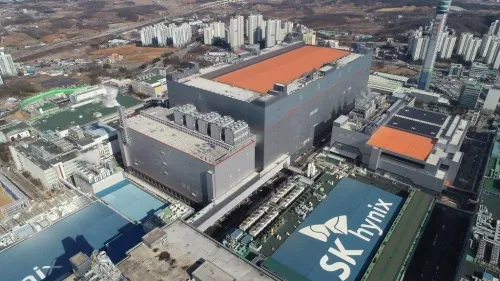
The primary engine behind the upgraded outlook is South Korea's semiconductor sector, which has benefited directly from surging global investment in AI data centres and infrastructure. Demand for advanced chips — where South Korean manufacturers hold significant market share — has remained resilient, providing a durable export tailwind.
This comes amid a broader global race to build AI compute capacity, with leading technology firms committing hundreds of billions of dollars to infrastructure buildout. South Korea's position as a key supplier of memory and logic chips places it favourably within this spending cycle.
Global Banks and Government Projections
The BOK's revised forecast aligns with a broader trend of upward revisions by global financial institutions. Moody's has projected 3.5 percent growth for South Korea, while Morgan Stanley forecasts 3.4 percent. Most major global investment banks have now placed their estimates at 3 percent or above.
For 2027, the BOK raised its growth outlook to 2.9 percent, up from the 2.1 percent estimate it issued in May — a sign that the central bank expects the current momentum to carry into the medium term, albeit at a moderated pace.
Quarterly Growth and Household Income
Recent economic data reinforces the optimism. South Korea's GDP grew 1.8 percent in the first quarter of 2026 on a quarterly basis — the strongest quarterly performance since the third quarter of 2020, when the economy expanded 2.2 percent. In the second quarter, Asia's fourth-largest economy expanded 0.6 percent, sharply exceeding the BOK's earlier forecast of just 0.2 percent.
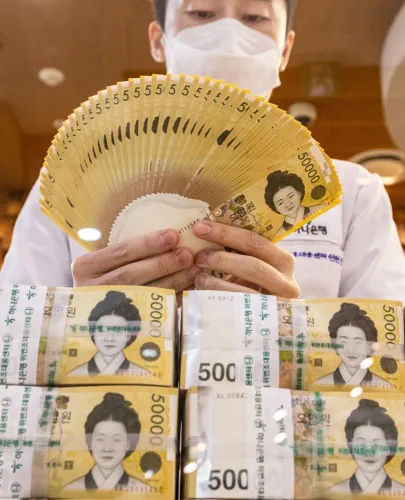
On the household front, average monthly income rose 4.5 percent year-on-year in the April–June 2026 period, reaching 5.29 million won (approximately US$3,810), according to data from the Ministry of Data and Statistics. Inflation-adjusted household income grew a more modest 1.5 percent, per the finance ministry. Average monthly wage income edged up 0.8 percent to 3.21 million won, with growth tempered by a smaller wage-worker base and slowing wage increases.
Inflation Outlook Unchanged
Despite the growth upgrade, the BOK retained its earlier inflation projections — 2.7 percent for 2026 and 2.3 percent for 2027 — suggesting the central bank views the expansion as broadly non-inflationary, driven by export performance rather than domestic demand overheating. How the BOK calibrates monetary policy in response to sustained outperformance will be closely watched in the quarters ahead.
Point of View
At its core, an AI dividend story — and the BOK is essentially acknowledging that semiconductor demand tied to AI infrastructure has structurally altered the country's near-term trajectory. The more telling detail is that the Q2 GDP print of 0.6% tripled the central bank's own May forecast of 0.2%, suggesting official models have struggled to capture the pace of the chip-export surge. The gap between nominal household income growth (4.5%) and real growth (1.5%) also deserves scrutiny: purchasing power gains are being significantly eroded by inflation, meaning the macro headline and the lived experience of South Korean households are telling quite different stories.
NationPress
11 Oct 2026
Frequently Asked Questions
Why did the Bank of Korea raise South Korea's growth forecast for 2026?
The Bank of Korea raised its 2026 growth forecast to 3.3 percent, citing strong semiconductor exports driven by sustained global demand for AI infrastructure. The revision is the second upward adjustment since the BOK's initial 2 percent projection in February 2026.
How does the BOK's 3.3 percent forecast compare to other institutions?
The BOK's 3.3 percent forecast exceeds the South Korean government's own 3 percent outlook. Moody's projects 3.5 percent and Morgan Stanley forecasts 3.4 percent, with most major global investment banks now placing estimates at 3 percent or above.
What is South Korea's growth outlook for 2027?
The Bank of Korea raised its 2027 growth forecast to 2.9 percent, up from 2.1 percent projected in May 2026, indicating expectations of continued but moderating momentum.
How did South Korea's economy perform in the first half of 2026?
South Korea's GDP grew 1.8 percent quarter-on-quarter in Q1 2026 — the strongest quarterly growth since Q3 2020. In Q2 2026, the economy expanded 0.6 percent, well above the BOK's earlier forecast of 0.2 percent.
What is the inflation outlook for South Korea in 2026 and 2027?
The Bank of Korea kept its inflation forecasts unchanged at 2.7 percent for 2026 and 2.3 percent for 2027, suggesting the growth acceleration is seen as export-led rather than driven by domestic demand pressures.