Have Global IBs Improved South Korea's 2026 Economic Growth Forecast to 2.1%?
Synopsis
South Korea's economic growth forecast for 2026 has been raised to 2.1% by major global investment banks, driven by a positive outlook for the semiconductor industry. This article delves into the revised forecasts and governmental support for the automotive sector, highlighting the nation's resilience amidst global challenges.
Key Takeaways
Economic growth forecast for South Korea raised to 2.1% .
Global semiconductor industry drives optimism.
Government support for automotive sector includes significant investments.
Continued challenges from U.S. tariffs may impact non-tech industries.
Collaboration on autonomous driving technologies is underway.
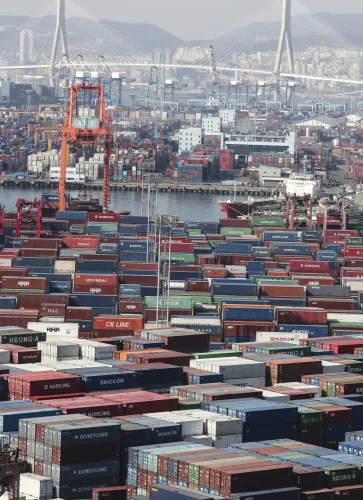
Seoul, Feb 5 (NationPress) Major international investment banks (IBs) have revised their projections for South Korea's economic growth this year, attributing this adjustment to a resurgence in the global semiconductor sector, as reported by a financial organization on Thursday.
The average growth forecast for Asia's fourth-largest economy, compiled by eight leading global IBs, now stands at 2.1 percent as of the end of January, reflecting an increase of 0.1 percentage points compared to their previous median outlook released a month prior, according to the Korea Center for International Finance (KCIF).
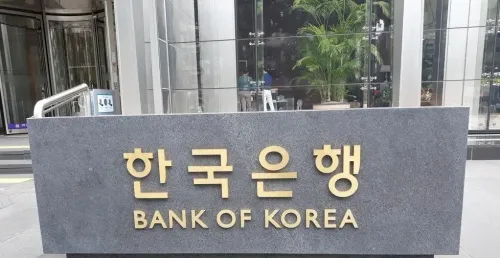
This new estimate is more optimistic than the Bank of Korea (BOK)'s projection of 1.8 percent and the Seoul government's forecast of 2 percent, as reported by the Yonhap news agency.
Among the IBs, Citi has raised its forecast to 2.4 percent from 2.2 percent, while UBS has increased its estimate to 2.2 percent from 2 percent.
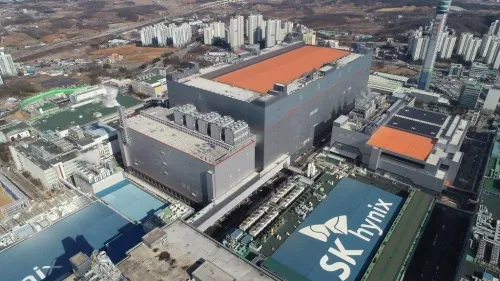
Citi anticipates that the growth rate of semiconductor exports will more than double to 54 percent in 2026, compared to last year's 22 percent.
Nomura has maintained its forecast at 2.3 percent, while Barclays and Bank of America have kept their projections steady at 2.1 percent and 1.9 percent, respectively. JP Morgan has also left its outlook unchanged at 2 percent, and HSBC at 1.8 percent.
Conversely, Goldman Sachs has lowered its forecast to 1.8 percent from 1.9 percent.
Expectations remain robust for a stronger and more resilient global semiconductor cycle than previously thought, although some analysts have cautioned about challenges facing non-tech sectors due to persistent risks from the United States' aggressive tariff measures.
Meanwhile, the industry ministry announced plans to allocate up to 464.5 billion won (approximately US$317.6 million) in support for the automotive sector this year, aiming to help the local industry enhance its competitiveness in advanced technologies, such as autonomous driving.
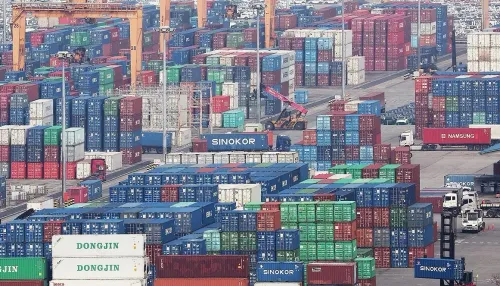
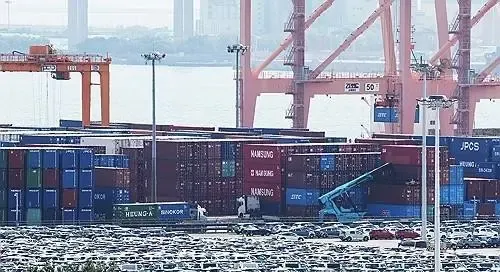
This initiative, unveiled by the Ministry of Trade, Industry and Resources, follows South Korea's record high auto exports of US$72 billion last year, despite the impact of U.S. tariffs.
Out of this total, 382.7 billion won will be directed towards research and development of essential automotive technologies, including autonomous driving systems and electronic and hydrogen-powered vehicles.
A public-private partnership focused on autonomous driving, formed last year, will spearhead various projects in self-driving technology, according to the ministry.
Point of View
South Korea's revised growth forecast reflects a strategic response to the semiconductor industry's resurgence. The government's proactive measures in supporting the automotive sector further underscore the nation's commitment to technological advancement. This optimistic outlook, however, must be tempered with caution regarding potential headwinds in non-tech industries due to geopolitical factors.
NationPress
8 Oct 2026
Frequently Asked Questions
What are the key factors behind the revised economic growth forecast for South Korea?
The revised forecast is primarily driven by an upcycle in the global semiconductor industry, which is expected to see substantial growth in exports.
How does the new forecast compare to previous projections?
The new average forecast of 2.1% is an increase of 0.1 percentage points from earlier projections, exceeding estimates from the Bank of Korea and the Seoul government.
What support is the South Korean government providing to the automotive sector?
The government plans to invest up to 464.5 billion won to enhance competitiveness in cutting-edge technologies, particularly in autonomous driving.