India pulse imports fall 31% as Aatmanirbharta mission boosts production
Synopsis
India's pulse import bill fell by over ₹14,000 crore in a single year — a 31.52% drop — while exports crossed $969 million, signalling the first concrete trade-balance shift from the ₹11,440 crore Mission for Aatmanirbharta in Pulses on its first anniversary. With production at 274 lakh tonnes and a 2030-31 target of 350 lakh tonnes, the numbers suggest India's long-elusive pulse self-sufficiency may finally be within reach.
Key Takeaways
India's pulse imports fell 31.52% from ₹46,427.60 crore to ₹31,793.59 crore in 2025-26 .
Domestic pulse production rose to 274.09 lakh tonnes from 256.83 lakh tonnes in 2024-25.
Pulse exports grew 13.4% to $969.53 million ; total export volume reached 10.01 lakh tonnes .
Cultivation area expanded to 286.46 lakh hectares ; yield improved to 957 kg per hectare .
The ₹11,440 crore Mission targets 350 lakh tonnes production and 1,130 kg per hectare yield by 2030-31 .
87.5 lakh free seed kits distributed; procurement at MSP via NCCF and NAFED covering 489 districts .
India's pulse imports dropped by a significant 31.52 per cent in 2025-26, falling from ₹46,427.60 crore to ₹31,793.59 crore, as domestic production surged under the government's Mission for Aatmanirbharta in Pulses, according to an official factsheet released on Sunday, 11 October 2026. Total pulse output climbed to 274.09 lakh tonnes in 2025-26 from 256.83 lakh tonnes the previous year, marking measurable progress in the Centre's push for self-sufficiency in the protein-rich crop.
Production and Cultivation Gains
The area under pulse cultivation expanded from 277.20 lakh hectares in 2024-25 to 286.46 lakh hectares in 2025-26, while national productivity improved from 926 kg per hectare to 957 kg per hectare over the same period. The scheme, which marks its first anniversary on 11 October 2026, was launched with a total outlay of ₹11,440 crore and targets pulse production of nearly 350 lakh tonnes with a yield of 1,130 kg per hectare by 2030-31.
The major pulse-growing states driving these numbers include Madhya Pradesh, Maharashtra, Rajasthan, Uttar Pradesh, Gujarat, Andhra Pradesh, Karnataka, Jharkhand, Odisha, and West Bengal.
Exports Rise as Imports Shrink
While imports declined sharply, pulse exports moved in the opposite direction, rising 13.4 per cent from $855 million in 2024-25 to $969.53 million in 2025-26. Total export volume reached 10.01 lakh tonnes during the year, with China, the UAE, Bangladesh, the USA, and Sri Lanka emerging as the principal destinations. The simultaneous drop in imports and rise in exports signals a structural shift in India's pulse trade balance, moving the country closer to net-sufficiency.
Key Strategic Measures Under the Mission
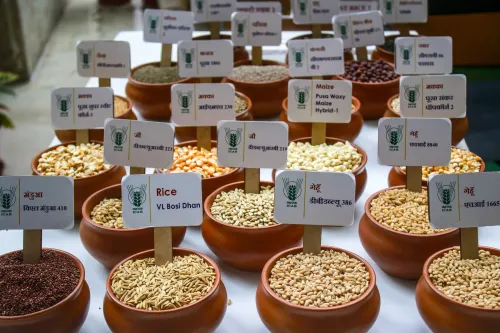
The scheme is being implemented through a cluster-based approach covering 489 districts nationwide, with a focus on intensifying production of tur, urad, and masoor. Farmers have received 87.5 lakh free seed kits and 126 lakh quintals of certified seeds are being distributed over six years. Climate-resilient seed varieties and improved seed quality are central to the strategy.
Assured procurement at the Minimum Support Price (MSP) for tur, urad, and masoor is being carried out through the National Cooperative Exports Limited (NCCF) and NAFED from willing and registered farmers, providing an important price backstop for growers.
Why Pulse Self-Sufficiency Matters for India
India is the world's largest producer of pulses, yet has historically relied on imports to bridge demand gaps — making price volatility a recurring concern for consumers. Pulses contain 20–25 per cent protein, more than double that of wheat and nearly three times that of rice, making them a cornerstone of nutritional security, especially for lower-income households. Reducing the import bill by over ₹14,000 crore in a single year eases pressure on the current account and on retail dal prices.
This comes amid a broader government push to cut dependence on agri-imports across commodities, from edible oils to pulses. Notably, this is the first full-year data point for the Mission, and the trajectory — if sustained — positions India to meet its 2030-31 targets ahead of schedule. The next milestone will be whether productivity gains continue into the upcoming rabi season.
Point of View
Certified seeds, cluster-based cultivation — that earlier schemes lacked, but a single good crop year can flatter any policy. The real proof will be whether productivity continues climbing toward the 1,130 kg per hectare target, and whether the MSP backstop actually reaches smallholders in the 489 districts, or merely benefits larger registered farmers near procurement centres. The import-bill reduction also masks a currency dimension: the numbers compare rupee-denominated imports against dollar-denominated exports, making a clean apples-to-apples read difficult. Sustained self-sufficiency — not just one good year — will be what keeps dal affordable on Indian plates.
NationPress
11 Oct 2026
Frequently Asked Questions
By how much did India's pulse imports fall in 2025-26?
India's pulse imports declined by 31.52% in 2025-26, falling from ₹46,427.60 crore to ₹31,793.59 crore. The drop is attributed to rising domestic production under the Mission for Aatmanirbharta in Pulses.
What is the Mission for Aatmanirbharta in Pulses?
It is a government scheme launched on 11 October 2025 with an outlay of ₹11,440 crore to achieve self-sufficiency in pulses. It targets production of nearly 350 lakh tonnes and a yield of 1,130 kg per hectare by 2030-31, covering 489 districts through a cluster-based approach.
How much did India's pulse production grow in 2025-26?
India's total pulse production rose to 274.09 lakh tonnes in 2025-26 from 256.83 lakh tonnes in 2024-25. Cultivation area also expanded from 277.20 lakh hectares to 286.46 lakh hectares over the same period.
Which countries import pulses from India?
India's pulse exports in 2025-26, which reached $969.53 million and 10.01 lakh tonnes in volume, were primarily directed to China, the UAE, Bangladesh, the USA, and Sri Lanka.
Why are pulses important to India's food security?
Pulses contain 20–25% protein — more than double that of wheat and nearly three times that of rice — making them a critical source of nutrition, especially for lower-income households. India is the world's largest producer of pulses, and reducing import dependence directly eases pressure on the current account and on retail prices.