South Korea calls for aggressive AI infrastructure investment, eyes new semiconductor cluster
Synopsis
South Korea's top presidential policy aide has signalled a major pivot: the AI and semiconductor supercycle is not a cyclical boom but a structural transformation — and the government's response must match that scale. A second semiconductor cluster beyond Yongin is reportedly in its final planning stages, and the capital region has simply run out of land, power, and water to host it.
Key Takeaways
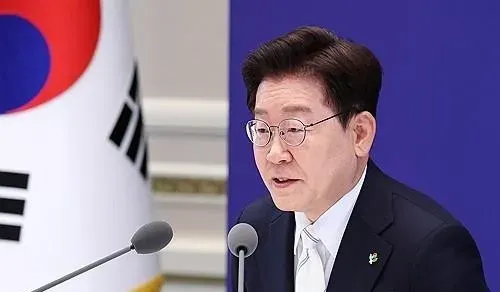
Kim Yong-beom , South Korea's presidential chief of staff for policy, called for 'aggressive' state investment in AI infrastructure on 24 June 2025 .
The capital region has no remaining capacity for land, electricity, or water, pushing plans for a new semiconductor cluster to regional areas.
Discussions on an additional cluster beyond the one under construction in Yongin — home to Samsung Electronics and SK Hynix — are reportedly 'nearing the final stage.' South Korea's real GDP growth is projected at 3 percent for 2025, with nominal growth potentially hitting the 10-percent range and per capita income nearing US$40,000 .
Kim flagged Korean won depreciation and real estate market instability as key risks requiring policy attention.
The policy chief also called for social debate on equitable distribution of AI-era gains and the use of excess tax revenues.
Kim Yong-beom, presidential chief of staff for policy in South Korea, on Wednesday, 24 June called for aggressive state investment in artificial intelligence infrastructure, arguing that the country's response to the ongoing AI and semiconductor supercycle must be structurally different from past industrial policy. His remarks came at a discussion hosted by the Kwanhun Club, a senior journalists' association in Seoul, amid a stock market boom driven by record profits and gains among AI-related chipmakers.
The Case for Preemptive Investment
'If the ongoing semiconductor and AI supercycle constitutes the beginning of a structural transformation that will raise South Korea's potential growth trajectory, as well as a reorganisation of its industrial structure, our response should be different,' Kim told the gathering.
He argued that the new AI era demands new state infrastructure, urging the government to 'lay the growth foundation through preemptive investment that is aggressive enough to transform South Korea's industrial map.' The remarks signal a shift in the policy framing — from reactive industrial support to front-loaded, infrastructure-first planning.
Land, Power, and a New Regional Cluster
Kim specifically flagged the need for massive amounts of electricity, land, and water to sustain the AI buildout, noting that the capital region has effectively exhausted its capacity across all three. He suggested that regional areas could host a new industrial landscape featuring data centres, next-generation electricity networks, and allied infrastructure.
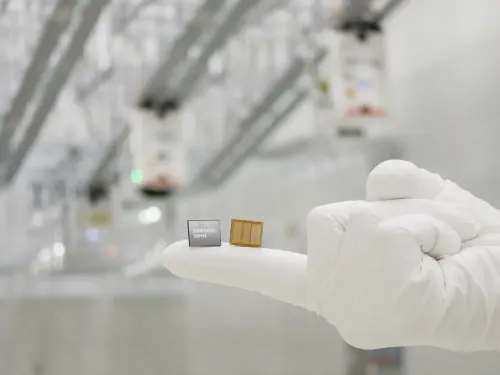
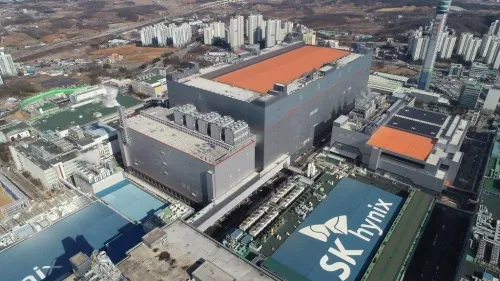
Discussions on constructing an additional semiconductor cluster beyond the one already under development in Yongin — south of Seoul — are reportedly 'nearing the final stage,' Kim said. The Yongin cluster is being built as a key production hub for advanced chips by major manufacturers including Samsung Electronics Co. and SK Hynix Inc. 'If they are finalised, (the government) would prepare an occasion to explain it ... to the public,' he added.
Sharing the Gains: Labour and Tax Policy in Focus
Beyond infrastructure, Kim raised the question of distributional equity in the AI era, calling for social discussions on how to deploy excess tax revenues and address emerging labour market disruptions. 'We have to look into how the fruits of growth in the AI era are shared,' he said, adding: 'AI could enrich a country, but there is no guarantee that all people could equally enjoy the benefits.'
This comes amid broader global debate on AI-driven labour displacement, making South Korea one of the few governments to formally link infrastructure investment with equity policy in a single policy address.
Economic Signals: Growth, Income, and Risks
On the macroeconomic front, Kim projected South Korea's real GDP growth at 3 percent year-on-year for 2025, with nominal growth potentially reaching the 10-percent range. He cited annual per capita national income approaching US$40,000, record-high corporate profits, and sustained stock market rallies as positive indicators.
However, he flagged two risks as 'new tasks': the continued depreciation of the Korean won against the US dollar, and instability in the real estate market. Both, he acknowledged, require policy attention even as the AI boom lifts headline numbers.
What to Watch Next
The government's next move will be closely tracked — particularly whether it formally announces the site and scale of a second semiconductor cluster. Industry observers and regional governments are expected to lobby actively once the decision enters the public domain. South Korea's ability to balance aggressive infrastructure expansion with fiscal discipline and social equity will be the defining policy test of its AI era ambitions.
Point of View
Both of which have already committed to multi-cluster semiconductor buildouts with explicit energy and water planning. Kim's acknowledgement that the capital region is at capacity is not a new discovery — it has been flagged by industry for years. The more telling signal is the equity framing: linking AI investment to labour and tax distribution policy is politically astute in an economy where the semiconductor boom has visibly concentrated gains in a handful of conglomerates. Whether that framing translates into concrete redistribution mechanisms, or remains aspirational, will determine whether South Korea's AI era is inclusive or merely profitable for a few.
NationPress
22 Sept 2026
Frequently Asked Questions
What did South Korea's presidential policy chief say about AI infrastructure?
Kim Yong-beom, presidential chief of staff for policy, called for aggressive and preemptive state investment in AI infrastructure on 24 June 2025, arguing that the AI and semiconductor supercycle represents a structural transformation requiring a fundamentally different government response. He cited the need for new electricity networks, data centres, land, and water capacity.
Is South Korea planning a new semiconductor cluster?
Yes, discussions on an additional semiconductor cluster beyond the one under construction in Yongin are reportedly 'nearing the final stage,' according to Kim. The government is expected to make a public announcement once the decision is finalised. The Yongin cluster serves Samsung Electronics and SK Hynix.
Why can't the new cluster be built in South Korea's capital region?
Kim stated that the capital region has no remaining capacity for land, electricity, or water — the three critical inputs for large-scale semiconductor and data centre infrastructure. Regional areas are being considered as they can offer the necessary space and utility headroom.
What is South Korea's projected economic growth for 2025?
South Korea's economy is projected to register real GDP growth of 3 percent year-on-year in 2025, with nominal growth potentially reaching the 10-percent range. Per capita national income is expected to approach US$40,000, alongside record corporate profits and stock market gains.
What risks did the South Korean government flag alongside the AI boom?
Kim Yong-beom identified two key risks: the continued depreciation of the Korean won against the US dollar, and instability in the real estate market. He described both as 'new tasks' that require policy attention even as AI-driven growth lifts headline economic indicators.