South Korea's $517.9 billion semiconductor cluster plan: 4 fabs, AI push
Synopsis
South Korea is not just expanding its chip industry — it is restructuring it. With 800 trillion won in corporate investment, four new memory fabs, a 12-year timeline acceleration, and a parallel 1,000-trillion-won AI data centre push, Seoul is making the largest industrial bet in its modern history, all while racing China on humanoid robots.
Key Takeaways
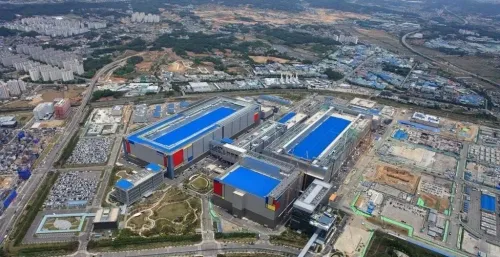
South Korea announced an 800 trillion won ($517.9 billion) semiconductor cluster in the Gwangju and Jeolla regions , including four memory chip fabrication plants .
Construction timelines will be accelerated by up to 12 years , from the mid-to-late 2040s to the mid-2030s .
The Chungcheong region will receive 81 trillion won to become an advanced chip packaging hub; Daegu and North Gyeongsang will focus on materials and equipment.
AI data centre investment — with SK Group , GS Group , and Naver — is projected to exceed 1,000 trillion won by 2035 , targeting 18.4 GW of capacity.
South Korea aims to grow its humanoid robot market share from 1% to 20% globally over the long term.
Samsung Electronics Chairman Lee Jae-yong and SK Group Chairman Chey Tae-won attended the briefing, signalling direct corporate commitment.
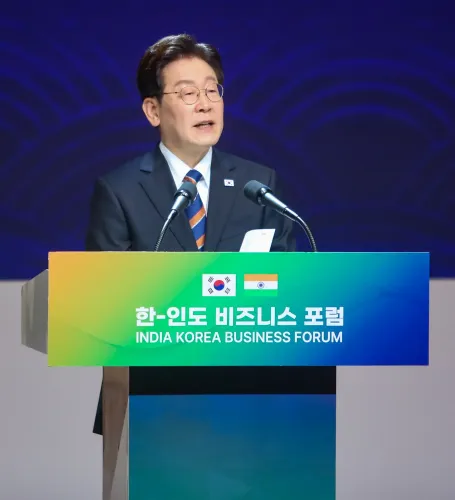
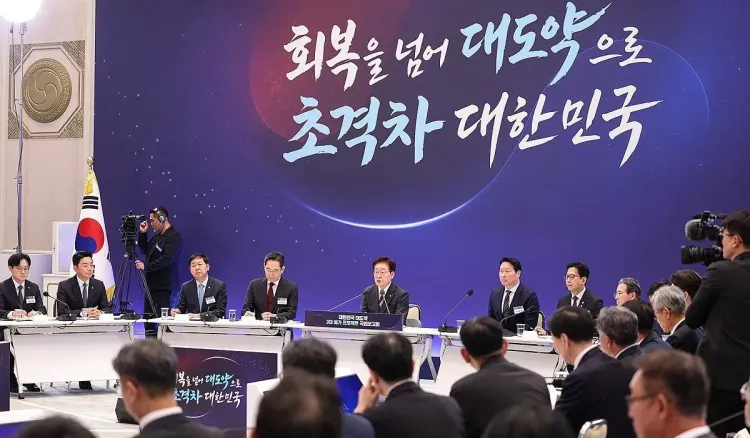
South Korea has unveiled a plan to build a new semiconductor production cluster in its southwestern Gwangju and Jeolla regions, backed by 800 trillion won ($517.9 billion) in corporate investment that will include four new memory chip fabrication plants. Industry Minister Kim Jung-kwan announced the blueprint on Monday, 29 June at a national investment briefing chaired by President Lee Jae Myung at Cheong Wa Dae.
Why a Second Semiconductor Hub
South Korea's existing semiconductor base is concentrated in the Seoul metropolitan area, and Minister Kim warned that this single-cluster model can no longer keep pace with surging global chip demand. 'Relying on a single production base in the Seoul metropolitan area is no longer sufficient to meet surging semiconductor demand,' Kim said, citing hard limits on power and water resources that constrain further expansion at the current site.
The new southwestern cluster is designed to operate alongside — not replace — the Seoul-area hub, giving the country a geographically distributed supply chain that is more resilient to infrastructure bottlenecks. Critically, the government said it will accelerate construction timelines for new fabrication plants by as much as 12 years, pulling the schedule forward from the mid-to-late 2040s to the mid-2030s.
The Three Mega Projects: Chips, AI, and Robotics
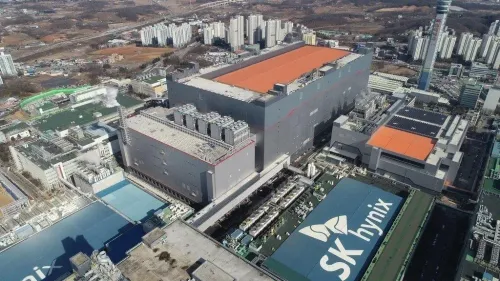
The semiconductor cluster is one pillar of the government's broader 'three mega projects' initiative, which also covers physical artificial intelligence (AI) and AI data centres. Chip giants Samsung Electronics Co. and SK hynix Inc. are among the primary corporate participants, alongside other companies across the value chain.
A separate 81 trillion won investment will develop the Chungcheong region into an advanced semiconductor packaging hub, while the Daegu and North Gyeongsang regions are earmarked as innovation centres for semiconductor materials, components, and equipment. The government also committed 30 trillion won over the next 15 years to support the full semiconductor value chain — from research and development and chip design through to testing and manufacturing.
AI Data Centres: A 1,000 Trillion Won Bet
On the AI infrastructure front, the government — working with SK Group, GS Group, and portal operator Naver — plans to invest approximately 550 trillion won by 2029 to build AI data centres with a combined capacity of 8.4 gigawatts (GW). Total investment is projected to exceed 1,000 trillion won by 2035, expanding capacity to 18.4 GW.
Humanoid Robots: Racing China to Scale
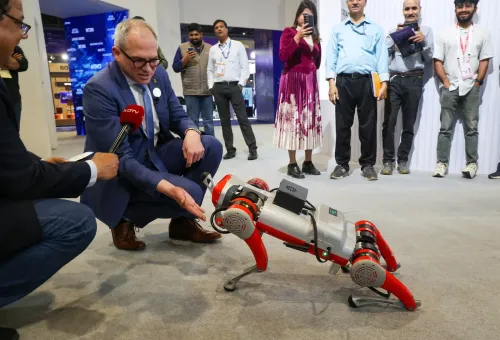
The third pillar targets South Korea's nascent humanoid robotics sector. Minister Kim flagged that China has already begun mass-producing humanoid robots through regional manufacturing hubs, pressing Seoul to move faster. 'We must accelerate the foundation for mass production,' Kim said. The government plans to generate early domestic demand by procuring humanoid robots for education, defence, and disaster response, with a long-term goal of raising South Korea's share of the global humanoid robot market from 1 percent last year to 20 percent.
Government Commitments and Corporate Presence
To enable the investment surge, the government pledged to streamline permits and construction procedures and invest in critical infrastructure, including electricity and industrial water supplies. The briefing was attended by Samsung Electronics Chairman Lee Jae-yong and SK Group Chairman Chey Tae-won, signalling top-level corporate buy-in for what Seoul describes as a generational industrial transformation — from a manufacturing powerhouse to a leader in the AI era.
Point of View
But the real test is execution. Accelerating fab construction by 12 years sounds transformative — until you recall that semiconductor infrastructure projects routinely slip on power, water, and regulatory timelines, the exact bottlenecks Seoul admits already constrain its Seoul-area hub. The 1,000-trillion-won AI data centre target by 2035 also assumes electricity supply growth that no grid in the world has yet delivered at this pace. Meanwhile, the humanoid robotics ambition — jumping from 1% to 20% global market share — is a political target more than an industrial roadmap. The plan's true value may lie not in the headline numbers but in whether the permit-streamlining and infrastructure commitments translate into actual shovel-in-ground timelines.
NationPress
27 Sept 2026
Frequently Asked Questions
What is South Korea's 800 trillion won semiconductor cluster plan?
It is a government-backed industrial initiative announced on 29 June to build a new semiconductor production base in the Gwangju and Jeolla regions, funded by 800 trillion won ($517.9 billion) in corporate investment and anchored by four new memory chip fabrication plants. The plan is part of a broader 'three mega projects' strategy covering semiconductors, AI, and robotics.
Why is South Korea building a second semiconductor cluster?
Industry Minister Kim Jung-kwan said the existing Seoul metropolitan area hub faces hard limits on power and water resources that prevent further expansion. A southwestern cluster is intended to distribute capacity geographically and meet surging global chip demand that a single production base can no longer satisfy.
How has the construction timeline changed for the new fabs?
The government said it will bring forward the construction schedule for new fabrication plants by as much as 12 years — from the mid-to-late 2040s to the mid-2030s — by streamlining permits, construction procedures, and critical infrastructure investment.
Which companies are involved in South Korea's semiconductor mega project?
Samsung Electronics Co. and SK hynix Inc. are the primary chip-sector participants. For AI data centres, SK Group, GS Group, and Naver are involved. Samsung Electronics Chairman Lee Jae-yong and SK Group Chairman Chey Tae-won both attended the national investment briefing.
What is South Korea's AI data centre investment target?
The government, working with SK Group, GS Group, and Naver, plans to invest approximately 550 trillion won by 2029 to build AI data centres with a combined capacity of 8.4 GW. Total investment is projected to exceed 1,000 trillion won by 2035, expanding capacity to 18.4 GW.