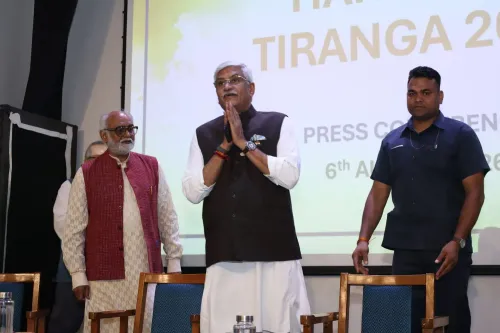
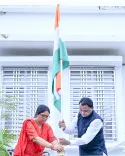
Shekhawat invokes Tiranga pride ahead of Independence Day
Synopsis
Union Culture Minister Gajendra Singh Shekhawat marked the eve of Independence Day 2026 by invoking the Tricolour as a symbol of freedom, responsibility, and sovereignty, sharing the Har Ghar Tiranga campaign portal and calling India's civilizational pride unassailable.
Key Takeaways
Union Culture and Tourism Minister Gajendra Singh Shekhawat posted on 13 August 2026 , one day before Independence Day.
He described the Tricolour as a symbol of identity, freedom, self-respect, and responsibility.
The post links to harghartiranga.com , the portal for the Har Ghar Tiranga campaign.
The Har Ghar Tiranga campaign was launched in August 2022 under Azadi Ka Amrit Mahotsav to mark 75 years of independence.
Shekhawat framed India's sovereignty and 'inclusive, undivided culture' as globally recognised facts, not merely aspirations.
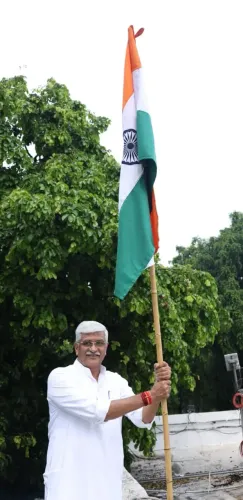
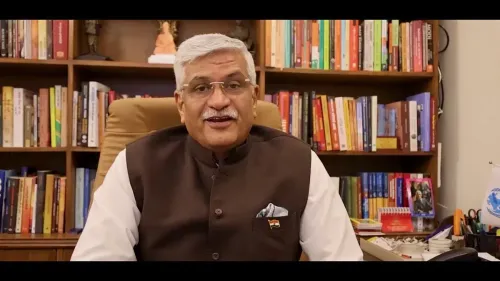
As India counts down to Independence Day on 15 August 2026, Union Culture and Tourism Minister Gajendra Singh Shekhawat has anchored the national mood to a single, charged symbol — the Tricolour — calling it not just an emblem of identity but a living reminder that freedom carries responsibility.
Posting on 13 August 2026, Shekhawat wrote: 'Indians no longer need to be told that the Tricolour is our identity, our symbol of freedom and self-respect. The Tiranga also reminds us that liberty is a responsibility. Now, no one can stop us from venerating Bharat Maa and taking pride in our eternal culture. The world always knew — and now accepts — that India is a sovereign nation, standing strong with its inclusive, undivided culture and self-respect.' He closed with the rallying cries Bharat Mata ki Jai! and Vande Mataram!, and linked to harghartiranga.com.
Har Ghar Tiranga: four years and still flying
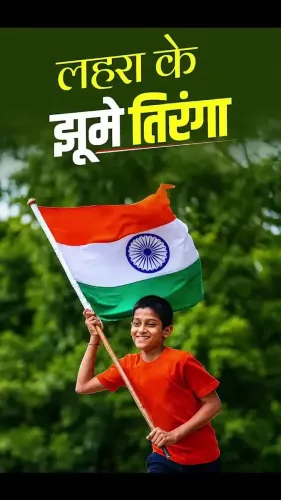
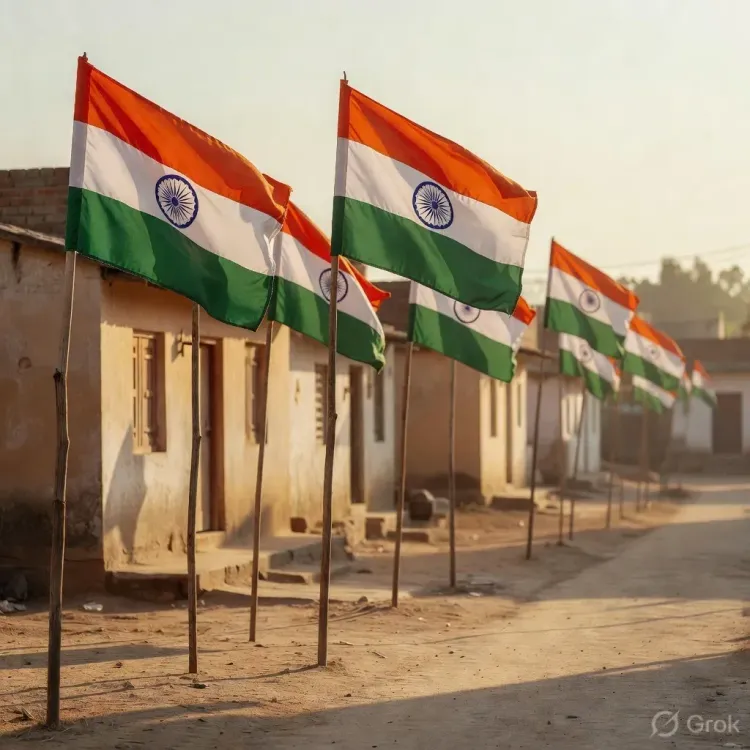
The Har Ghar Tiranga campaign — 'A Tricolour in Every Home' — was launched by the Ministry of Culture in August 2022 as the centrepiece of Azadi Ka Amrit Mahotsav, the government's commemoration of 75 years of Indian independence. The idea was straightforward but potent: turn a passive symbol into an active, citizen-level act of belonging by encouraging every household to hoist the national flag.
What began as a one-season initiative has become an annual Independence Day fixture. Shekhawat's post, with its direct link to the campaign portal, signals that the 2026 edition is live — inviting citizens to register their participation online, a digital layer that has expanded the campaign's reach well beyond physical flag-hoisting.
Sovereignty, culture, and the message behind the message
The minister's language does more than celebrate a flag. His assertion that 'the world always knew — and now accepts' India's sovereignty frames the Tricolour as diplomatic proof of standing, not just domestic pride. That framing — India recognised, India respected — has become a recurring motif in official cultural messaging, threading together civilizational identity and contemporary geopolitical confidence.
The reference to India's 'inclusive, undivided culture' (samaveshi akhand sanskriti) is deliberate vocabulary: it positions cultural unity as both ancient and unbroken, a through-line from history to the present government's agenda. For a minister who holds the Culture portfolio, the Independence Day window is the single biggest annual platform to amplify that narrative at scale.
With 15 August hours away, the Tricolour is already everywhere — on storefronts, vehicles, and social feeds. Whether the 2026 campaign sets a new participation record is the number to watch.
Point of View
Consistent with the BJP's broader effort to link cultural nationalism to foreign-policy confidence. For a minister who controls both the Culture and Tourism portfolios, Har Ghar Tiranga doubles as soft-power infrastructure — a mass-participation campaign that generates domestic pride and international visibility simultaneously. The continuity of this campaign into its fourth year suggests it has graduated from initiative to institution.
NationPress
13 Aug 2026
Frequently Asked Questions
What is the Har Ghar Tiranga campaign?
Har Ghar Tiranga — meaning 'A Tricolour in Every Home' — is a campaign launched by India's Ministry of Culture in August 2022 as part of Azadi Ka Amrit Mahotsav, encouraging every household to hoist the national flag around Independence Day.
Who launched the Har Ghar Tiranga campaign?
The campaign was launched by the Ministry of Culture under the Azadi Ka Amrit Mahotsav initiative in 2022 to mark 75 years of Indian independence.
What did Gajendra Singh Shekhawat say about the Tricolour?
Shekhawat called the Tricolour a symbol of India's identity, freedom, and self-respect, and said it reminds citizens that liberty carries responsibility. He also asserted that India's sovereignty and civilizational culture are now globally recognised.
How can I participate in Har Ghar Tiranga 2026?
Citizens can register their participation through the official campaign portal at harghartiranga.com, which allows online sign-up alongside the physical act of hoisting the Tricolour at home.
What is Azadi Ka Amrit Mahotsav?
Azadi Ka Amrit Mahotsav is a government-led commemoration of 75 years of Indian independence that began in 2021, encompassing events, campaigns, and initiatives celebrating India's freedom and cultural heritage.