CM Bhajan Lal hands over homes to nomadic families in Rajasthan
Synopsis
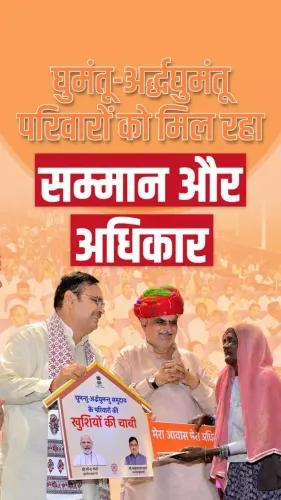
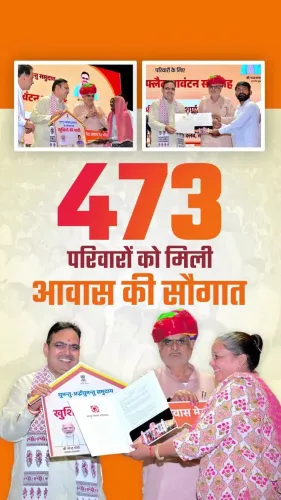
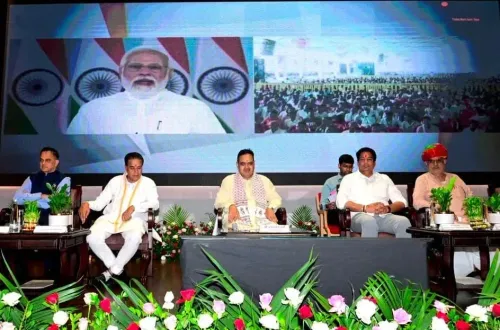
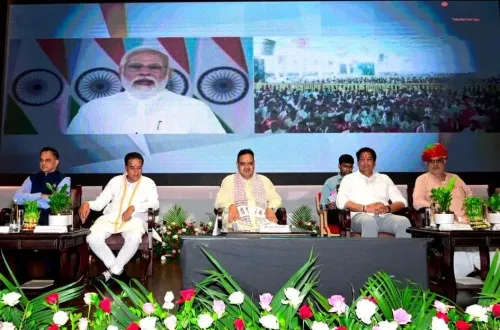
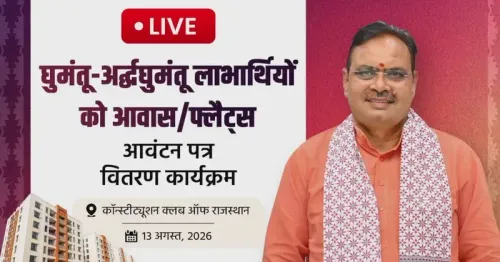
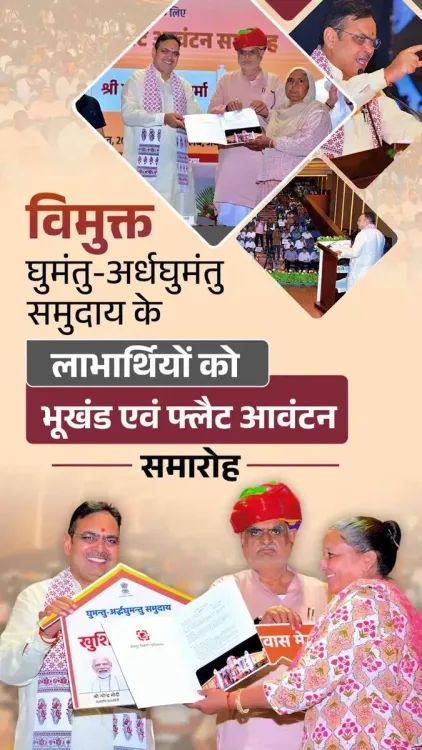
Rajasthan Chief Minister Bhajan Lal Sharma handed over housing allotment letters and keys to families from denotified, nomadic, and semi-nomadic communities on 13 August 2026, reaffirming the state government's commitment to mainstreaming India's most historically excluded citizens.
Key Takeaways
Rajasthan CM Bhajan Lal Sharma personally distributed plot and flat allotment letters and keys to Vimukt, Ghumantu, and Ardhghumantu Samaj families on 13 August 2026 .
These communities were branded criminal by birth under the Criminal Tribes Act of 1871 , repealed only in 1952 , leaving generations without permanent addresses or mainstream welfare access.
A fixed address is the gateway to ration cards, school enrolments, bank accounts, and voter IDs — making housing the single most impactful inclusion tool for nomadic communities.
Sharma framed the drive as a government commitment to 'every citizen on the last rung of society,' signalling continued district-level allotment events ahead.
The long-term impact will depend on whether allotments come with utility connections, legal title clarity, and livelihood proximity.
For communities that once had no fixed address — by law, by history, by colonial design — a set of keys and an allotment letter can mean everything. On Thursday, 13 August 2026, Rajasthan Chief Minister Bhajan Lal Sharma personally handed over plot and flat allotment letters and keys to families from the Vimukt, Ghumantu, and Ardhghumantu Samaj — India's denotified, nomadic, and semi-nomadic communities — marking a concrete step in the state's push to bring its most historically marginalised citizens into the mainstream.
From the Criminal Tribes Act to a set of keys
The communities receiving homes on Thursday carry a weight few others do. Their ancestors were branded criminals by birth under the Criminal Tribes Act of 1871 — a colonial law that presumed entire groups to be hereditarily criminal and subjected them to surveillance, forced settlement, and restricted movement. The Act was repealed in 1952, but the stigma and statelessness it created did not vanish with it. Generations of these families have lived without permanent addresses, making access to government schemes, voter IDs, bank accounts, and education structurally difficult.
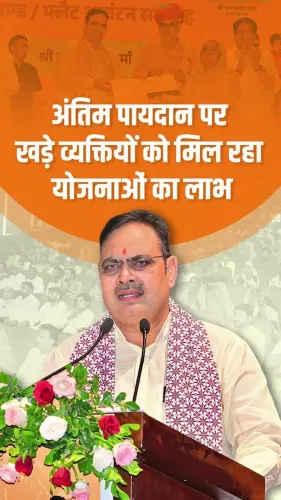
Sharma, posting in Hindi on X, framed the event in terms of commitment rather than charity: 'Hamari sarkar samaj ke antim paaydan par khade har naagrik ke utthan aur unhe mukhyaadhaara se jodne ke liye poori tarah pratibaddh hai' — 'Our government is fully committed to the upliftment of every citizen standing on the last rung of society and to connecting them to the mainstream.'
Housing as the anchor for social inclusion
Across India, several states have run targeted housing and settlement schemes for denotified and nomadic groups, recognising that a permanent dwelling is not just shelter — it is the anchor that makes every other welfare benefit accessible. A fixed address unlocks ration cards, school enrolments, and bank accounts. Without it, mainstream inclusion remains a slogan.
Rajasthan's distribution drive fits into this longer national pattern, with the state government signalling that district-level allotment events and budget allocations for DNT housing will continue. The scale of Thursday's event — exact beneficiary numbers and locations were not disclosed in the post — will become clearer as official figures are released.
What the allotment drive signals for Rajasthan's DNT communities
For the BJP government in Jaipur, the optics and the policy substance align here: reaching communities that have historically fallen outside the net of both political mobilisation and welfare delivery is both a governance priority and an electoral signal. Sharma took office in December 2023 and has positioned his administration around last-mile delivery to the most excluded. Handing keys directly — not through a bureaucratic chain — is a deliberate image of accountability.
The next test will be in the follow-through: whether allotted plots and flats come with utility connections, legal title clarity, and proximity to livelihoods — the details that determine whether a housing scheme transforms lives or merely transfers paperwork.
Point of View
This event serves a dual purpose: it advances a genuine last-mile delivery agenda while also consolidating political outreach to communities that have historically been mobilised without being served. The broader national pattern of DNT housing schemes suggests this is less a Rajasthan innovation than a tested playbook — but execution quality, particularly on title clarity and infrastructure, will determine whether it breaks the cycle of symbolic inclusion. Watch the state budget's DNT housing line item as the real indicator of commitment depth.
NationPress
28 Sept 2026
Frequently Asked Questions
Who are the Vimukt, Ghumantu, and Ardhghumantu Samaj in India?
They are India's denotified tribes, nomadic tribes, and semi-nomadic tribes — communities historically criminalised under the British-era Criminal Tribes Act of 1871 and denotified after its repeal in 1952. They remain among India's most socially and economically excluded groups.
What did Rajasthan CM Bhajan Lal Sharma distribute on 13 August 2026?
CM Bhajan Lal Sharma distributed plot and flat allotment letters along with keys to families from nomadic and denotified communities in Rajasthan as part of a state housing initiative.
Why is housing so important for nomadic and denotified communities?
A permanent address is the gateway to government benefits including ration cards, school admissions, bank accounts, and voter IDs. Without fixed residence, families from these communities are structurally excluded from most welfare schemes.
When did Bhajan Lal Sharma become Chief Minister of Rajasthan?
Bhajan Lal Sharma took office as Chief Minister of Rajasthan in December 2023 after the BJP's victory in the state assembly elections.
What was the Criminal Tribes Act and how does it affect these communities today?
The Criminal Tribes Act of 1871 was a colonial British law that designated certain communities as hereditarily criminal, subjecting them to surveillance and restricted movement. It was repealed in 1952, but the resulting social stigma and lack of permanent settlement have continued to affect these communities for generations.