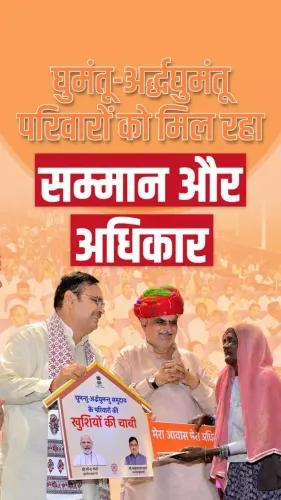
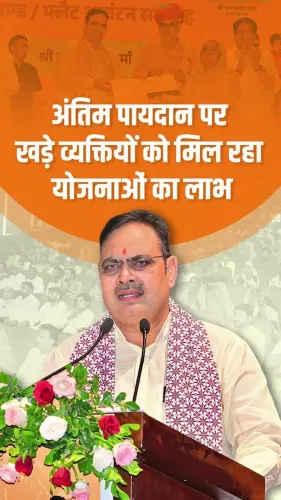
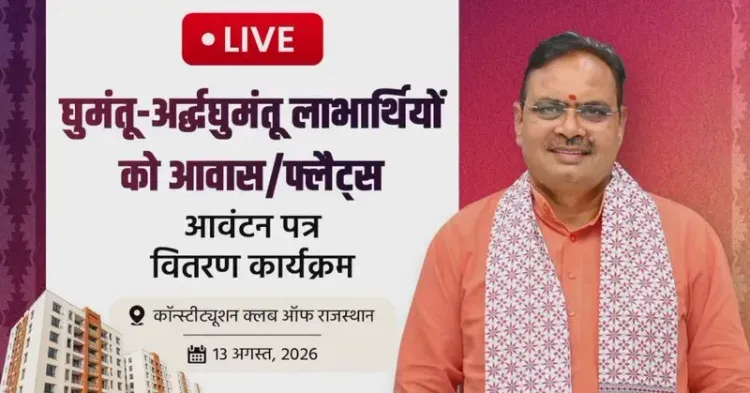
CM Bhajan Lal Sharma distributes housing allotment letters to nomadic communities in Jaipur
Synopsis
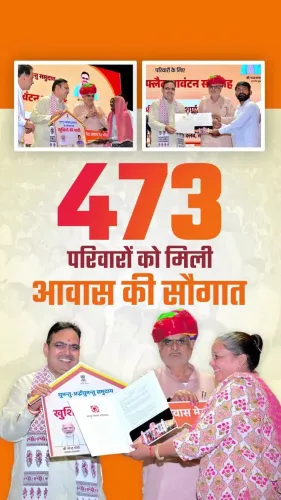
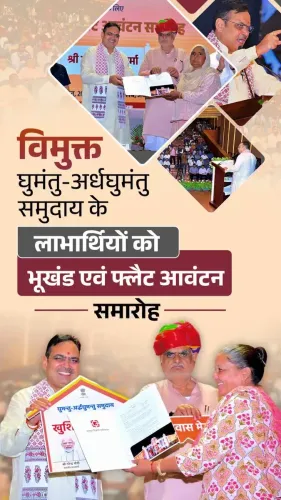
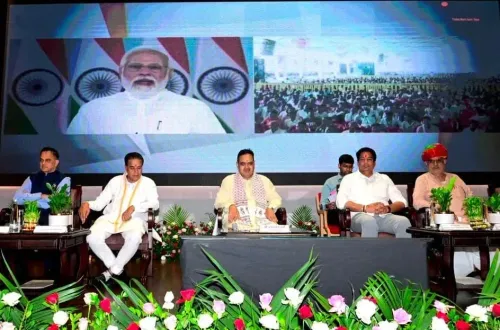
Rajasthan CM Bhajan Lal Sharma presided over a housing allotment letter distribution event for nomadic and semi-nomadic communities in Jaipur on August 13, 2026, continuing the state's welfare delivery push under the Pradhan Mantri Awas Yojana framework.
Key Takeaways
CM Bhajan Lal Sharma chaired a housing allotment letter distribution programme for nomadic and semi-nomadic beneficiaries in Jaipur on August 13, 2026 .
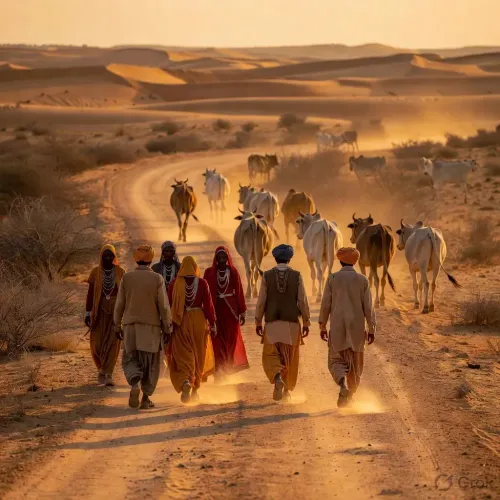
Nomadic and semi-nomadic communities are among India's most historically marginalised groups, often excluded from welfare due to lack of a fixed address.
The event operates within the Pradhan Mantri Awas Yojana (PMAY) framework, launched in 2015 to provide pucca housing to eligible poor households.
Rajasthan's BJP government, in office since December 2023 , has made visible welfare delivery to excluded communities a stated priority.
Actual possession and utilisation by beneficiaries will be the next administrative test for the programme's real impact.
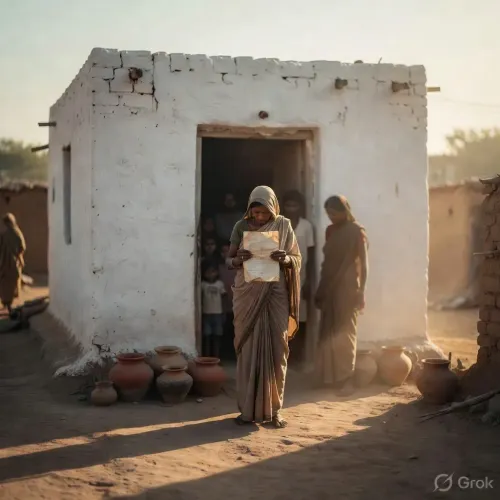
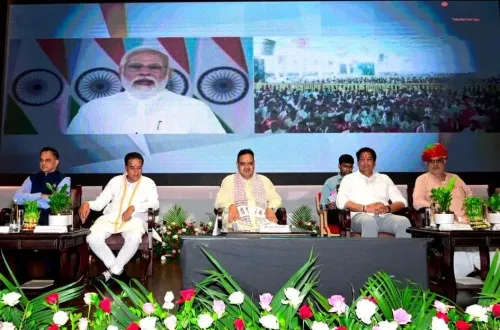
For families who have spent generations without a permanent address, a piece of paper can mean everything. Rajasthan Chief Minister Bhajan Lal Sharma presided over a housing and flat allotment letter distribution programme for nomadic and semi-nomadic beneficiaries in Jaipur on Thursday, August 13, 2026.
Who the allotment drive targets
Nomadic and semi-nomadic communities — historically among India's most marginalised groups — have long faced a structural barrier: without a fixed address, accessing government welfare is nearly impossible. These communities, which include denotified tribes still carrying the colonial-era stigma of the Criminal Tribes Act, are a priority target under housing welfare drives staged by state governments across India. The Jaipur event is part of a broader pattern of periodic allotment ceremonies through which states convert central scheme approvals into tangible possession — putting keys, or at minimum, formal letters, into beneficiaries' hands.Pradhan Mantri Awas Yojana and Rajasthan's delivery machinery
The central architecture behind such drives is the Pradhan Mantri Awas Yojana (PMAY), launched in 2015 with the stated goal of ensuring a pucca house for every eligible poor household. Both its urban and rural arms empower state governments to identify beneficiaries, sanction units, and conduct formal distribution events. Rajasthan, under the BJP government that took office in December 2023, has positioned welfare delivery to historically excluded groups as a visible governance priority. Letter distribution programmes like today's serve a dual function: they formalise entitlement on paper and create a public accountability moment — beneficiaries receive documented proof of allotment that can be tracked through to actual possession.What follows the letter
A distribution ceremony is the beginning of a process, not its end. The harder administrative test comes next — whether allotted units are actually handed over, whether they meet liveable standards, and whether nomadic families who have never held property can navigate the bureaucratic steps to full possession. State-level monitoring of utilisation rates among nomadic beneficiaries will be the real measure of today's programme's impact. For communities still learning what it means to have a permanent home, the allotment letter is a first, fragile foothold — and the government's follow-through will determine whether it holds.Point of View
Extending PMAY benefits to historically excluded groups signals both administrative intent and political outreach to communities that have rarely featured in mainstream welfare narratives. The harder question — whether allotment letters translate into actual, liveable homes — will test the government's follow-through beyond the ceremony. If possession and utilisation rates are tracked and published, this programme could set a useful accountability benchmark for nomadic welfare delivery nationwide.
NationPress
27 Sept 2026
Frequently Asked Questions
What is the nomadic community housing allotment programme in Rajasthan?
It is a state government initiative distributing formal housing allotment letters to nomadic and semi-nomadic communities under central and state housing schemes, including the Pradhan Mantri Awas Yojana, entitling beneficiaries to permanent homes or flats.
What is Pradhan Mantri Awas Yojana and how does it help nomadic tribes?
Pradhan Mantri Awas Yojana (PMAY), launched in 2015, is a central government scheme aimed at providing pucca houses to eligible poor households. State governments identify beneficiaries from marginalised groups, including nomadic tribes, and conduct allotment drives to deliver these benefits.
Who are nomadic and semi-nomadic communities in Rajasthan?
These are communities with a historical tradition of mobile or itinerant lifestyles, including denotified tribes that were once labelled under colonial criminal laws. They are among India's most housing-deprived groups due to their lack of a permanent fixed address.
What did CM Bhajan Lal Sharma do at the Jaipur event on August 13, 2026?
CM Bhajan Lal Sharma presided over a programme distributing housing and flat allotment letters to nomadic and semi-nomadic beneficiaries in Jaipur, formalising their entitlement to government-provided homes.
What happens after a housing allotment letter is distributed?
The allotment letter is the first formal step. Beneficiaries must then go through administrative processes to take actual possession of the unit. State governments are expected to monitor utilisation to ensure families move into and are able to use the allotted homes.