CM Bhajan Lal Hands House Keys to 473 Nomadic Families
Synopsis
Rajasthan CM Bhajan Lal Sharma handed house keys and allotment letters to 473 denotified, nomadic and semi-nomadic families in Jaipur on 13 August 2026, invoking the Antyodaya principle of last-mile welfare delivery.
Key Takeaways
473 families from Vimukt, Ghumantu and Ardh-Ghumantu communities received housing allotment letters and keys at the Constitution Club of Rajasthan, Jaipur on 13 August 2026 .
CM Bhajan Lal Sharma framed the initiative as an Antyodaya -driven commitment to reach the last person in the welfare queue.
Denotified and nomadic tribes were historically criminalised under the Criminal Tribes Act of 1871 , repealed in 1952 , but have remained among India's most underserved communities.
A permanent address unlocks school enrolment, ration cards and other entitlements — multiplying the benefit beyond housing alone.
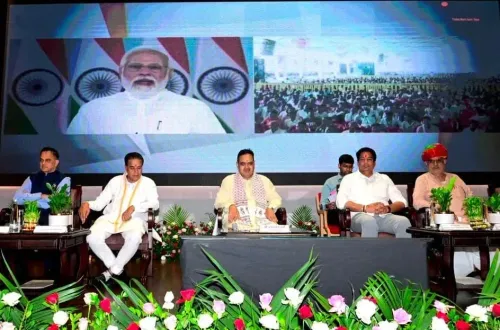
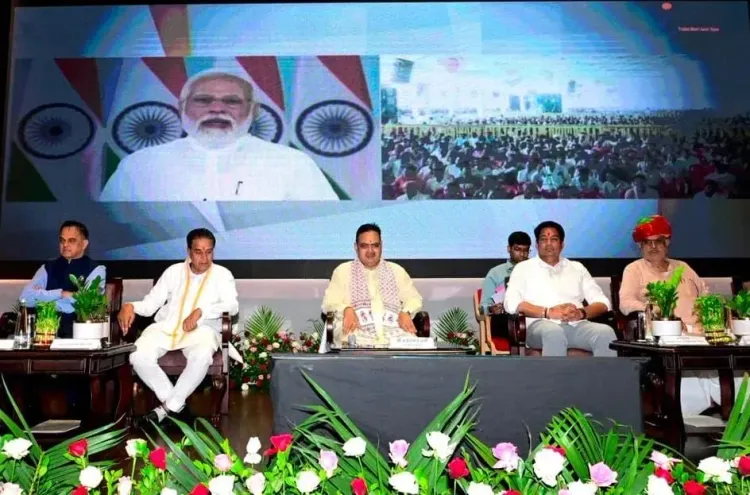
Ministers Jogaram Patel , Avinash Gehlot and Kharra attended, reflecting cross-departmental government backing for the programme.
Further phases of housing distribution under Rajasthan's social justice department are expected.
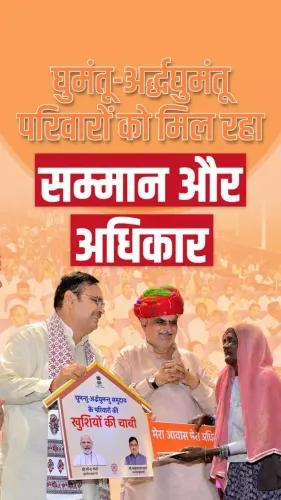
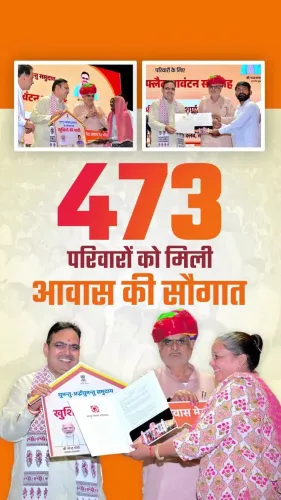
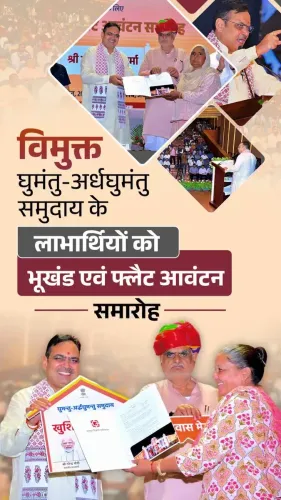
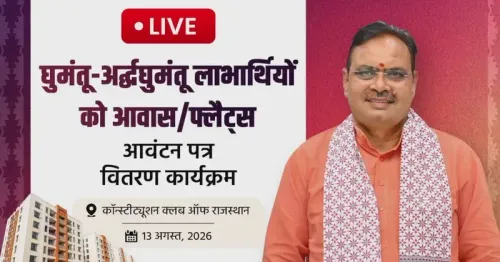
For families who have spent generations without a fixed address, a set of house keys is more than a physical object — it is a document of belonging. Rajasthan Chief Minister Bhajan Lal Sharma handed allotment letters and keys to 473 Vimukt, Ghumantu and Ardh-Ghumantu (denotified, nomadic and semi-nomadic) families at a ceremony held at the Constitution Club of Rajasthan, Jaipur, on 13 August 2026.
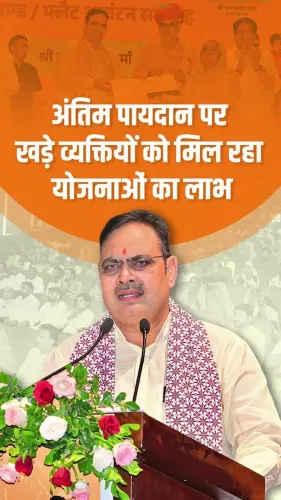
Addressing the gathering, CM Sharma said these communities are an inseparable part of society and that connecting them to basic facilities like housing is 'an important step towards bringing stability to their lives and laying a strong foundation for the better future of their children.' He invoked the principle of Antyodaya — upliftment of the last person in the queue — as the governing commitment of his administration.
Who Are the Vimukt and Ghumantu Communities?
The roots of this marginalisation run deep. Under the Criminal Tribes Act of 1871, British colonial authorities branded entire communities as 'born criminals,' forcing nomadic and semi-nomadic groups into surveillance, restricted movement and social stigma. The Act was repealed in 1952, but denotification did not erase decades of displacement. These communities — known collectively as DNT (Denotified and Nomadic Tribes) — have remained among India's most underserved, often falling outside the net of land records, ration cards and housing schemes because they lack fixed addresses. That circular trap — no address, no entitlement; no entitlement, no address — is precisely what today's allotment attempts to break.Housing as the First Rung of Stability
Rajasthan's social justice and empowerment architecture has periodically targeted DNT communities with rehabilitation support, but converting intent into allotment letters with physical keys represents a concrete delivery milestone. The Pradhan Mantri Awas Yojana, launched in 2015 to provide pucca (permanent) housing to economically weaker households, forms the broader policy backbone within which state-level targeted distributions like this one typically operate. For children in these families, a permanent home address unlocks school enrolment, continuity of education and access to other entitlements that require proof of residence — a compounding benefit that extends well beyond four walls.Ministers Present at the Jaipur Ceremony
The event drew senior members of the Rajasthan cabinet. Parliamentary Affairs and Law Minister Jogaram Patel, Social Justice and Empowerment Minister Avinash Gehlot, and Urban Development and Autonomous Governance Minister of State Kharra were present alongside other dignitaries, signalling the cross-departmental weight the government is placing on this initiative. With further phases of housing distribution expected under the social justice department, the question now is whether the momentum translates into a systematic, time-bound programme — or remains a series of well-photographed ceremonies. The keys have been handed over. What opens next is the real test.Point of View
Which frames last-mile delivery as both a moral obligation and an electoral signal to historically excluded groups. For Bhajan Lal Sharma, who took office in December 2023, visible welfare ceremonies serve as proof-of-governance moments in a state where social justice credibility matters across caste and community lines. The deeper policy question is whether one-off allotment events are backed by a systematic, budgeted pipeline — DNT communities number in the millions nationally, and 473 families, while meaningful, is a narrow slice. The linkage with updated central DNT development schemes will determine whether Rajasthan's effort becomes a replicable model or a standalone gesture.
NationPress
27 Sept 2026
Frequently Asked Questions
Who are the Vimukt and Ghumantu communities in Rajasthan?
Vimukt (denotified), Ghumantu (nomadic) and Ardh-Ghumantu (semi-nomadic) communities are tribes historically classified as 'criminal' under the British-era Criminal Tribes Act of 1871. After the Act was repealed in 1952, they became known as DNT communities and remain among India's most socially and economically marginalised groups.
How many families received houses from CM Bhajan Lal Sharma today?
CM Bhajan Lal Sharma distributed housing allotment letters and keys to 473 Vimukt, Ghumantu and Ardh-Ghumantu families at a ceremony in Jaipur on 13 August 2026.
What is the Antyodaya principle CM Sharma mentioned?
Antyodaya, meaning 'upliftment of the last person,' is a welfare philosophy associated with RSS ideologue Deen Dayal Upadhyaya and adopted as a guiding principle by BJP governments. It prioritises delivering development benefits to the most marginalised citizens first.
Is this housing linked to the Pradhan Mantri Awas Yojana?
The Pradhan Mantri Awas Yojana (PMAY), launched in 2015 to provide permanent housing to economically weaker households, forms the broader policy framework within which state-level targeted distributions for DNT communities typically operate, though the specific scheme linkage for this allotment was not detailed in the announcement.
What ministers attended the Jaipur housing ceremony?
Parliamentary Affairs and Law Minister Jogaram Patel, Social Justice and Empowerment Minister Avinash Gehlot, and Urban Development Minister of State Kharra attended the ceremony alongside other dignitaries.