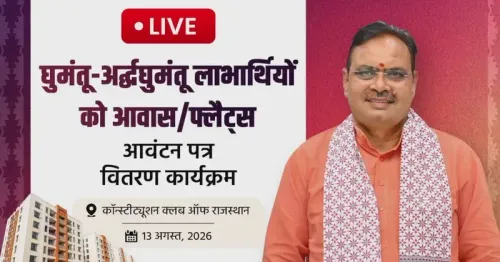
Rajasthan CM flags 32 notified denotified-tribe castes
Synopsis
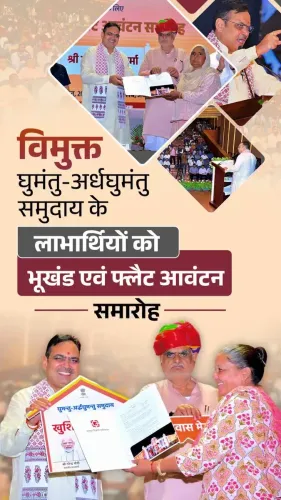
The Chief Minister's Office of Rajasthan announced that 32 castes from denotified, nomadic, and semi-nomadic communities are officially notified in the state, a key administrative step for welfare delivery to groups historically excluded since the colonial Criminal Tribes Act era.
Key Takeaways
32 castes from denotified, nomadic, and semi-nomadic communities are officially notified in Rajasthan .
The announcement was made by the Chief Minister's Office under CM Bhajan Lal Sharma (BJP) on 13 August 2026 .
Official notification is the administrative gateway for these communities to access state welfare schemes and reservations.
India repealed the colonial Criminal Tribes Act in 1952 , but welfare inclusion for denotified groups has remained an ongoing policy challenge.
Rajasthan periodically updates its notified list; this figure reflects the current count under the Sharma government.
Seventy-four years after India struck down the colonial-era Criminal Tribes Act, the work of recognition is still being counted — community by community. The Chief Minister's Office of Rajasthan, posting on behalf of Chief Minister Bhajan Lal Sharma, stated on Thursday, 13 August 2026 that 32 castes belonging to denotified, nomadic, and semi-nomadic communities are officially notified in the state.
The post, tagged with the campaign hashtag #आपणो_अग्रणी_राजस्थान ('Our Pioneering Rajasthan'), frames the figure as a marker of the state's commitment to communities that were historically branded as hereditary criminals under British law and have spent decades fighting for mainstream recognition and welfare access.Who are denotified, nomadic, and semi-nomadic communities?
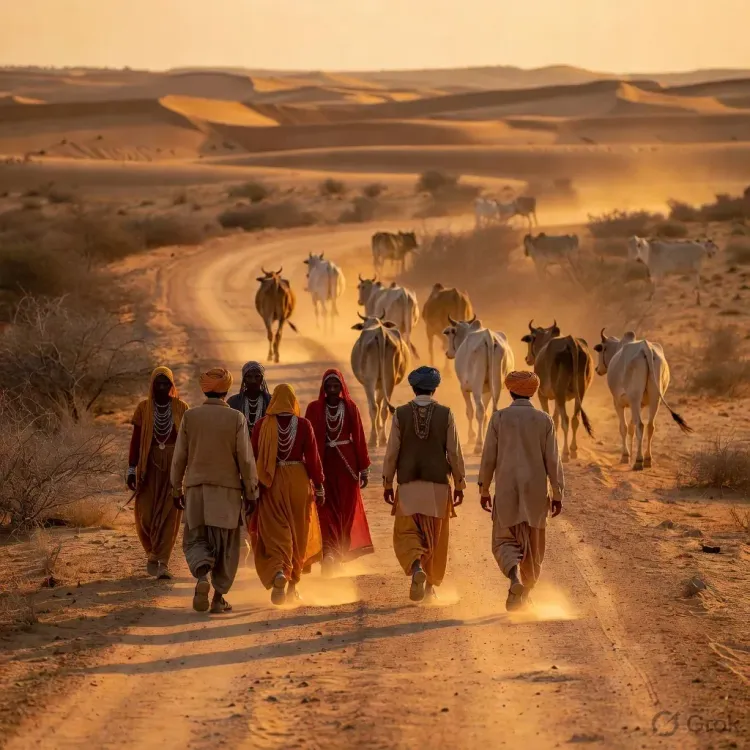
When the Criminal Tribes Act, 1871 was repealed in 1952, the groups it had stigmatised were 'denotified' — officially freed from criminal classification. But freedom from a label did not mean access to land, education, or government schemes. Nomadic and semi-nomadic communities, who move seasonally for livelihoods such as herding, craft, or trade, were similarly excluded from the settled-village frameworks that most welfare delivery depended on.
Across India, states maintain their own notified lists of such communities to extend targeted development schemes, reservations, and identity documents. Rajasthan, with its vast geography and historically mobile pastoral populations, carries one of the more substantial such lists in the country.
What official notification means on the ground
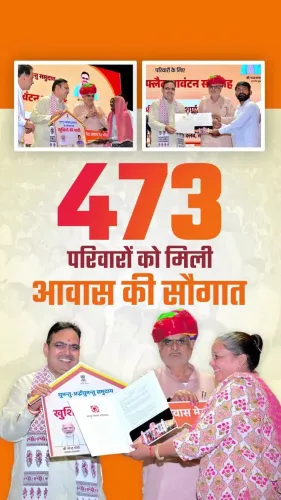
Being on a state's notified list is the administrative gateway to affirmative-action benefits — from scholarship programmes and housing schemes to inclusion in reservation categories. Without it, families can fall through every net: not urban enough for city schemes, not settled enough for rural ones. The Rajasthan government periodically reviews and updates its list, and the figure of 32 notified castes signals the current official count under the Sharma administration.
The broader national picture has seen renewed attention on this question. The Renke Commission and subsequent reports have repeatedly flagged that denotified and nomadic communities remain among the most data-poor and welfare-poor groups in India, often invisible in census enumeration and therefore in planning. State-level counts and notifications are, for now, the primary lever governments have to make them visible.
For the Bhajan Lal Sharma government, surfacing this number publicly is also a political signal — that these communities are being seen, counted, and, the hashtag implies, led forward.Point of View
Where nomadic pastoral communities have deep historical roots, the figure of 32 notified castes anchors a broader outreach narrative under CM Sharma. The move also responds to longstanding national-level criticism — most recently echoed in commission reports — that denotified tribes remain undercounted and underserved. Whether the notification count translates into measurable scheme delivery on the ground will be the harder test of intent.
NationPress
28 Sept 2026
Frequently Asked Questions
How many denotified and nomadic castes are notified in Rajasthan?
According to the Chief Minister's Office of Rajasthan, 32 castes from denotified, nomadic, and semi-nomadic communities are currently officially notified in the state.
What does it mean for a community to be 'notified' in Rajasthan?
Being on the state's notified list makes a community eligible for targeted government welfare schemes, reservations, and identity-document programmes that would otherwise be inaccessible to them.
Who are denotified tribes in India?
Denotified tribes are communities that were classified as hereditary criminals under the British-era Criminal Tribes Act of 1871. After India repealed the Act in 1952 , these groups were 'denotified' but have continued to face social and economic exclusion.
What welfare schemes exist for nomadic communities in Rajasthan?
Rajasthan extends affirmative-action benefits — including scholarships, housing schemes, and reservation provisions — to communities on its notified list. The specific schemes available depend on the category under which each community is listed.
What is the hashtag Aapno Agrani Rajasthan about?
Aapno Agrani Rajasthan ('Our Pioneering Rajasthan') is a campaign hashtag used by the Bhajan Lal Sharma government to frame its development and welfare initiatives as positioning Rajasthan as a leading state.