CM Fadnavis Calls for National Acupuncture Council at ACUCON 2026
Synopsis
At the ACUCON 2026 national acupuncture conference in Nagpur on 11 July 2026, Maharashtra CM Devendra Fadnavis urged Prime Minister Modi to create a National Acupuncture Council, holding up the existing Maharashtra Acupuncture Council as the model for a central statutory body.
Key Takeaways
CM Devendra Fadnavis called for a National Acupuncture Council at the ACUCON 2026 conference in Nagpur on 11 July 2026 .
The appeal was addressed directly to Prime Minister Narendra Modi via a post on X.
Fadnavis cited the Maharashtra Acupuncture Council as the ready blueprint for a national body.
India's Ministry of AYUSH , established in 2014 , currently governs complementary medicine but has no dedicated national acupuncture council.
The proposal follows a well-established pattern of state-level regulatory bodies informing central health legislation in India.
A national council would standardise licensing and quality assurance for acupuncture practitioners across the country.
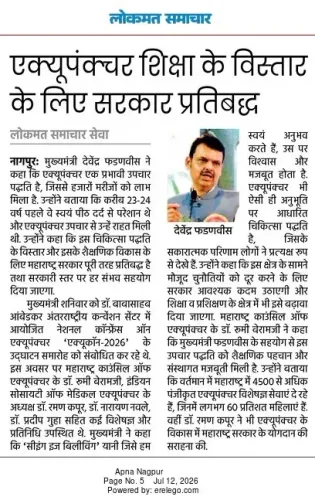
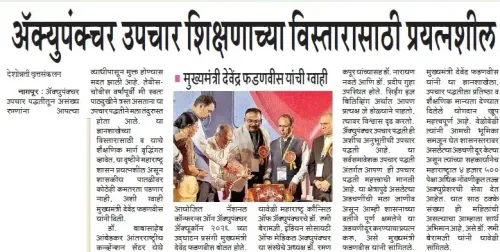
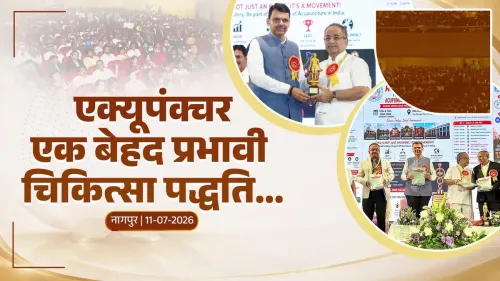
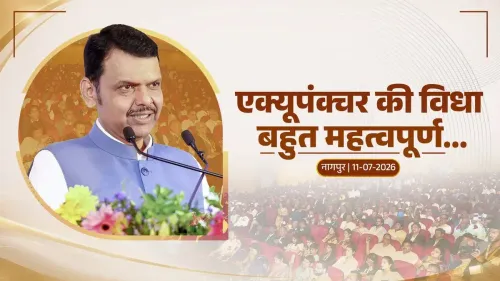
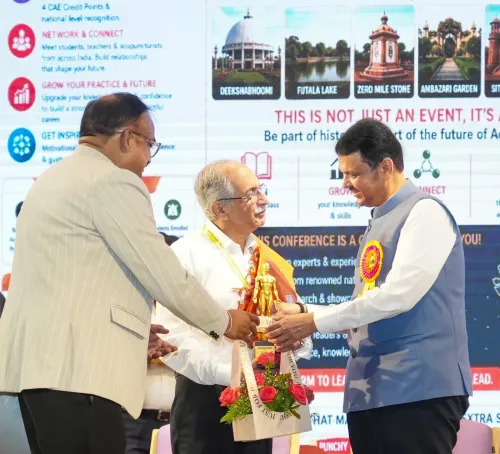
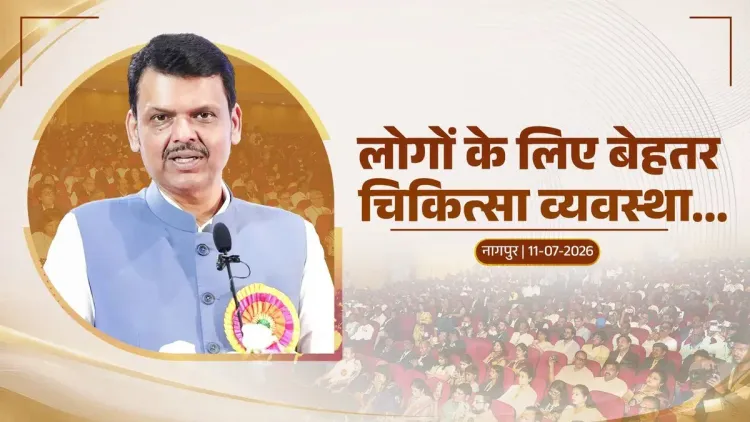
Maharashtra Chief Minister Devendra Fadnavis, speaking at the inauguration of ACUCON 2026 — the National Conference on Acupuncture — in Nagpur on 11 July 2026, called on Prime Minister Narendra Modi to establish a National Acupuncture Council for India, citing the Maharashtra Acupuncture Council as the ready blueprint.
Context
Addressing the national conference, Fadnavis stated in Marathi and Hindi: 'Maharashtra Acupuncture Council ki tarah hi desh mein bhi National Acupuncture Council taiyar honi chahiye' ('Just as Maharashtra has its Acupuncture Council, a National Acupuncture Council must be set up for the country as well'). The remark was framed as a direct appeal to the Prime Minister and was posted on X (formerly Twitter) the same evening.
The conference, held under the banner #ACUCON2026, brought together acupuncture practitioners and health administrators from across the country, with Nagpur — the Chief Minister's home constituency — serving as the venue.
Policy Backdrop
India's regulatory architecture for complementary and alternative medicine is anchored in the Ministry of AYUSH, established in November 2014, which oversees traditional systems including Ayurveda, Yoga, Unani, Siddha, and Homeopathy. Acupuncture, though widely practised, currently lacks a dedicated national statutory council comparable to those governing other AYUSH disciplines.
Maharashtra's state-level initiative in forming its own Acupuncture Council follows a broader pattern in Indian health governance: states act as regulatory laboratories, piloting sector-specific bodies whose frameworks are later considered for central legislation. Fadnavis is explicitly invoking this precedent to push for federal action.
Stakeholders and Impact
A National Acupuncture Council, if constituted, would directly affect thousands of acupuncture practitioners across India by providing standardised licensing, ethical guidelines, and a grievance redressal mechanism. Patients seeking acupuncture treatment would benefit from clearer quality assurance.
The AYUSH ministry and its existing regulatory bodies would be the primary institutional actors in any such expansion. Practitioners currently operating under state-level or informal frameworks would face new compliance requirements, but would also gain formal professional recognition.
What's Next
The Chief Minister's public appeal to Prime Minister Modi at a national conference elevates the proposal from a state-level discussion to a potential item on the central government's health-policy agenda. Any formal move would likely involve consultations between the Maharashtra Acupuncture Council, the Ministry of AYUSH, and parliamentary committees overseeing health legislation.
If the Centre responds positively, the Maharashtra model could serve as the template for a national statutory body — a development that would mark a significant step in the formal integration of acupuncture into India's regulated healthcare landscape.
Point of View
A tactic that has worked before in AYUSH governance. By positioning the Maharashtra Acupuncture Council as the template, he simultaneously claims credit for Maharashtra's regulatory initiative and applies gentle pressure on the Union government. The move fits a broader BJP pattern of using chief ministers as policy entrepreneurs who pilot ideas that the Centre can later nationalise, lending both federal coherence and political visibility to the exercise. Whether the Ministry of AYUSH acts on this or files it as a conference recommendation will signal how seriously the Centre is considering acupuncture's formal integration into the regulated healthcare system.
NationPress
10 Oct 2026
Frequently Asked Questions
What is the National Acupuncture Council that CM Fadnavis is proposing?
CM Fadnavis is calling for a central statutory body — a National Acupuncture Council — that would regulate acupuncture practice across India, similar to how the Maharashtra Acupuncture Council currently oversees the profession at the state level.
What is ACUCON 2026?
ACUCON 2026 is the National Conference on Acupuncture held in Nagpur on 11 July 2026, where CM Devendra Fadnavis made the inauguration address and issued his appeal for a national regulatory council.
Does India already have a national body for acupuncture regulation?
No. While the Ministry of AYUSH, set up in 2014, governs several traditional and complementary medicine systems, there is currently no dedicated national statutory council for acupuncture in India.
What is the Maharashtra Acupuncture Council?
The Maharashtra Acupuncture Council is a state-level regulatory body for acupuncture practitioners in Maharashtra. CM Fadnavis cited it as the model that a future National Acupuncture Council should replicate.
How could a National Acupuncture Council affect patients and practitioners?
A national council would standardise licensing, ethical guidelines, and quality assurance for acupuncture across India, giving practitioners formal recognition and giving patients greater confidence in the safety and credentials of their treatment providers.