CM Fadnavis Backs 'No Tolerance for Drugs' Drive Across Maharashtra
Synopsis
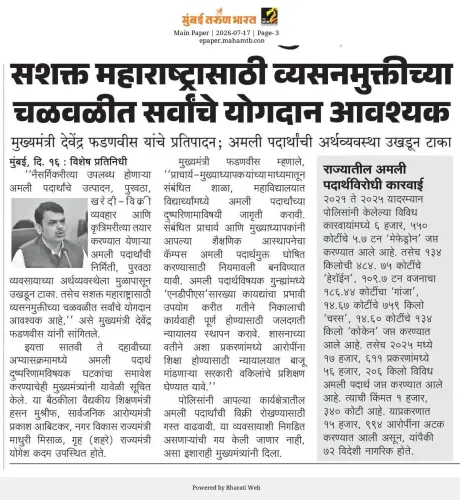
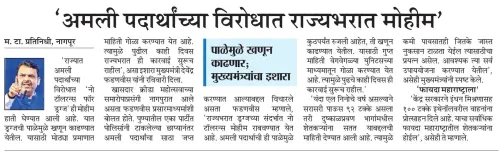
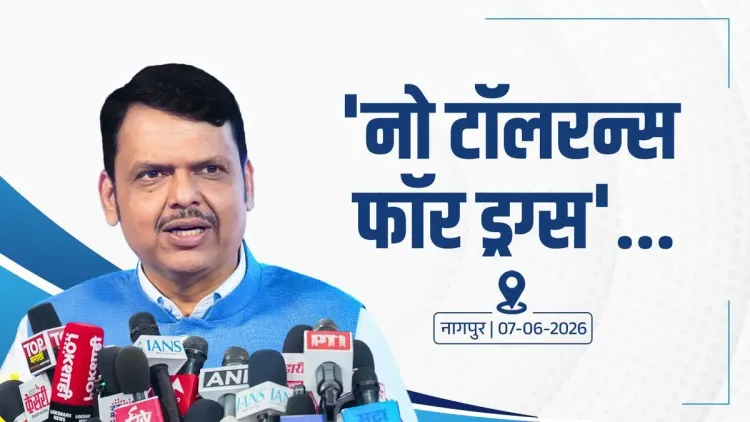
Maharashtra Chief Minister Devendra Fadnavis on June 7, 2026, announced from Nagpur that the 'No Tolerance for Drugs' campaign is actively running across Maharashtra and the country, reinforcing the state's alignment with the central government's Nasha Mukt Bharat Abhiyan.
Key Takeaways
CM Devendra Fadnavis publicly reaffirmed the 'No Tolerance for Drugs' campaign on June 7, 2026 from Nagpur .
The drive is framed as both a state-level and national initiative, running concurrently across Maharashtra and the rest of India.
The campaign aligns with the central government's Nasha Mukt Bharat Abhiyan , launched in August 2020 .
Enforcement operates under the NDPS Act, 1985 , with coordination between state police and the Narcotics Control Bureau .
Key targets include drug trafficking networks and substance abuse among youth in Maharashtra's major urban centres.
Measurable outcomes — arrests, seizures, rehabilitation figures — are yet to be officially published for this campaign phase.
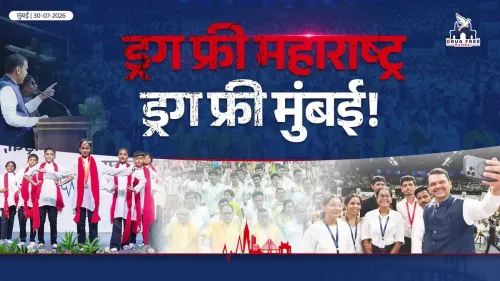
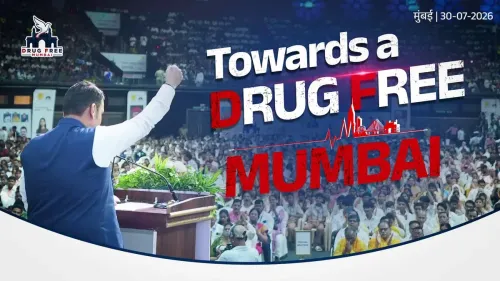
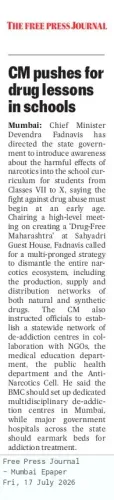
Maharashtra Chief Minister Devendra Fadnavis on Sunday, June 7, 2026, reaffirmed the state government's commitment to an ongoing anti-narcotics campaign, declaring that the 'No Tolerance for Drugs' drive is actively under way across Maharashtra and the rest of the country. The announcement was made from Nagpur, the state's winter capital, and shared on the Chief Minister's official X account.
Context
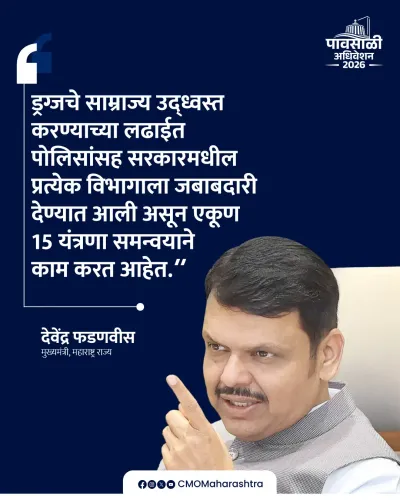
In his post, Fadnavis wrote in both Marathi and Hindi: 'राज्यासह देशभरात ड्रग्सविरोधात नो टॉलरन्स फॉर ड्रग्स मोहीम सुरू आहे' ['The No Tolerance for Drugs campaign against drugs is under way across the state and the country']. The bilingual message signals an effort to reach audiences across Maharashtra's diverse linguistic communities while also framing the drive as part of a broader national push.
The statement comes amid sustained pressure on state governments to demonstrate visible enforcement action against drug trafficking and substance abuse, particularly among youth in urban and semi-urban areas.
Policy Backdrop
The campaign aligns with the central government's Nasha Mukt Bharat Abhiyan, launched in August 2020 by the Ministry of Social Justice and Empowerment to coordinate awareness, counselling, and enforcement efforts across states. The broader legal framework for drug control in India rests on the Narcotic Drugs and Psychotropic Substances (NDPS) Act, 1985, which empowers both central and state agencies to prosecute trafficking and possession offences.
Maharashtra, as India's second-most populous state and a major economic hub, faces particular vulnerability to drug trafficking due to its extensive coastline and land borders. The state has historically coordinated operations with the Narcotics Control Bureau (NCB) on high-value seizure cases.
Stakeholders and Impact
Fadnavis, a senior BJP leader who has served multiple terms as Chief Minister with a stated focus on law and order, has consistently positioned narcotics control as a governance priority. The 'No Tolerance for Drugs' framing mirrors zero-tolerance rhetoric adopted by several state governments in recent years to signal firm enforcement intent to both law enforcement agencies and the public.
The primary stakeholders in such campaigns include state police units, the NCB, district-level anti-narcotics cells, and rehabilitation and counselling networks. Youth populations in cities such as Mumbai, Pune, and Nagpur are the most directly targeted beneficiaries of the awareness and demand-reduction components of the drive.
What's Next
Attention will now turn to the Maharashtra Home Department for follow-up data on arrests, seizures, and rehabilitation referrals linked to the campaign. The upcoming monsoon session of the Maharashtra state legislature is likely to see questions from opposition benches on measurable outcomes of the drive. Whether the campaign translates into sustained institutional action — beyond public communication — will be the key test of its impact.
Point of View
Lending it both legitimacy and political visibility. By invoking the 'No Tolerance' framing in both Marathi and Hindi, the Chief Minister signals to multiple constituencies — local voters, central leadership, and law enforcement — that Maharashtra is an active participant in the national anti-narcotics agenda. The timing and tone also serve a governance optics function: social-media declarations of zero tolerance are increasingly used by state executives to pre-empt criticism and set a public benchmark. The real test, however, will come when the Home Department releases verifiable enforcement data that either substantiates or complicates the campaign's claimed reach.
NationPress
23 Oct 2026
Frequently Asked Questions
What is the 'No Tolerance for Drugs' campaign in Maharashtra?
The 'No Tolerance for Drugs' campaign is an anti-narcotics enforcement and awareness drive running across Maharashtra and India, reaffirmed by Chief Minister Devendra Fadnavis on June 7, 2026, aimed at curbing drug trafficking and substance abuse.
What is Nasha Mukt Bharat Abhiyan?
Nasha Mukt Bharat Abhiyan is a central government initiative launched in August 2020 by the Ministry of Social Justice and Empowerment to reduce drug abuse through coordinated awareness, counselling, and enforcement efforts involving state governments.
What law governs drug enforcement in India?
Drug enforcement in India is primarily governed by the Narcotic Drugs and Psychotropic Substances (NDPS) Act, 1985, which provides the legal framework for prosecuting trafficking and possession of narcotics and psychotropic substances.
Why is Maharashtra considered vulnerable to drug trafficking?
Maharashtra's extensive coastline, land borders, and status as India's largest economic hub make it a strategic corridor for drug trafficking networks, prompting regular coordinated operations between state police and the Narcotics Control Bureau.
What should we watch for after Fadnavis's anti-drugs announcement?
Key things to watch include official data on arrests and seizures from the Maharashtra Home Department, opposition questions during the state legislature's monsoon session, and any updates on rehabilitation referrals linked to the campaign.