CM Fadnavis Prays at Pandharpur for Youth, Viksit Bharat
Synopsis
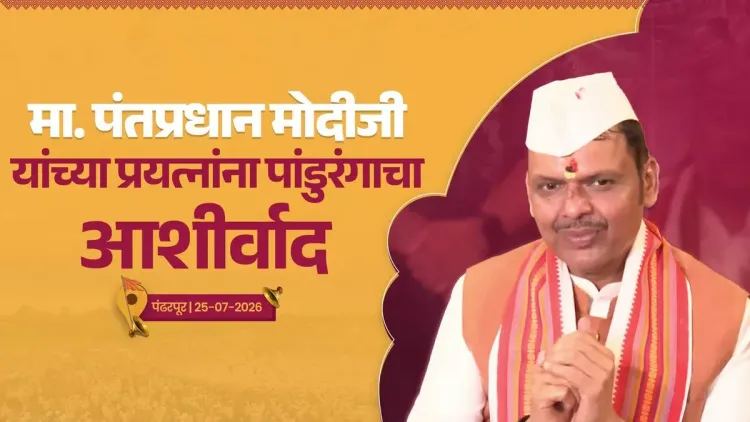
Maharashtra CM Devendra Fadnavis offered prayers at the Vithoba temple in Pandharpur on 25 July 2026, seeking divine blessings for PM Modi's youth development vision and the Viksit Bharat goal of a developed India by 2047.
Key Takeaways
Devendra Fadnavis visited the Vithoba temple, Pandharpur and offered prayers on 25 July 2026 .
He prayed for the success of PM Narendra Modi 's youth-focused development agenda and the Viksit Bharat vision.
The CM invoked blessings for every young Indian to realise their dreams and secure opportunities.
The post was shared in both Marathi and Hindi , reflecting a broad outreach across Maharashtra and the Hindi belt.
The Viksit Bharat Sankalp Yatra was launched in 2023 to advance India's developed-nation goal by 2047 .
BJP state leaders regularly align public messaging with central government priorities at prominent religious sites.
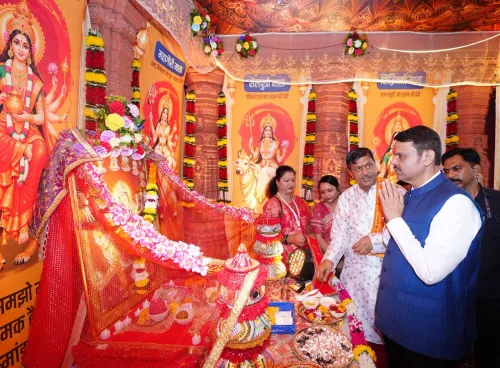
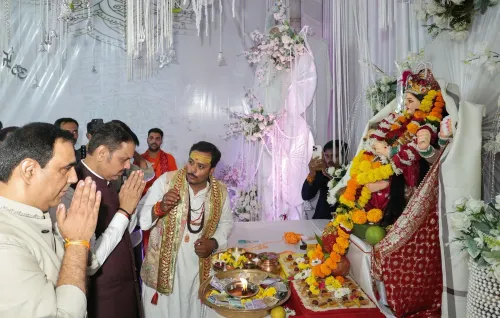
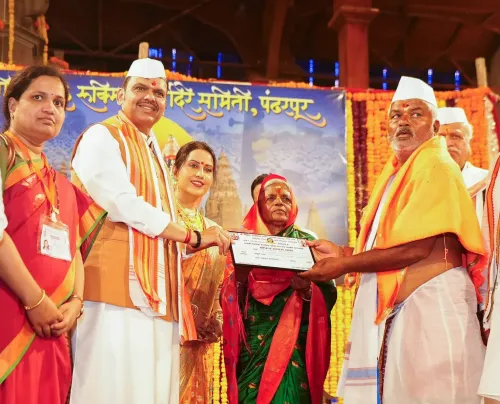
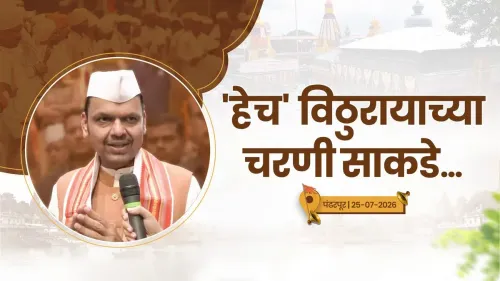
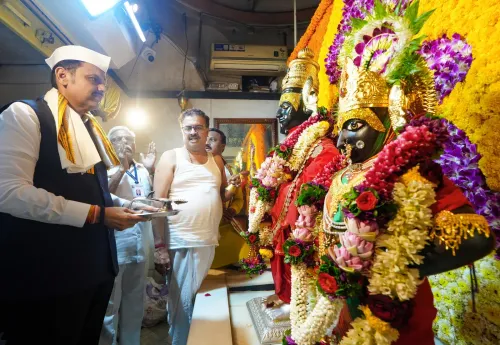
Maharashtra Chief Minister Devendra Fadnavis visited the sacred Vithoba temple at Pandharpur and offered prayers for the success of Prime Minister Narendra Modi's youth development agenda and the Viksit Bharat vision, he announced on Saturday, 25 July 2026. The CM shared his devotion on X, invoking the blessings of Vitthal (Lord Vithoba) for every young citizen of India and for the nation as a whole.
Context
Posting in both Marathi and Hindi, Fadnavis wrote that he prayed at the feet of Vithumauli (a reverent name for Lord Vithoba) that the 'new chapter of development, opportunities, and new hopes and aspirations that Prime Minister Narendra Modi has opened for the youth of our country receives greater strength.' He further prayed that 'every young man and woman in the country gets the inspiration and opportunity to realise their dreams, and that this journey of building a Viksit Bharat (Developed India) moves forward with greater speed.'
The post concludes with a blessing: 'May the grace of Vithumauli always remain on Maharashtra, the country, and every citizen — this is my prayer.'
Policy Backdrop
Pandharpur, located in Solapur district of Maharashtra, is one of the most significant Vaishnava pilgrimage centres in India. The Vithoba temple draws millions of devotees annually, particularly during the Wari pilgrimage season, and has long been a site where Maharashtra's political leaders publicly express their faith and governance commitments.
The Viksit Bharat framework — anchored in the goal of making India a developed nation by 2047 — has been the central organising theme of the BJP-led central government since the Viksit Bharat Sankalp Yatra was launched in 2023. Parallel initiatives such as the Skill India Mission, launched in 2015, aim to equip millions of young Indians with employable skills and link them to economic opportunities.
Stakeholders and Impact
The primary beneficiaries invoked in Fadnavis's prayer are Indian youth, whose aspirations for employment, skill development, and economic mobility sit at the centre of both state and central government policy. Maharashtra, as one of India's most industrialised and populous states, plays a critical role in translating central youth schemes into on-ground outcomes.
BJP leaders at the state level have consistently aligned their public messaging with the central government's development narrative, and Fadnavis's statement from a revered religious site reinforces that alignment. Such expressions from a pilgrimage venue carry weight with Maharashtra's large devotional electorate, spanning urban and rural constituencies alike.
What's Next
Attention will now turn to how Maharashtra's state budget and legislative sessions translate these stated priorities into concrete allocations for youth employment and skill programmes. Analysts will watch for state-level rollout updates on centrally sponsored schemes such as Skill India and any new Maharashtra-specific youth initiatives that may follow from the CM's expressed commitment. The pace of implementation under the Viksit Bharat framework in Maharashtra will be a key metric for assessing whether the prayer at Pandharpur translates into policy momentum.
Point of View
The CM reinforces the BJP's strategy of embedding governance goals within cultural and religious idiom. The choice of Pandharpur, with its vast cross-caste devotional base, is unlikely to be incidental: the Wari pilgrimage tradition cuts across Maharashtra's social fabric, giving such statements an unusually wide resonance. The real test will be whether state budget allocations and scheme implementation in Maharashtra match the fervour of the prayer.
NationPress
24 Oct 2026
Frequently Asked Questions
Why did CM Devendra Fadnavis visit Pandharpur?
Fadnavis visited the Vithoba temple in Pandharpur to offer prayers, and publicly announced that he prayed for the success of PM Modi's youth development vision and the Viksit Bharat goal of a developed India by 2047.
What is Viksit Bharat and why does Fadnavis mention it?
Viksit Bharat is the BJP-led central government's framework to make India a fully developed nation by 2047. Fadnavis mentioned it as the overarching goal he prayed for at Pandharpur, aligning Maharashtra's state messaging with the national agenda.
What is the significance of the Vithoba temple at Pandharpur?
The Vithoba temple in Pandharpur, Solapur district, is one of Maharashtra's most important Vaishnava pilgrimage sites, attracting millions of devotees during the annual Wari pilgrimage. It holds deep cultural and spiritual significance across the state.
What youth schemes did Fadnavis refer to in his Pandharpur prayer post?
Fadnavis did not name specific schemes but referenced the broader development, opportunities, and aspirations that PM Modi's government has opened for Indian youth — an arc that includes initiatives such as Skill India and the Viksit Bharat Sankalp Yatra.
When did Devendra Fadnavis post about his Pandharpur visit?
Fadnavis posted about his Pandharpur visit on Saturday, 25 July 2026, at approximately 6:28 AM IST on X (formerly Twitter).