CM Fadnavis Pays Tribute to Pingali Venkayya on Birth Anniversary
Synopsis
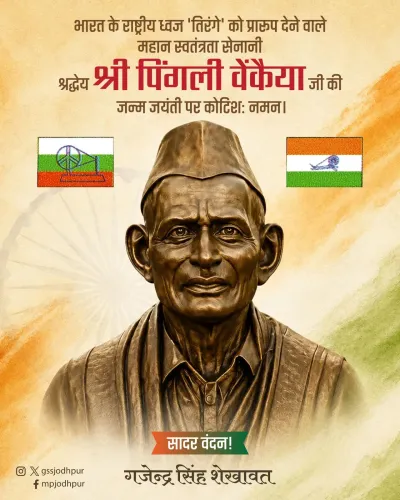
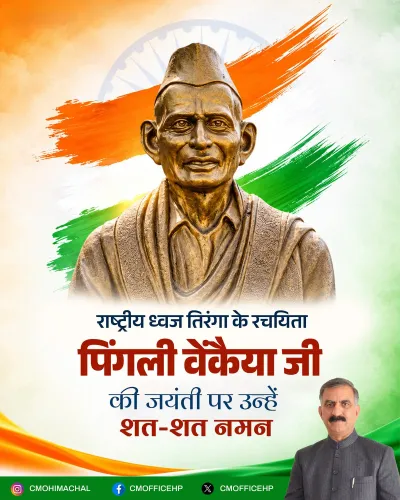
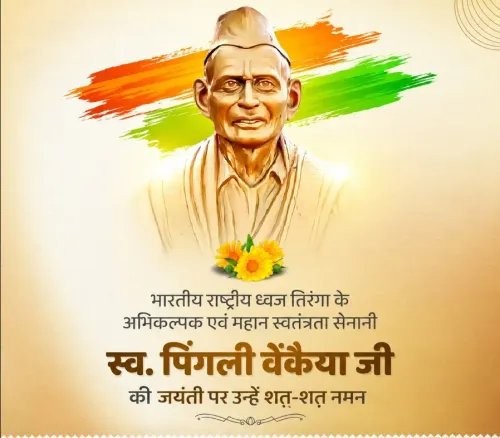
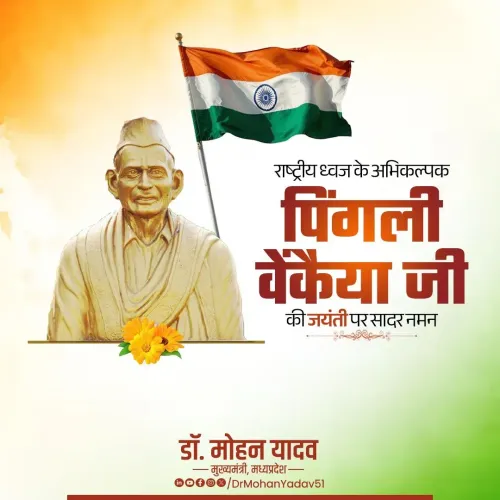
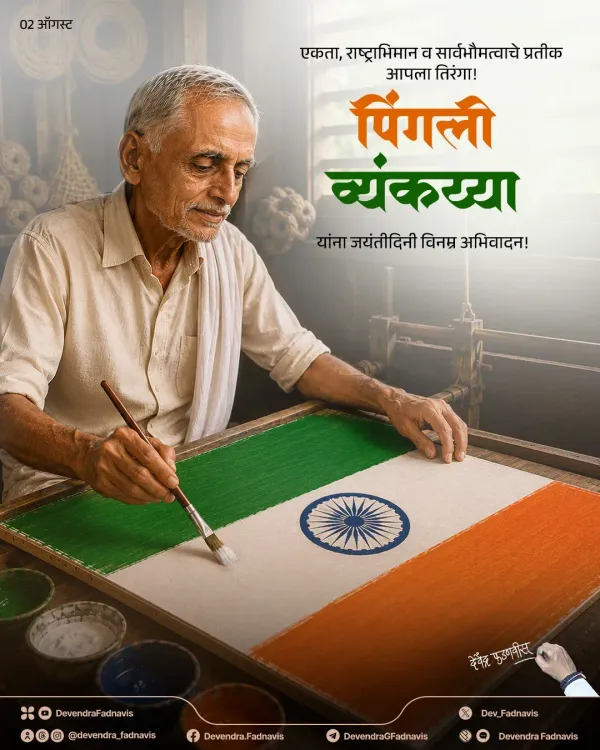
Maharashtra CM Devendra Fadnavis honoured Pingali Venkayya — the freedom fighter who designed the Indian national flag presented to Gandhi in 1921 and adopted by the Constituent Assembly in 1947 — on his birth anniversary, calling the Tricolour a symbol of unity, pride, and sovereignty.
Key Takeaways
Devendra Fadnavis , Chief Minister of Maharashtra, posted a tribute to Pingali Venkayya on his birth anniversary on 2 August 2026 .
Pingali Venkayya designed the flag he presented to Mahatma Gandhi in 1921 , which formed the basis of the Indian national flag.
The Indian national flag was officially adopted by the Constituent Assembly on 22 July 1947 .
Fadnavis posted in both English and Marathi, framing the Tricolour as a symbol of 'unity, pride, and sovereignty.' Such tributes to independence-era figures on their birth anniversaries are a consistent practice among leaders across Indian political parties.
The man who gave India its Tricolour rarely gets the headlines he deserves. Maharashtra Chief Minister Devendra Fadnavis used his platform on Sunday, 2 August 2026 to change that — paying tribute to Pingali Venkayya, the freedom fighter and flag designer whose creation became the sovereign emblem of a billion people.
Fadnavis posted in both English and Marathi, writing: 'Unity. Pride. Sovereignty. Our Tiranga reflects it all. Honouring the designer of the Indian national flag, Pingali Venkayya, for giving India its most iconic symbol of freedom and identity, on his Birth Anniversary!' In Marathi, he added — एकता, राष्ट्राभिमान व सार्वभौमत्वाचे प्रतीक, आपला तिरंगा! ['Unity, national pride and sovereignty — our Tricolour!'] — before offering a 'humble salute' to the flag's architect.
The Man Behind the Tricolour
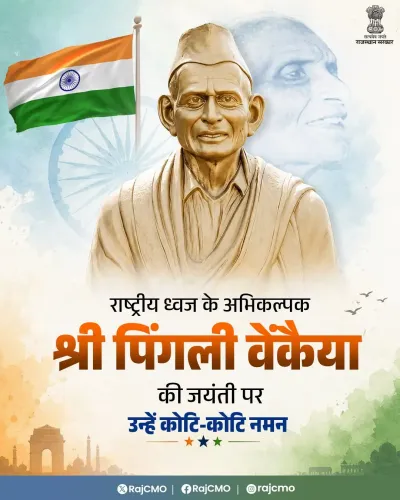
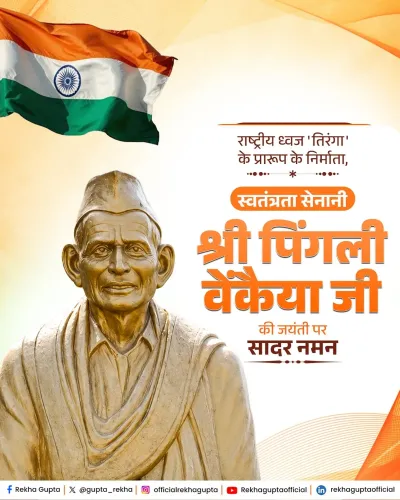
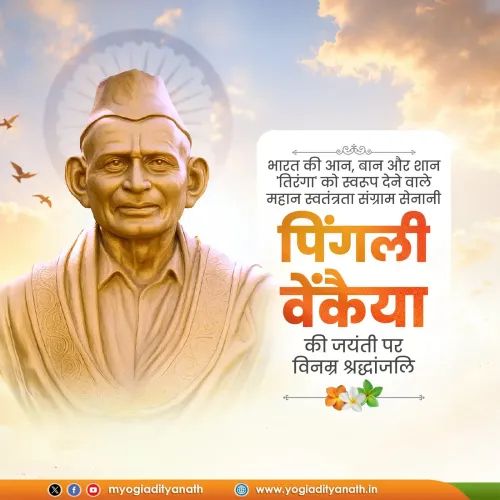
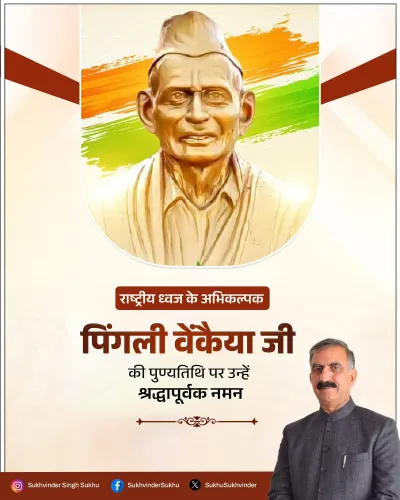
Pingali Venkayya was an Indian freedom fighter who designed the flag he presented to Mahatma Gandhi in 1921. That design became the foundation for the flag formally adopted by the Constituent Assembly on 22 July 1947 — just weeks before Independence. Every time the Tricolour is unfurled, it is Venkayya's vision that flies.
Despite that legacy, Venkayya has historically occupied a quieter corner of India's freedom-struggle memory. Tributes on his birth anniversary, from leaders across the political spectrum, are one of the few recurring moments when his name returns to national conversation.
A Ritual of Remembrance — and What It Signals
Birth-anniversary tributes to independence-era figures are a fixture of Indian political communication, cutting across party lines. What makes this one notable is the framing: Fadnavis anchored the tribute not in political history alone but in three ideas — unity, pride, and sovereignty — that carry particular resonance in the current national climate. The Tricolour, in that framing, becomes less a historical artefact and more a living argument for national cohesion.
For Maharashtra, a state with a rich tradition of honouring its own freedom-movement figures, the Chief Minister's public salute to Venkayya also signals an intent to keep the broader pan-Indian independence narrative prominent in state discourse.
Venkayya's gift endures on every flagpole in the country. The least his nation can do is remember his name.
Point of View
Given how rarely the flag's designer receives mainstream recognition. Anchoring the tribute in 'unity, sovereignty, and pride' rather than purely historical commemoration suggests a deliberate effort to connect a historical figure to contemporary national sentiment. For a Chief Minister navigating a complex coalition state, wrapping that message in the Tricolour carries broad, cross-community appeal. It is soft nationalism with deep historical roots — and near-zero political risk.
NationPress
16 Sept 2026
Frequently Asked Questions
Who was Pingali Venkayya?
Pingali Venkayya was an Indian freedom fighter who designed the national flag he presented to Mahatma Gandhi in 1921. His design formed the basis for the flag officially adopted by the Constituent Assembly on 22 July 1947.
Who designed the Indian national flag?
Pingali Venkayya designed the Indian national flag. He presented the design to Mahatma Gandhi in 1921, and it was formally adopted as India's national flag by the Constituent Assembly on 22 July 1947.
Why did CM Devendra Fadnavis post about Pingali Venkayya?
Fadnavis posted a tribute to Pingali Venkayya on his birth anniversary, honouring him as the designer of the Indian national flag and describing the Tricolour as a symbol of unity, pride, and sovereignty.
When was the Indian national flag adopted?
The Indian national flag was officially adopted by the Constituent Assembly on 22 July 1947, just weeks before India's Independence on 15 August 1947.
What does the Indian Tricolour represent?
The Indian Tricolour is the national flag of India, representing unity, sovereignty, and national identity. CM Fadnavis, in his tribute, described it as a symbol of 'unity, pride, and sovereignty.'