CMT patient C-section at Midnapore Medical College: A rare surgical feat in West Bengal
Synopsis
A district government hospital in West Bengal pulled off what is believed to be a first — a successful C-section on a patient with Charcot-Marie-Tooth disease, a rare hereditary nerve disorder that makes anaesthesia administration particularly dangerous. The five-hour preparation for a 90-minute surgery tells the real story of how high the stakes were.
Key Takeaways
Doctors at Midnapore Medical College and Hospital performed a Caesarean section on Sonamoni Giri , 25 , on 25 August — believed to be the first such procedure on a CMT patient in the district.
Charcot-Marie-Tooth (CMT) disease is a hereditary neurological disorder affecting peripheral nerves, causing weakness, difficulty walking, and potential respiratory muscle involvement.
The C-section lasted approximately 1.5 hours , but preparation and anaesthesia monitoring took nearly 4 to 5 hours due to the elevated risk.
Suman Chatterjee , head of anaesthesia, and Prof.
Bijoy Kumar Bandopadhyay led the procedure, describing the risk as 'considerable.' Both the mother and newborn are reported to be healthy and under medical observation.
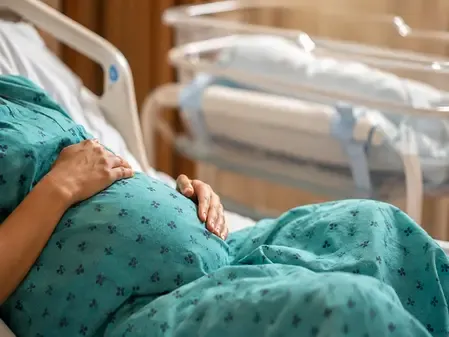
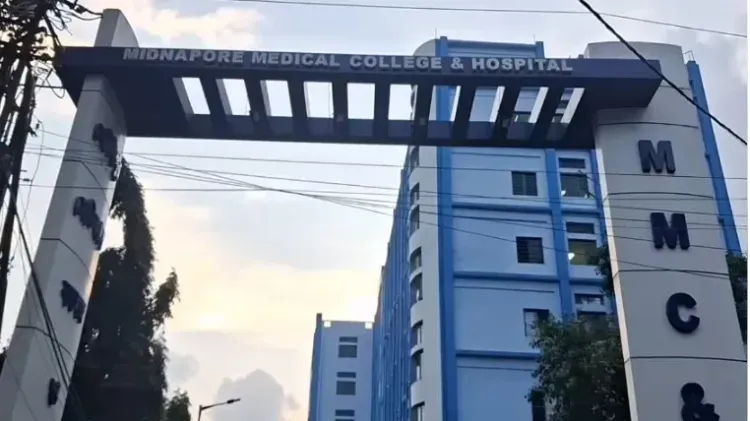
Doctors at Midnapore Medical College and Hospital in West Bengal have successfully performed a Caesarean section on a 25-year-old woman diagnosed with the rare hereditary neurological condition Charcot-Marie-Tooth (CMT) disease, with both the mother and newborn reported to be in good health. The procedure, completed on 25 August, is believed to be the first of its kind performed on a CMT patient in the district.
Who the Patient Is
Sonamoni Giri, a resident of Mohanpur in the Egra area of East Midnapore, was admitted to Midnapore Medical College for the second time during her pregnancy. Medical evaluations during this admission confirmed she was living with CMT disease — a hereditary disorder affecting the peripheral nerves that causes progressive weakness in the hands and feet, difficulty walking, and impaired movement. Giri, who already has a daughter, described walking as extremely difficult due to the condition.
Why This Surgery Was Medically Complex
The central challenge, according to the surgical team, was the administration of anaesthesia. In CMT patients, the peripheral nerve involvement can extend to respiratory muscles, significantly raising the risk of complications during and after surgery. This made close monitoring essential at every stage of the procedure.
Although the Caesarean section itself lasted approximately one-and-a-half hours, the medical team spent nearly four to five hours on pre-operative preparation and anaesthesia-related monitoring to minimise potential risks. This level of preparation underscores how atypical and high-stakes the procedure was.
What the Doctors Said
Suman Chatterjee, head of the hospital's anaesthesia department, and Professor Bijoy Kumar Bandopadhyay led the procedure. 'The risk was considerable, but we succeeded,' the doctors said, adding that both the mother and child are healthy following the surgery. Hospital officials confirmed that the mother and newborn remain under medical observation.
Significance of the Procedure
CMT disease affects roughly 1 in 2,500 people globally, making it one of the most common inherited neurological disorders — yet surgical interventions on CMT patients, particularly obstetric ones, remain rare and are not well-documented in district-level government hospitals in India. This is the first such recorded case in Midnapore district, according to hospital sources. The success of this procedure is notable not only for the patient's outcome but for what it demonstrates about the capacity of public health institutions in West Bengal to manage complex neurological comorbidities in obstetric care.
Both mother and child are currently healthy and under observation, with the medical team continuing to monitor for any post-operative neurological developments.
Point of View
The absence of a documented national protocol for anaesthesia in CMT pregnancies means each such case depends heavily on individual clinical judgement. India needs standardised guidelines for rare-disease obstetric care, not just case-by-case heroics.
NationPress
10 Oct 2026
Frequently Asked Questions
What is Charcot-Marie-Tooth (CMT) disease?
Charcot-Marie-Tooth disease is a hereditary neurological disorder that affects the peripheral nerves, causing progressive muscle weakness, difficulty walking, and reduced sensation in the hands and feet. It affects approximately 1 in 2,500 people globally and has no cure, though symptoms can be managed.
Why is performing a C-section on a CMT patient risky?
Administering anaesthesia to a CMT patient carries elevated risk because the disease can affect respiratory muscles, potentially complicating breathing during and after surgery. This requires extensive pre-operative planning and continuous monitoring, as the surgical team at Midnapore Medical College demonstrated with a 4-to-5-hour preparation phase.
Is this the first C-section performed on a CMT patient in India?
According to hospital sources, it is believed to be the first such procedure performed on a CMT patient in Midnapore district. Whether it is a national first has not been formally verified, but documented cases of obstetric surgery on CMT patients in Indian public hospitals are rare.
Who performed the surgery at Midnapore Medical College?
The procedure was led by Suman Chatterjee , head of the anaesthesia department, and Professor Bijoy Kumar Bandopadhyay . The team spent nearly 4 to 5 hours on preparation and monitoring before and after the 1.5-hour surgery.
What is the current condition of the mother and child?
Both Sonamoni Giri and her newborn are reported to be in good health following the surgery. They remain under medical observation at Midnapore Medical College and Hospital.