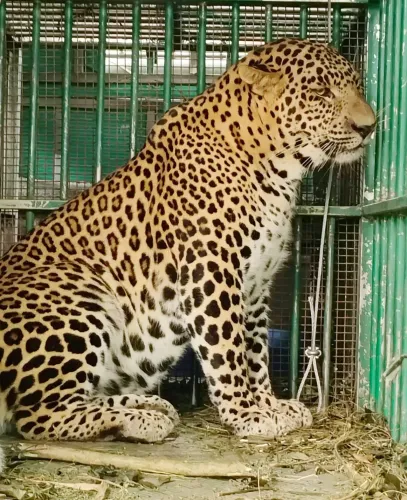
Was a Five-Year-Old Boy Mauled to Death by a Leopard in Valparai, TN?

Synopsis
Tragedy strikes in Valparai as a five-year-old boy is killed by a leopard, marking the third child fatality in recent months. This incident raises serious concerns about the safety of families living near wildlife habitats.
Key Takeaways
Five-year-old boy tragically killed by a leopard in Valparai.
This is the third child fatality in the region in eight months.
Concerns are growing about safety in plantation communities .
Forest officials are enhancing patrols and installing camera traps.
Residents are advised to keep children indoors after dusk .
Coimbatore, Dec 6 (NationPress) In a distressing incident of human–wildlife conflict in the Anamalai hills, a five-year-old boy tragically lost his life due to a leopard attack in Valparai, located in Tamil Nadu's Coimbatore district on Saturday, as reported by police authorities.
The deceased, Saiful, was the child of a migrant Assamese worker who was employed at a local tea estate.
As per the accounts from the Police and Forest Department officials, the boy was playing outside the labor quarters at Ayyarpadi when the leopard emerged unexpectedly from the adjacent tea bushes, seized him, and vanished into the depths of the estate.
Following extensive searches conducted by estate workers and forest personnel, Saiful's body was discovered deep within the plantation, showing clear evidence of a leopard attack.
This marks the third child fatality attributed to leopard attacks in Valparai within the past eight months, igniting concerns among the local populace and amplifying calls for enhanced protective measures in tea estates adjacent to forested areas.
On August 11, 2025, an eight-year-old boy named Noorjil Haq, son of Assam native Sarafat Ali, was similarly killed at Waverly Estate in Kavarakallu, approximately 30 km from the Kerala–Tamil Nadu border.
The child was playing near his home when the leopard dragged him into the dense tea plantation, with his remains later found severely disfigured, as the animal had partially consumed him.
Forest teams rushed to the scene, but the leopard escaped upon hearing the disturbance.
Just weeks prior, on June 22, 2025, a four-year-old girl named Roshini, daughter of a migrant couple from Jharkhand, was attacked and taken away by a leopard in Pachamalai near Valparai. Despite immediate search efforts, her body parts were only located the following day after the Forest Department intensified their search.
The frequency of these incidents has instilled a climate of fear among the plantation communities in Valparai, many of whom are migrant workers living in close proximity to forested regions.
Residents note that the fragmented areas of dense bushes, inadequate lighting, and the absence of fencing around labor quarters render children especially susceptible to such attacks.
In response, forest officials have stepped up patrols and installed additional camera traps in the vicinity. They have advised residents to keep children indoors after dark and promptly report any leopard sightings.
With another young life lost, the demand for a long-term, coordinated strategy to mitigate wildlife conflicts in Valparai has intensified.
Point of View
It is crucial to approach this tragedy with sensitivity and a commitment to factual reporting. The recurring incidents of leopard attacks on children in Valparai highlight the urgent need for a coordinated wildlife management strategy to ensure the safety of vulnerable communities. Our responsibility is to inform the public and advocate for protective measures that can prevent further tragedies.
NationPress
2 Oct 2026
Frequently Asked Questions
What happened to the five-year-old boy in Valparai?
The boy was mauled to death by a leopard while playing outside near his home.
How many children have been attacked by leopards in Valparai recently?
This incident marks the third child fatality due to leopard attacks in Valparai in the last eight months.
What measures are being taken to prevent further attacks?
Forest officials are increasing patrols, installing camera traps, and advising residents to keep children indoors after dark.
Where did this incident occur?
The incident occurred in Ayyarpadi, Valparai, Tamil Nadu.
What should residents do if they see a leopard?
Residents are urged to report any leopard sightings immediately to the authorities.