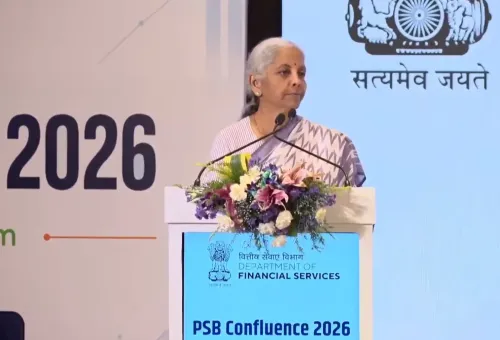
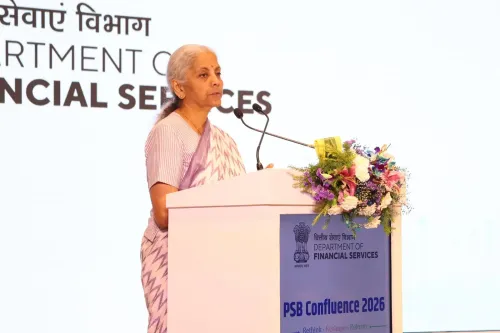
FM Sitharaman Addresses PSB Confluence 2026 in New Delhi
Synopsis
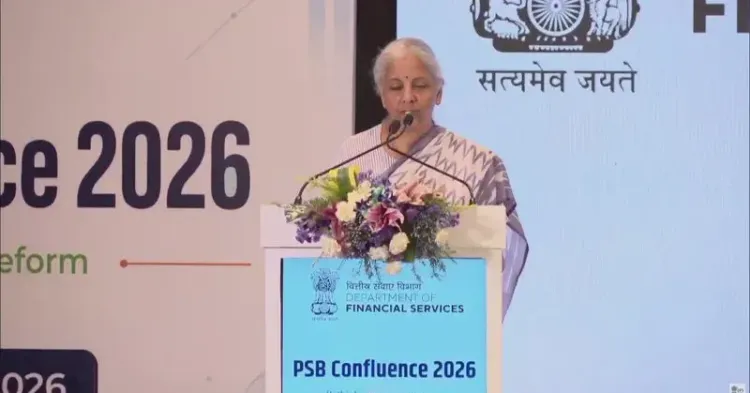
Union Finance Minister Nirmala Sitharaman addressed PSB Confluence 2026 in New Delhi on August 17, engaging state-owned bank leadership at the government's flagship banking reform conclave — continuing a pattern of direct ministerial oversight over India's consolidated public sector banking system.
Key Takeaways
Union Finance Minister Nirmala Sitharaman addressed PSB Confluence 2026 in New Delhi on August 17, 2026 .
The conclave is the government's flagship direct-engagement platform with public sector bank leadership.
India consolidated 10 public sector banks into four entities starting in 2019 to strengthen balance sheets and cut NPAs.
Such conclaves historically set credit targets and reform mandates that feed into Union Budget and RBI policy cycles.
The address was live-streamed, signalling transparency and market-facing confidence in the banking sector's current health.
Watchers will track any announcements on digital banking, capital infusion, or credit growth targets emerging from the event.
India's public sector banking ecosystem gathered in New Delhi on Monday, August 17, 2026, as Union Finance Minister Nirmala Sitharaman took the podium at #PSBConfluence2026 — the high-stakes annual conclave where the government and state-owned banks align on lending priorities, reform targets, and the road ahead for the financial sector.
Why PSB Confluence Carries Real Weight
This is not a ceremonial gathering. The PSB Confluence series has historically served as the government's primary direct-engagement platform with the chiefs and boards of India's public sector banks — a room where reform mandates get translated into institutional action. Sitharaman, who has held the Finance portfolio since 2019, has used such conclaves to push performance benchmarks, review non-performing asset reduction, and signal budget-linked credit priorities.
The backdrop matters. Beginning in 2019, the government executed one of the most sweeping restructurings in Indian banking history — consolidating 10 public sector banks into four larger entities to shore up balance sheets, improve capital adequacy, and reduce the drag of legacy bad loans. The results of that consolidation exercise are now visible in healthier quarterly numbers across most PSBs, but the government's appetite for further reform has not dimmed.
The Pattern Behind the Podium
Successive administrations have used periodic PSB conclaves precisely because state-owned banks remain the primary credit pipeline for priority sectors — agriculture, MSMEs, infrastructure, and Jan Dhan-linked financial inclusion. A ministerial address here is a policy signal as much as a review session. Watchers will be tracking any direction given on bank credit targets, digital banking expansion, or capital infusion timelines that could feed into the next Union Budget or an upcoming RBI policy review.
Sitharaman's address was live-streamed, underscoring the government's intent to make the deliberations visible to markets, regulators, and the broader public — a transparency posture that itself signals confidence in the sector's current standing.
The state of India's public sector banks in 2026 is markedly different from the stressed-balance-sheet era of the mid-2010s. Whether today's conclave produces fresh mandates on credit growth, fintech integration, or capital allocation will define the next chapter of that transformation.
Point of View
Not a completed project. The 2019 consolidation gave the government fewer, stronger banks to steer; conclaves like this are how that steering actually happens. Any fresh direction on digital banking or capital infusion here could move markets and shape the next budget cycle.
NationPress
17 Aug 2026
Frequently Asked Questions
What is PSB Confluence 2026?
PSB Confluence 2026 is the government's annual conclave bringing together the leadership of India's public sector banks with the Finance Minister to review performance, set reform priorities, and align lending targets with national economic goals.
What did Nirmala Sitharaman say at PSB Confluence 2026?
The specific content of her address has not been officially detailed yet, but the conclave typically covers credit growth targets, NPA reduction, digital banking, and capital adequacy — areas where Sitharaman has consistently pushed reforms since 2019.
How many public sector banks are there in India after the 2019 mergers?
Following the 2019 consolidation, 10 public sector banks were merged into four larger entities, reducing the total number of government-owned banks and strengthening their balance sheets.
Why does the government hold PSB conclaves?
PSB conclaves allow the Finance Minister to directly engage state-owned bank chiefs on lending priorities, reform implementation, and alignment with government schemes — translating budget and policy mandates into institutional action.
Where was PSB Confluence 2026 held?
PSB Confluence 2026 was held in New Delhi on August 17, 2026, with Finance Minister Nirmala Sitharaman delivering the keynote address.