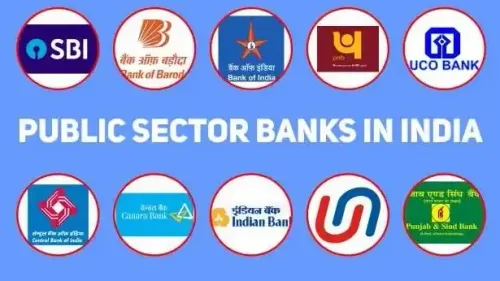
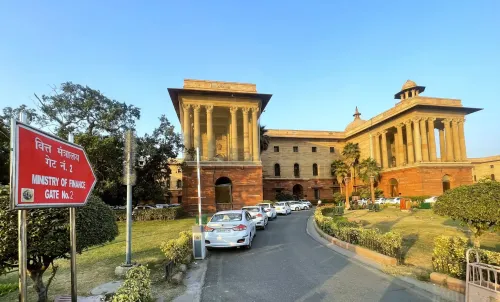
Public sector banks hit all-time high ₹1.98 lakh crore net profit in FY26

Synopsis
India's public sector banks have posted an all-time high net profit of ₹1.98 lakh crore in FY26 — their fourth consecutive record year — with gross NPAs at a historic low of 1.93% and credit growing at 15.7%. The turnaround from the NPA crisis of the late 2010s is now statistically complete, and PSBs are increasingly positioned as engines of India's next credit cycle.
Key Takeaways
PSBs posted an all-time high net profit of ₹1.98 lakh crore in FY 2025–26 , up 11.1% year-on-year.
This is the fourth consecutive year of profitability for public sector banks.
Gross NPA ratio fell to 1.93% and Net NPA ratio to 0.39% — both at historically low levels.
Aggregate business reached ₹283.3 lakh crore , growing 12.8% ; gross advances rose 15.7% to ₹127 lakh crore .
MSME and Retail credit grew at 18.2% and 18.1% respectively, reflecting broad-based credit expansion.
Aggregate CRAR stood at 16.6% , well above the regulatory floor of 11.5% .
Public sector banks (PSBs) recorded a net profit of ₹1.98 lakh crore in FY 2025–26, an 11.1% year-on-year increase and an all-time high, the Finance Ministry announced on Tuesday, 12 May 2026. This marks the fourth consecutive year of profitability for PSBs, underpinned by governance reforms, stronger balance sheets, and improved capital adequacy.
Record Profitability and Business Growth
The aggregate business of PSBs climbed to ₹283.3 lakh crore as of 31 March 2026, registering a growth of 12.8% over the previous year, according to the Finance Ministry statement. Improved asset quality, healthy credit expansion, and higher income were cited as the primary drivers of this profitability milestone. Gross advances grew 15.7% year-on-year to ₹127 lakh crore, while aggregate deposits rose 10.6% to ₹156.3 lakh crore, reflecting sustained depositor confidence.
Asset Quality at Historically Low Stress Levels
Asset quality improved significantly, with the Gross NPA ratio declining to 1.93% and the Net NPA ratio falling to 0.39% as of 31 March 2026 — both at historically low levels. Every PSB maintained a provisioning coverage ratio above 90%, indicating prudent risk management and stronger underwriting standards. Fresh slippages also continued to ease, with the slippage ratio reducing to 0.7%. Total recoveries, including those from written-off accounts, stood at ₹86,971 crore, reflecting improved recovery mechanisms across the sector.
Broad-Based Credit Growth Across RAM Segments
Credit growth remained broad-based during FY26, with advances in the Retail, Agriculture, and MSME (RAM) segments growing by 18.1%, 15.5%, and 18.2% respectively. The Finance Ministry noted that this reflects PSBs' critical role in supporting entrepreneurship, financial inclusion, and wider economic participation. Notably, MSME and retail credit expansion outpaced overall advances growth, signalling a deepening of formal credit access beyond large corporates.
Capital Position and Operational Efficiency
The aggregate Capital to Risk (Weighted) Assets Ratio (CRAR) improved to 16.6% as of 31 March 2026, well above the regulatory minimum of 11.5%. PSBs raised ₹50,551 crore in capital during FY26, supplemented by internal accruals and retained earnings. Operational efficiency also improved, with the cost-to-income ratio tightening to 49.67%, driven by technology adoption and digital transformation initiatives across the sector.
What This Signals for the Banking Sector
The Finance Ministry attributed the sustained turnaround to a multi-year reform programme encompassing improved governance, enhanced credit discipline, and wider access to formal credit. This comes amid a broader economic context where India's credit demand remains robust, and PSBs — long seen as weaker relative to private peers — are increasingly closing the performance gap. Four straight years of record profits represent a structural shift from the NPA crisis that peaked around FY18, when gross bad loans had breached 11%. The trajectory now points to PSBs playing a more assertive role in funding India's infrastructure and consumption-led growth cycle ahead.
Point of View
The MSME and retail credit surge — both growing above 18% — warrants close monitoring; these segments historically carry higher delinquency risk in a slowdown. The turnaround story is real, but it needs a stress cycle to be truly validated.
NationPress
24 Sept 2026
Frequently Asked Questions
What is the net profit of public sector banks in FY26?
Public sector banks collectively posted a net profit of ₹1.98 lakh crore in FY 2025–26, an 11.1% increase over the previous year and an all-time high, according to the Finance Ministry.
Why is this the fourth straight year of profitability for PSBs?
PSBs have benefited from sustained government reforms, improved governance, better credit discipline, and declining bad loans since the NPA crisis peak around FY18. Each successive year has seen lower stressed assets and higher recoveries, enabling compounding profit growth.
What is the current Gross NPA ratio of public sector banks?
The Gross NPA ratio of PSBs declined to 1.93% as of 31 March 2026, down from elevated levels seen earlier in the decade, reflecting historically low stressed assets and improved recovery mechanisms.
How much capital did PSBs raise in FY26?
Public sector banks raised ₹50,551 crore in capital during FY 2025–26 through a combination of market capital raising, internal accruals, and retained earnings, helping maintain a CRAR of 16.6%.
Which segments drove credit growth for PSBs in FY26?
The Retail, Agriculture, and MSME segments were the primary growth drivers, expanding by 18.1%, 15.5%, and 18.2% respectively in FY26, reflecting PSBs' deepening role in financial inclusion and small business lending.