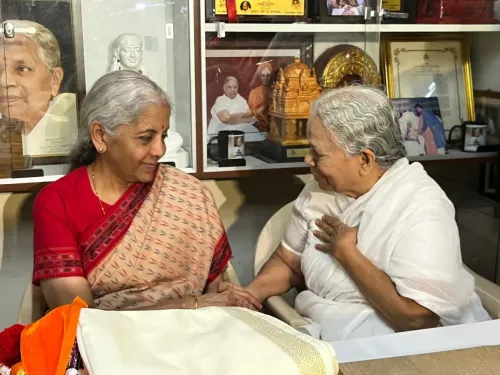
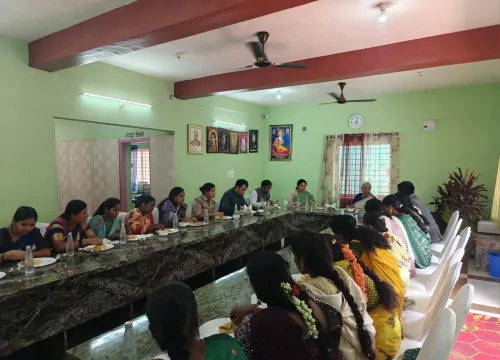
FM Sitharaman visits Sumangali Seva Ashrama, meets students
Synopsis
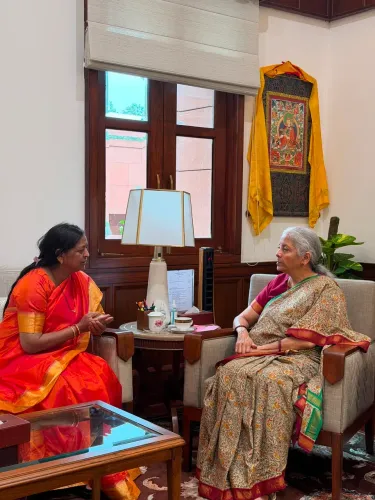
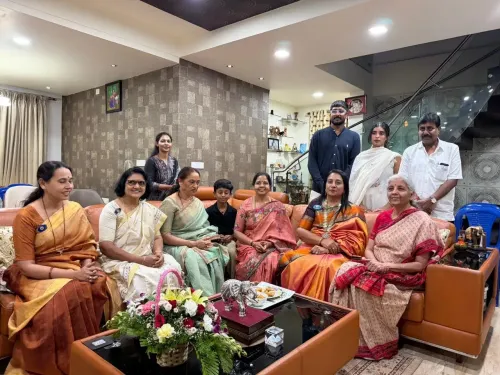
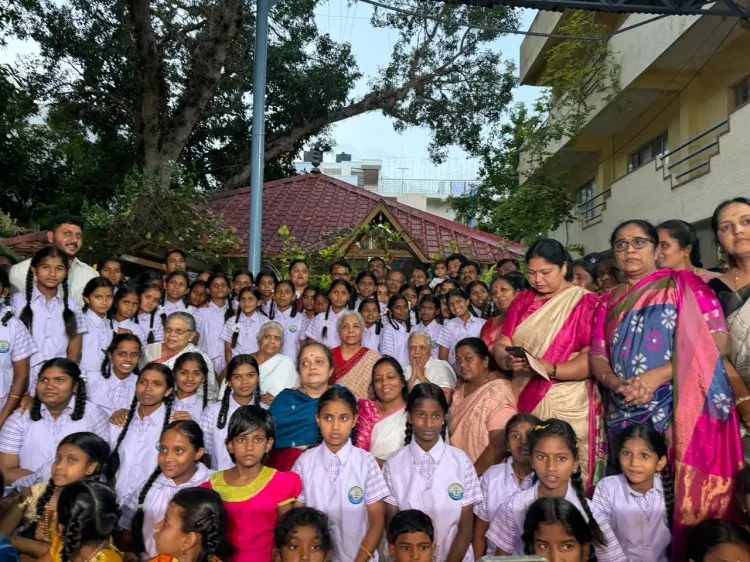
Union Finance Minister Nirmala Sitharaman visited the Sumangali Seva Ashrama in Bengaluru on 13 June 2026, interacting with students at the institution that provides education, shelter and vocational training to underprivileged girls and women in Karnataka.
Key Takeaways
Union Finance Minister Nirmala Sitharaman visited Sumangali Seva Ashrama in Bengaluru on 13 June 2026 .
The ashrama provides education, shelter, and vocational training to underprivileged girls and women.
Sitharaman interacted directly with students at the institution during her visit.
The visit is part of a broader pattern of BJP cabinet ministers engaging with welfare and educational institutions in Karnataka.
Observers will watch for any follow-up central grants or CSR linkages for similar welfare institutions in Karnataka.
Union Finance Minister Nirmala Sitharaman visited the Sumangali Seva Ashrama in Bengaluru on Saturday, 13 June 2026, interacting with students at the Bengaluru-based welfare institution that provides education, shelter, and vocational training to underprivileged girls and women.
Context
The Sumangali Seva Ashrama is a long-standing charitable organisation in Bengaluru focused on the rehabilitation and education of underprivileged girls and women. The ashrama offers residential facilities alongside formal schooling and skill-based vocational programmes, making it one of Karnataka's notable civil-society institutions working on girl-child welfare.
Sitharaman, who holds the portfolios of Union Finance Minister and Minister of Corporate Affairs, is a senior BJP leader with strong ties to Karnataka. Her visit to the ashrama reflects the personal engagement she has maintained with welfare and educational institutions in the state.
Policy Backdrop
Cabinet ministers from the BJP have maintained a pattern of visiting welfare homes, NGOs, and educational institutions in their home states as part of grassroots outreach. Such visits to institutions focused on girl-child education and women's rehabilitation have been a consistent feature of national leaders' engagement with Karnataka's civil society.
At the central level, schemes such as Beti Bachao Beti Padhao and various Ministry of Women and Child Development programmes provide a policy framework within which institutions like the Sumangali Seva Ashrama operate. Linkages between such central initiatives and state-level NGOs often depend on sustained political attention and CSR partnerships.
Stakeholders and Impact
The primary beneficiaries of the Sumangali Seva Ashrama are underprivileged girls and women in and around Bengaluru who receive residential support, schooling, and vocational training under one roof. A visit by a senior Union minister raises the institution's visibility at the national level.
Such high-profile interactions can attract renewed attention from corporate donors, central government grant mechanisms, and CSR-mandated funding from public-sector undertakings — all of which are channels that welfare homes of this nature typically rely upon to sustain operations.
What's Next
Observers will watch for any follow-up announcements regarding central grants, CSR linkages, or policy directives that may benefit the Sumangali Seva Ashrama or similar Karnataka-based welfare institutions. Sitharaman's engagement with the ashrama's students could also signal renewed political focus on girl-child education and women's rehabilitation in the run-up to Karnataka's legislative calendar. Whether the visit translates into concrete institutional support will be the measure of its longer-term significance.
Point of View
A state where the party is in opposition at the state level and keen to sustain its national-level connect with civil society. For a Finance Minister, a visit to a welfare institution carries an implicit signal about policy priorities — particularly around girl-child education and women's economic rehabilitation — that aligns with the Centre's stated social spending agenda. The visit's real significance will depend on whether it is followed by institutional support, such as enhanced central grants or facilitated CSR funding, rather than remaining a symbolic engagement. In the current political climate in Karnataka, such outreach by a Union minister also carries an undeniable electoral undertone.
NationPress
27 Oct 2026
Frequently Asked Questions
What is the Sumangali Seva Ashrama in Bengaluru?
The Sumangali Seva Ashrama is a Bengaluru-based charitable institution that provides education, residential shelter, and vocational training to underprivileged girls and women in Karnataka.
Why did Nirmala Sitharaman visit Sumangali Seva Ashrama?
Nirmala Sitharaman visited the Sumangali Seva Ashrama on 13 June 2026 to interact with students at the welfare institution, as part of her outreach to civil-society organisations working on girl-child education and women's rehabilitation in Karnataka.
What does Nirmala Sitharaman's visit mean for the ashrama?
A visit by the Union Finance Minister raises the institution's national visibility and could attract renewed attention from central government grant mechanisms, CSR funding, and policy support for similar welfare organisations in Karnataka.
Which schemes support institutions like Sumangali Seva Ashrama?
Institutions like the Sumangali Seva Ashrama can benefit from central government schemes such as Beti Bachao Beti Padhao and programmes run by the Ministry of Women and Child Development, as well as CSR funding from public-sector undertakings.
Is Nirmala Sitharaman from Karnataka?
Yes, Nirmala Sitharaman is a senior BJP leader with strong ties to Karnataka and has maintained regular engagement with welfare and educational institutions in the state.