FM Sitharaman meets Padma Shri awardee Dr SG Susheelamma
Synopsis
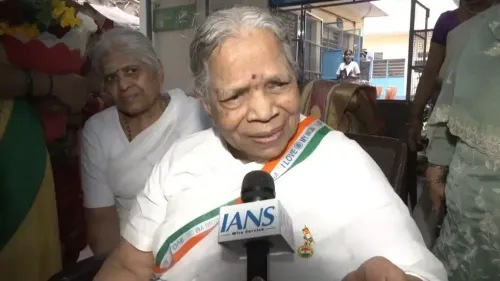
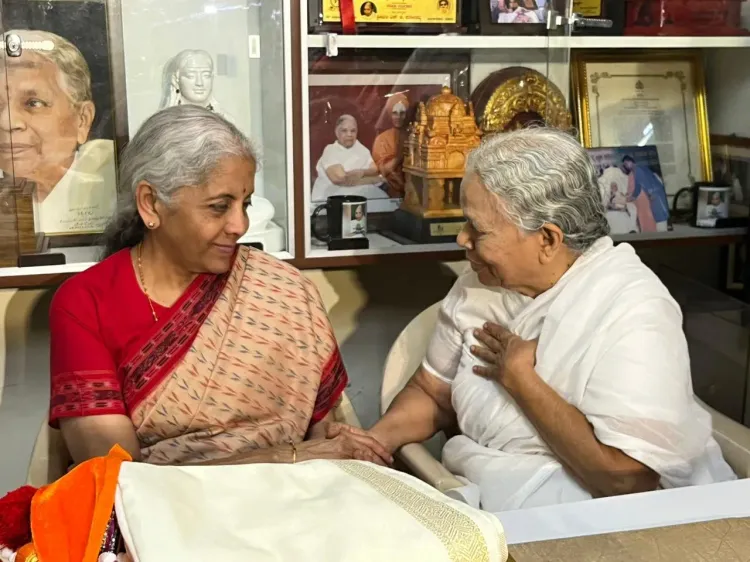
Union Finance Minister Nirmala Sitharaman met Dr SG Susheelamma, 2026 Padma Shri awardee and founder of Bengaluru's Sumangali Seva Ashrama, which has served abandoned children, women, tribal communities and the elderly for five decades while also planting over 40 lakh saplings across Karnataka.
Key Takeaways
Union Finance Minister Nirmala Sitharaman met Dr SG Susheelamma in Bengaluru on 13 June 2026 .
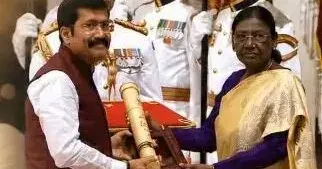
Dr Susheelamma was conferred the Padma Shri in 2026 for five decades of grassroots social welfare work.
She founded Sumangali Seva Ashrama in 1975 , which provides shelter, free education, medical care and livelihood training to thousands of abandoned children, distressed women, tribal communities and elderly citizens.
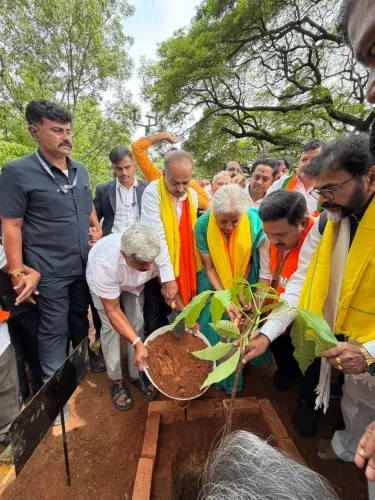
She leads the Vriksha Mahadasoha movement, which has planted over 40 lakh saplings across Karnataka .
She has also received the Dr Babasaheb Ambedkar National Award among multiple honours.
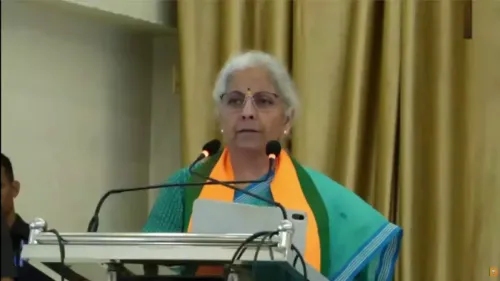
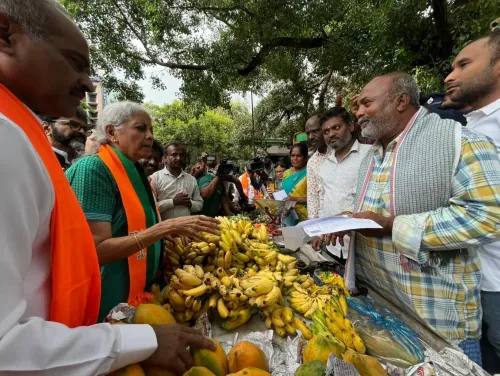
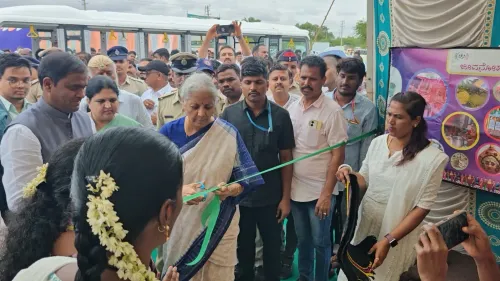
Union Finance Minister Nirmala Sitharaman met Dr SG Susheelamma, founder of Sumangali Seva Ashrama in Bengaluru, on Saturday, 13 June 2026, recognising five decades of grassroots social welfare work that has touched thousands of vulnerable lives across Karnataka.
Context
Dr SG Susheelamma was conferred the Padma Shri — India's fourth-highest civilian honour — in 2026 for her sustained contribution to social welfare. The Padma awards, instituted in 1954, are conferred annually to recognise distinguished service across fields including social work.
Sitharaman's interaction highlights the Finance Ministry's periodic engagement with non-governmental welfare providers who operate at the grassroots level, underscoring state recognition of their role in social service delivery.
Policy Backdrop
Dr Susheelamma voluntarily left her early employment to establish Sumangali Seva Ashrama in Bengaluru in 1975. Over the following five decades, she built it into an integrated institution that today provides shelter, free education, medical care, and livelihood training to thousands of abandoned children, distressed women, tribal communities, and elderly citizens.
The Ashrama's multi-sectoral model — combining shelter, health, education, and livelihood under one roof — mirrors the long-standing national emphasis on integrated social service delivery that successive governments have encouraged through policy and recognition frameworks.
Beyond direct welfare, Dr Susheelamma has spearheaded the Vriksha Mahadasoha environmental movement, which has planted over 40 lakh saplings across Karnataka, reflecting a convergence of welfare outreach and environmental stewardship that is increasingly visible in southern India's voluntary sector.
Stakeholders and Impact
The primary beneficiaries of Sumangali Seva Ashrama span some of society's most marginalised groups: abandoned children, distressed women, tribal communities, and elderly citizens in and around Bengaluru. The institution's decades-long continuity has made it a reference point for integrated voluntary welfare in Karnataka.
Dr Susheelamma has also received the Dr Babasaheb Ambedkar National Award, among multiple other prominent honours, reflecting cross-institutional recognition of her contribution. Indian ministers routinely publicise interactions with Padma awardees to draw attention to non-governmental welfare providers whose work complements state schemes.
What's Next
Attention will now turn to the next annual Padma awards cycle and whether central or state budgetary allocations will expand support for registered welfare ashrams such as Sumangali Seva Ashrama. The interaction also keeps the spotlight on large-scale afforestation drives like Vriksha Mahadasoha at a time when Karnataka's environmental targets are under scrutiny.
For grassroots institutions of this kind, ministerial visibility often translates into broader public awareness and, potentially, increased donor and policy support — a pattern that is likely to continue as the government spotlights civil society contributions to social development.
Point of View
Reinforcing the government's narrative that civil society complements state-led social delivery. The meeting is notable for spanning two policy domains simultaneously — social welfare and environmental action — through the Vriksha Mahadasoha movement, signalling that integrated grassroots institutions are gaining broader political recognition. For the BJP, spotlighting a Karnataka-based welfare figure also carries regional resonance in a state where the party is in opposition. The interaction is unlikely to signal any immediate policy shift, but it keeps pressure on budgetary frameworks to better support registered voluntary ashrams.
NationPress
20 Sept 2026
Frequently Asked Questions
Who is Dr SG Susheelamma?
Dr SG Susheelamma is the founder of Sumangali Seva Ashrama in Bengaluru , a welfare institution she established in 1975 that provides shelter, free education, medical care and livelihood training to abandoned children, distressed women, tribal communities and elderly citizens. She was conferred the Padma Shri in 2026 for five decades of grassroots social work.
What is Sumangali Seva Ashrama?
Sumangali Seva Ashrama is an integrated social welfare institution in Bengaluru , Karnataka, founded in 1975 by Dr SG Susheelamma . It offers shelter, free education, medical care and livelihood training to thousands of marginalised individuals including abandoned children, distressed women, tribal communities and the elderly.
What is the Vriksha Mahadasoha movement?
Vriksha Mahadasoha is an environmental movement spearheaded by Dr SG Susheelamma that has planted over 40 lakh saplings across Karnataka , combining ecological conservation with her broader social welfare mission.
Why did Nirmala Sitharaman meet Dr Susheelamma?
Union Finance Minister Nirmala Sitharaman met Dr SG Susheelamma on 13 June 2026 to recognise her decades of grassroots welfare work and her recent conferment of the Padma Shri . Such interactions are a common way for senior ministers to spotlight contributions from the voluntary social sector.
What is the Padma Shri award?
The Padma Shri is India's fourth-highest civilian honour, instituted in 1954 and conferred annually by the Government of India for distinguished service in various fields, including social work, arts, science and public affairs.