How Will the FTA with India Create More Jobs and Boost Exports?
Click to start listening
Synopsis
Discover how the recently concluded Free Trade Agreement between India and New Zealand is set to revolutionize job creation, boost exports, and elevate incomes for both nations. This landmark deal promises to open doors to a massive market, benefiting various sectors and enhancing bilateral relations.
Key Takeaways
- FTA with India promotes job creation.
- It opens up exports to 1.4 billion consumers.
- Investment commitment of $20 billion over 15 years.
- Supports various sectors, including textiles and IT services.
- A historic milestone for India-New Zealand relations.
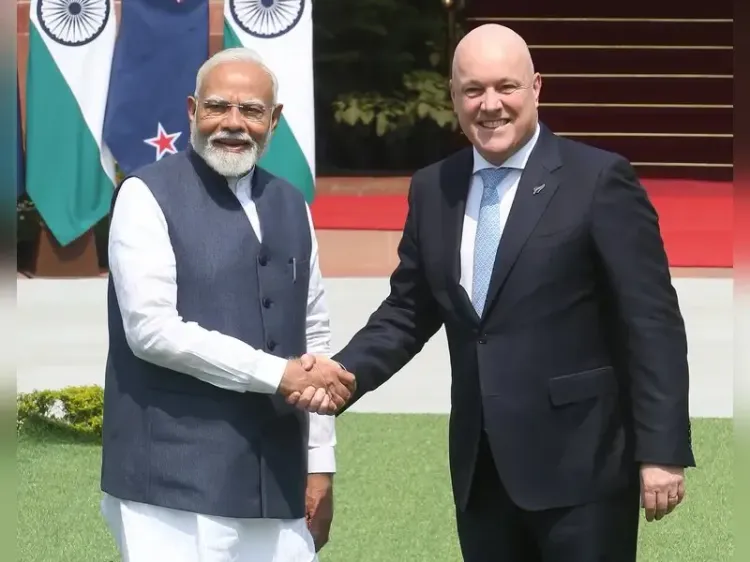
New Delhi, Dec 27 (NationPress) New Zealand's Prime Minister Christopher Luxon stated on Saturday that a Free Trade Agreement (FTA) with India will lead to increased employment, exports, and higher incomes. This announcement follows the completion of a comprehensive and long-awaited FTA, which marks a significant economic and strategic achievement.
"We promised to secure a Free Trade Agreement with India during our first term, and we have achieved that," Luxon noted in a social media post on platform X.
He emphasized that this groundbreaking agreement will result in more jobs, elevated incomes, and enhanced exports by granting access to 1.4 billion Indian consumers.
The negotiations were officially initiated on March 16.
Luxon remarked, "Fixing the Basics. Building the Future," while celebrating the deal that was finalized within a span of nine months.
Previously, Prime Minister Narendra Modi described the India-New Zealand FTA as a historic milestone.
"This is a pivotal moment for India-New Zealand relations, providing a robust boost to bilateral trade and investment! I had a fruitful discussion with my friend PM Christopher Luxon shortly after the conclusion of this landmark agreement," he posted on X.
The FTA abolishes duties on 100% of Indian exports, coupled with a $20 billion investment pledge over the next 15 years to enhance long-term economic and strategic collaboration.
It improves market access for India's labor-intensive sectors, including textiles, apparel, leather, footwear, marine products, gems and jewellery, handicrafts, engineering goods, and automobiles, directly benefiting Indian workers, artisans, women, youth, and MSMEs by integrating them deeper into global value chains, as reported by the commerce ministry.
In return, India has secured commitments in a variety of high-value sectors, such as IT and IT-enabled services, professional services, education, financial services, tourism, construction, and other business services. This opens up significant new opportunities for Indian service providers and high-skilled employment, according to the Commerce Ministry.
Point of View
The newly established Free Trade Agreement between India and New Zealand represents a significant step forward in enhancing bilateral relations and economic cooperation. This deal not only promises to create jobs and boost exports but also aligns with the global trend of increased interconnectivity among nations. Both countries stand to benefit greatly from this agreement, fostering a more collaborative and prosperous future.
NationPress
05/01/2026
Frequently Asked Questions
What is the significance of the Free Trade Agreement?
The Free Trade Agreement is significant as it eliminates duties on 100% of Indian exports and facilitates a $20 billion investment over 15 years, enhancing trade and economic cooperation.
How will this FTA impact job creation?
The FTA is expected to create more jobs by expanding market access and integrating various sectors of the economy, particularly labor-intensive industries.
What sectors will benefit from the FTA?
Sectors such as textiles, apparel, leather, marine products, and IT services are set to benefit significantly from improved market access and investment.