Union Budget 2026-27: How Does Nitin Gadkari View the Infrastructure Boost?
Synopsis
In a significant move, Nitin Gadkari applauds the infrastructure initiatives within the Union Budget 2026-27. By positioning infrastructure as a central pillar for India's growth, these measures aim to enhance resilience and global competitiveness, paving the way for a prosperous future.
Key Takeaways
Infrastructure as a key growth driver Focus on connectivity and efficiency Support for regional balance Empowerment of Tier II and Tier III cities Strategic initiatives for manufacturing sectors
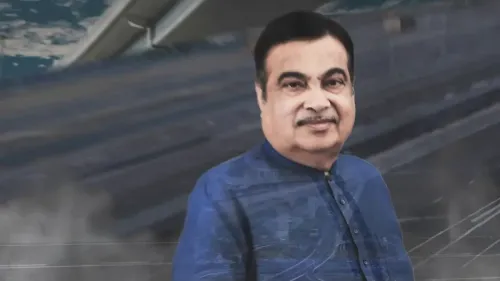
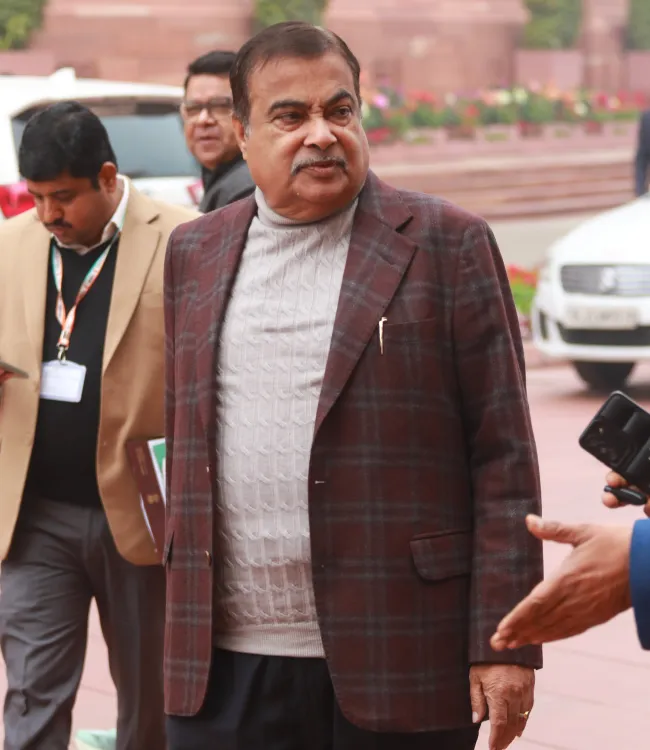
New Delhi, Feb 1 (NationPress) Union Minister for Road Transport & Highways, Nitin Gadkari, expressed his approval of the infrastructure boost in the Union Budget 2026-27, asserting that these measures embody a vision where infrastructure acts as an enabler of resilience, opportunity, and global competitiveness.
He noted that these recent announcements position infrastructure at the forefront of India's ambition for a Viksit Bharat by 2047.
During her Union Budget address for 2026-27, Finance Minister Nirmala Sitharaman highlighted significant emphasis on infrastructure development, advocating for ongoing public investment to stimulate economic growth and ensure balanced regional development.
In response, Gadkari remarked on X, stating: "The Union Budget 2026 prioritizes infrastructure as the cornerstone of India's pursuit of a Viksit Bharat 2047. With a strong focus on connectivity, enhanced manufacturing capabilities, and regional equity, this budget provides a robust impetus to construct world-class, future-oriented infrastructure."
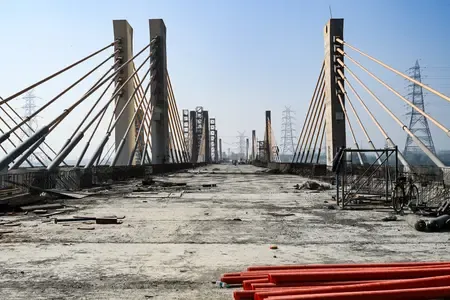
Regarding transformative connectivity, he pointed out the establishment of 20 new National Waterways, designed to fortify logistics and inter-regional mobility. He mentioned that seven high-speed railway corridors will boost passenger and freight efficiency.
Additionally, Gadkari highlighted dedicated Rare Earth Corridors in states like Odisha, Kerala, Andhra Pradesh, and Tamil Nadu, which will bolster essential mineral supply chains and support strategic industries.
In terms of infrastructure advancements for manufacturing and strategic sectors, he mentioned plans to enhance domestic manufacturing in key and strategic domains.
The budget proposes initiatives like biopharma SHAKTI to fortify life sciences infrastructure, the India Semiconductor Mission (ISM) 2.0 to advance chip manufacturing and ecosystem capacity, and an Electronics Components Manufacturing Scheme to strengthen value chain integration. Furthermore, three dedicated Chemical Parks will promote cluster-based industrial growth, along with a scheme aimed at revitalizing 200 legacy industrial clusters to unlock productivity and job opportunities.
The Union Minister asserted that the budget positions urban infrastructure as a catalyst for growth.
"With an acknowledgment of the growing significance of Tier II and Tier III cities, the government will persist in prioritizing infrastructure development in urban areas with populations exceeding 500,000, many of which are rapidly emerging as new growth hubs, innovation centers, and employment bases," he commented.
"Collectively, these initiatives reflect a distinct vision: perceiving infrastructure not merely as physical assets but as an enabler of resilience, opportunity, and global competitiveness," he concluded.
Point of View
The Union Budget 2026-27 signifies a pivotal moment for India's infrastructure landscape. By emphasizing sustainable development and regional balance, the government aims to catapult the nation towards a self-reliant and globally competitive economy.
NationPress
19 Sept 2026
Frequently Asked Questions
What is the significance of the infrastructure push in the Union Budget 2026-27?
The infrastructure push in the Union Budget 2026-27 is crucial as it aims to enhance resilience, create opportunities, and bolster global competitiveness, aligning with the vision of achieving a Viksit Bharat by 2047.
What new initiatives were mentioned by Nitin Gadkari?
Nitin Gadkari highlighted the establishment of 20 new National Waterways, seven high-speed railway corridors, and dedicated Rare Earth Corridors in various states to strengthen logistics and support strategic industries.
How does the budget support urban infrastructure?
The budget prioritizes infrastructure development in Tier II and Tier III cities, recognizing their expanding role as growth centers and innovation hubs, thereby promoting balanced regional development.
What are some specific programs introduced in the budget?
Programs such as biopharma SHAKTI, the India Semiconductor Mission (ISM) 2.0, and dedicated Chemical Parks were introduced to enhance manufacturing in key sectors and support industrial growth.
What is the overall vision of the Union Budget 2026-27?
The overall vision is to view infrastructure not just as physical assets but as a foundational element for resilience and global competitiveness, driving India's growth trajectory towards 2047.