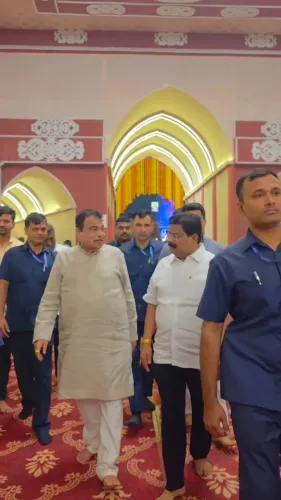
Gadkari addresses Mahabodhi World Heritage Expo closing in Nagpur
Synopsis
Union Minister Nitin Gadkari attended the closing ceremony of the Mahabodhi Temple World Heritage Exposition 2026 in Nagpur, praising its mission to spread Buddha's message and highlight the historic link between Deekshabhoomi and Dr. Ambedkar's Buddhist legacy.
Key Takeaways
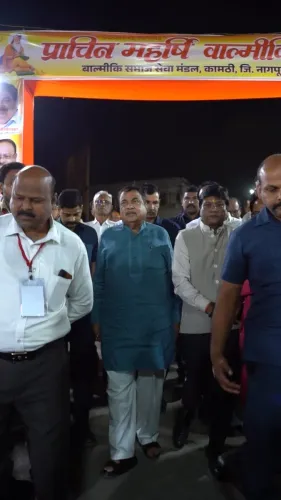
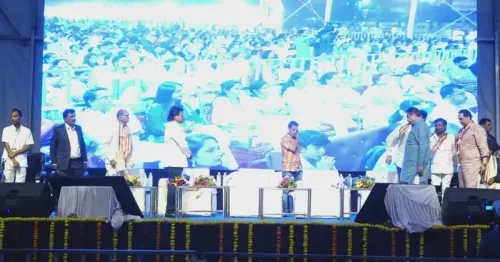
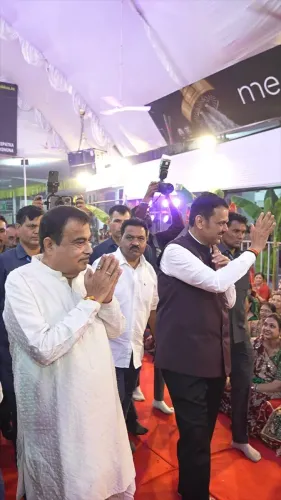
Union Minister Nitin Gadkari addressed the valedictory ceremony of the Mahabodhi Temple World Heritage Exposition 2026 in Nagpur on 25 October 2026 .
The event was organised by the Nagpur Buddhist Consortium at Buddha Park, Indora Square .
The exposition aimed to spread the Buddha's message of peace, compassion, equality, and humanity to a wider audience.
It highlighted the Mahabodhi Temple — a UNESCO World Heritage Site since 2002 — located in Bodh Gaya, Bihar .
A key focus was the historical and cultural bond between Dr.
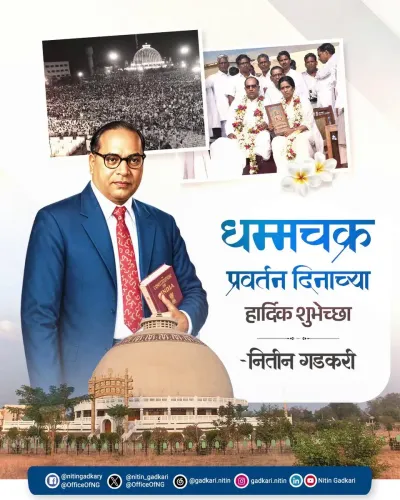
Babasaheb Ambedkar and Deekshabhoomi , where he embraced Buddhism in October 1956 .
Gadkari is the sitting Lok Sabha MP from Nagpur, making his presence at a major local Buddhist heritage event symbolically significant.
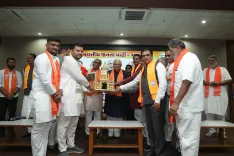
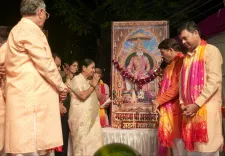
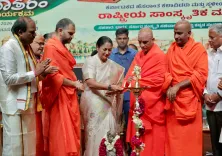
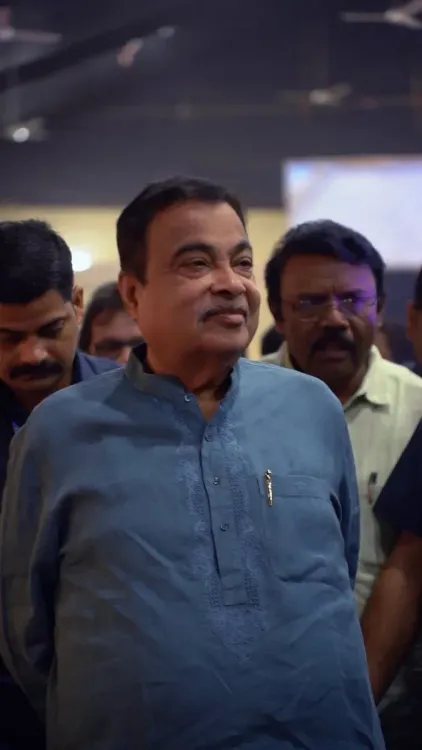
At Buddha Park, Indora Square, Nagpur, the closing ceremony of the Mahabodhi Temple World Heritage Exposition 2026 drew a senior cabinet voice on Sunday, 25 October 2026 — Union Road Transport and Highways Minister Nitin Gadkari addressed the special valedictory and felicitation programme organised by the Nagpur Buddhist Consortium, lending national heft to an event rooted in both ancient heritage and modern social history.
What the exposition set out to do
Gadkari, posting in Marathi, described the exposition's three-pronged mission: carry the message of peace, compassion, equality, and humanity taught by Lord Gautam Buddha to ordinary people; introduce the global heritage significance of the Mahabodhi Temple; and illuminate the deep historical and cultural ties between Dr. Babasaheb Ambedkar and Deekshabhoomi.
That third strand is the emotional core. Deekshabhoomi — just a few kilometres from Indora Square — is the ground where, on 14 October 1956, Ambedkar embraced Buddhism along with hundreds of thousands of followers in one of modern India's most consequential acts of mass conversion. Anchoring the Mahabodhi exposition in Nagpur is not accidental: the city sits at the crossroads of ancient Theravada pilgrimage memory and living Ambedkarite tradition.
Mahabodhi Temple: from Bodh Gaya to a Nagpur expo stage
The Mahabodhi Temple in Bodh Gaya, Bihar, marks the precise spot where the Buddha attained enlightenment. UNESCO inscribed it as a World Heritage Site in 2002, placing it alongside the world's most protected sacred landscapes. Bringing an exposition centred on that site to Maharashtra's second city is a deliberate act of cultural outreach — making pilgrimage knowledge accessible to communities for whom the journey to Bihar is rarely easy.
Gadkari's Nagpur connection and why his presence matters
Gadkari represents Nagpur in the Lok Sabha and has been the city's most prominent national political figure for decades. His appearance at a Buddhist heritage event in his own constituency carries symbolic weight: it signals mainstream political recognition of Buddhist cultural pride — a significant constituency in Maharashtra where Ambedkarite Buddhism has millions of adherents.
Indian governments have periodically used heritage expositions as instruments of soft cultural diplomacy, weaving together tourism promotion and community identity. A local expo connecting Bodh Gaya's UNESCO legacy with Ambedkar's Nagpur legacy fits squarely into that pattern — and a sitting Union Minister addressing its closing ceremony elevates it beyond municipal celebration.
The message Gadkari amplified
The minister's own words framed the exposition not as a religious event but as a social one — the Buddha's principles of shanti, karuna, samata ani manavata (peace, compassion, equality, and humanity) positioned as universally relevant, not sectarian. That framing is politically deliberate and socially resonant in a state where Buddhist identity politics and Ambedkarite mobilisation shape electoral outcomes in dozens of constituencies.
Nagpur's Buddha Park at Indora Square now carries the memory of a closing ceremony that tried, in the words of its organisers, to do all three things at once: honour a global heritage site, celebrate a local revolutionary, and keep a 2,500-year-old philosophy alive in everyday conversation.
Point of View
Which represent a decisive electoral bloc in several Vidarbha and western Maharashtra constituencies. The exposition's deliberate framing — tying a Bihari UNESCO site to Nagpur's Deekshabhoomi — reflects a broader cultural-diplomacy pattern in which local events do the heavy lifting of making distant heritage personally relevant. That Gadkari chose to attend the closing ceremony rather than the launch suggests a strategic calculation: benediction carries more lasting goodwill than inauguration. The event also underlines how Buddhist identity politics increasingly commands mainstream political attention, moving well beyond its traditional Dalit-movement base.
NationPress
25 Oct 2026
Frequently Asked Questions
What is the Mahabodhi Temple World Heritage Exposition 2026?
It is a cultural exposition organised by the Nagpur Buddhist Consortium in Nagpur to promote the Mahabodhi Temple's UNESCO World Heritage status and connect it with local Ambedkarite Buddhist heritage, particularly Deekshabhoomi.
What is Deekshabhoomi and why is it significant?
Deekshabhoomi is a historic site in Nagpur where Dr. B.R. Ambedkar converted to Buddhism on 14 October 1956, along with hundreds of thousands of followers, making it one of the most significant moments in modern Indian social history.
Is the Mahabodhi Temple a UNESCO World Heritage Site?
Yes. The Mahabodhi Temple in Bodh Gaya, Bihar — marking the site of Gautam Buddha's enlightenment — was inscribed as a UNESCO World Heritage Site in 2002.
Why did Nitin Gadkari attend a Buddhist heritage event in Nagpur?
Gadkari is the sitting Lok Sabha MP from Nagpur and a senior BJP leader; attending a major Buddhist heritage event in his own constituency underscores both his local political role and BJP's outreach to Buddhist and Ambedkarite communities in Maharashtra.
What was the main message Gadkari highlighted at the event?
Gadkari highlighted the exposition's mission to carry Lord Gautam Buddha's principles of peace, compassion, equality, and humanity to ordinary people, while spotlighting the global heritage of the Mahabodhi Temple and Ambedkar's historic link to Nagpur's Deekshabhoomi.